

Ingrid Pitt – Countess Dracula (1971) Countess Elisabeth Nádasdy High-Collar Publicity Photo
Limited Edition Photograph (learn more)
In stock
Ingrid Pitt as Countess Elisabeth Nádasdy commands this striking black-and-white publicity photograph from Countess Dracula (1971), her direct gaze framed by sculpted curls, a jeweled necklace and the dramatic sweep of an exceptionally high period collar. The close composition isolates Pitt against a softly subdued background, while the sharply rising collar creates an almost architectural frame around her face. The combination of elaborate costume, controlled expression and direct eye contact makes this a particularly distinctive image of the Countess in her rejuvenated form.
Pitt is positioned almost squarely toward the camera, although the slight turn of her shoulders gives the composition greater depth. Her expression is composed and self-assured rather than overtly threatening, allowing the character’s aristocratic authority to dominate the image. Carefully arranged curls frame her forehead and temples, while her hair falls farther behind the raised collar. Strong but controlled lighting defines the eyes, cheekbones and lips without sacrificing the softer tonal gradation of the surrounding skin.
The costume is one of the photograph’s strongest visual elements. The enormous pale collar rises dramatically on either side of Pitt’s neck, opening outward in sharp, sculptural forms and contrasting with the darker patterned fabric of the gown beneath it. A decorative necklace rests at the center of the neckline, adding another point of period detail. The high collar, jewelry and richly textured dress combine to create an appearance of wealth and rank appropriate to the Countess, while the monochrome photography emphasizes fabric, shape and facial structure rather than color.
This Ingrid Pitt Countess Dracula 1971 publicity image is especially effective because it contains no blood, victims or overt supernatural action. Instead, the photograph presents the Countess through elegance and controlled presence. That restraint reflects an important aspect of Pitt’s performance: Elisabeth’s renewed youth gives her beauty and confidence, but beneath that appearance lies the increasingly desperate violence required to preserve it. The image therefore captures the outwardly aristocratic identity that conceals the film’s central horror.
Directed by Peter Sasdy for Hammer Film Productions, Countess Dracula transforms elements of the legend surrounding the historical Hungarian noblewoman Elizabeth Báthory into Gothic fiction. Pitt plays the ageing Countess Elisabeth Nádasdy, who discovers that contact with the blood of a young woman appears to restore her youth. Determined to retain that transformation, she begins pursuing further victims while assuming a younger identity and attempting to sustain the illusion around those who know her.
The Nádasdy name used for Hammer’s fictional Countess also evokes Ferenc Nádasdy, the historical husband of Elizabeth Báthory, although the film freely reshapes historical material for its own Gothic narrative. Rather than presenting a documentary interpretation of Báthory, Hammer builds a story around rejuvenation, obsession, deception and the terrifying cost of maintaining physical beauty.
For collectors of Ingrid Pitt, Hammer Horror and early-1970s Gothic cinema, this photograph offers an elegant alternative to the film’s more sensational imagery. Pitt’s unwavering gaze, elaborate period styling and extraordinary collar create a visually memorable representation of the character, while the restrained black-and-white presentation places particular emphasis on her features and costume.
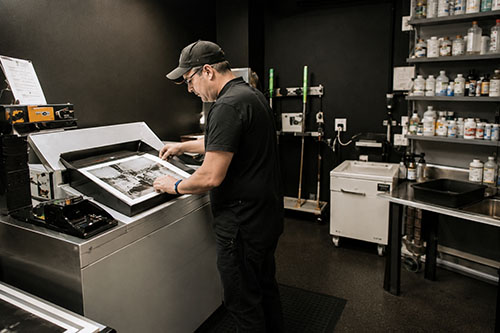
Carefully restored from historic photographic source material and professionally lab-developed, this museum-quality photograph is presented uncropped, preserving the complete image area contained in the source. Restoration recovers Pitt’s facial detail, sculpted curls, jeweled necklace, high-collar edging, gown texture and subtle background definition while maintaining the natural tonal gradation and character of the historic black-and-white photograph. The finished photograph contains no AI-generated image content.
Product Enquiry
Kodak Professional Endura Paper
Kodak Endura papers provide an incredible amount of detail and smooth transition of tones. Designed for the professional photographer in mind, looking for a more traditional photo print style, Kodak Endura provides an extended print life and color gamut almost at the level of a high end fine art paper print.
Archival Matte Paper
Archival Matte Paper, also known as Moab Lasal Photo Matte, is our house stock fine art paper and is an economical favorite for fine art reproductions and photo prints. It features a smooth surface, heavy weight (230 g, 9.5-mil), neutral white, matte paper engineered for accurate color reproduction that provides high contrast and high-resolution output. This paper is acid-free, making it the perfect choice for both photography & fine art reproductions.
Giclee William Turner Paper by Hahnemühle
The William Turner by Hahnemühle is one of the most popular papers used in the Giclee printing industry. This is a 310g natural white mould made natural line paper with 100% rag content making it highly archival. It has a slight coarse texture which gives photos and artwork an elegant look. These fine art paper prints (also known as Giclee) are ordered by galleries, individual artists and photographers. The papers and inks are not only archival but use some of the most accurate print technology for full color prints.
- Giclee prints use very expensive archival pigmented inks.
- Highest level of color gamut available in printing (12 color printing).
- Exceptional black & white printing.
- Fade resistant, pigmented inks which provide a superior color range compared to other types of inks. Widely preferred in fine art and photography circles.
- We ONLY use professional grade fine art and photo paper that resist yellowing and aging.
Framing
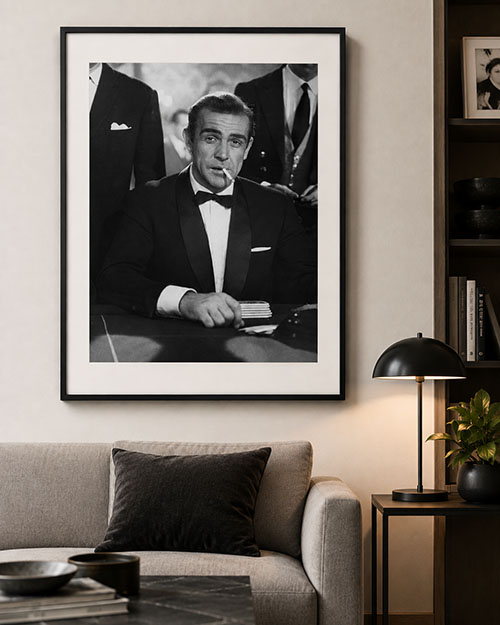
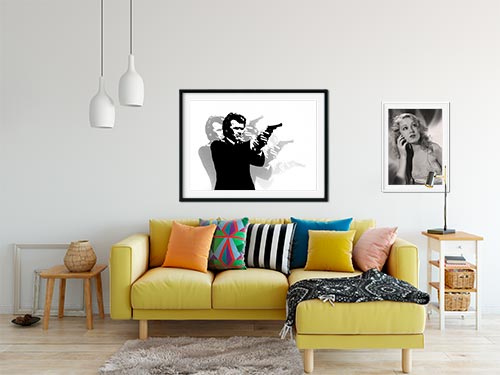
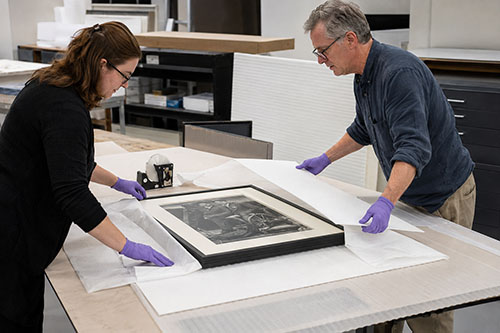
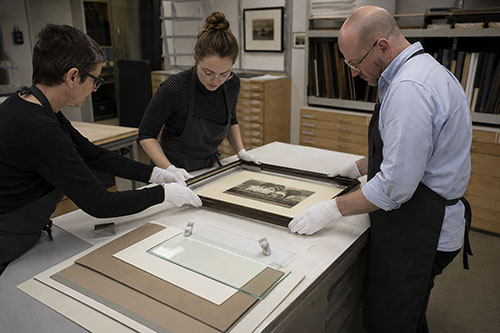
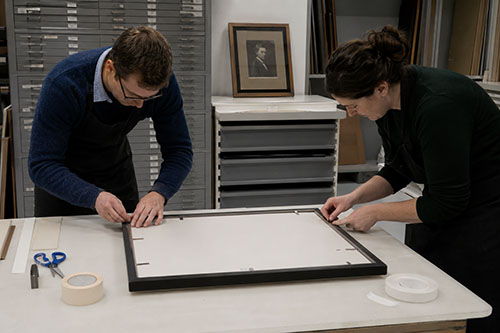
We offer wood and metal frames, custom cut & joined to order. Each framed print includes hanging hardware and foamcore backer.
Matting
We use conservation grade 100% virgin alpha-cellulose 2 ply mats with white core. Acid-free and lignin-free, these are both face resistant and meet all conservation quality standards set by the Fine Art Trade Guild. Mats are digitally cut for ultimate precision. The window will be 1/8″ smaller than the print dimensions.
Glazing (Acrylic Glass)
We offer custom cut panes of shatter-proof, acrylic glass, to protect your valuable artwork and prints.
Premium Clear
Framing grade clear acrylic is shatter resistant and lightweight.
Reflection Control
With its matte finish, Tru Vue Reflection Control® Acrylic scatters light to diminish unwanted glare.
Conservation Clear
Tru Vue Conservation Clear® Acrylic is a framing industry staple, blocking up to 99% of UV rays for ultimate protection.
Conservation Reflection Control
Tru Vue Conservation Reflection Control® Acrylic scatters and diffuses light to reduce unwanted glare. Blocks up to 99% of UV rays.
Related products
-

King Kong (1933) Skull Island Great Wall Gate Breakthrough Concept Artwork
$38.00 -
Leonard Whiting – Frankenstein: The True Story (1973) Victor Assembling the Creature Scene Photo
$25.00 -
King Kong (1933) Ann Darrow Manhattan Empire State Building Promotional Artwork
$38.00 -
Ingrid Pitt – Countess Dracula (1971) Countess Elisabeth Nádasdy Laughing in Costume Hammer Gothic Horror Photo
$38.00