

Ingrid Pitt & Sandor Elès – Countess Dracula (1971) Elisabeth Nádasdy & Imre Toth Wedding Portrait Hammer Gothic Horror Photo
Limited Edition Photograph (learn more)
In stock
INGRID PITT and SANDOR ELÈS appear together in their elaborate wedding costumes from Countess Dracula (1971) in this richly colored Hammer Gothic portrait. Pitt stands prominently in the foreground as Countess Elisabeth Nádasdy, wearing an ornate red-and-cream gown with jeweled headdress, veil, pearl detailing and embroidered fabric, while Elès as Imre Toth stands immediately behind her in formal period dress with decorative braid and a dramatic dark fur-edged cloak. Both performers look directly toward the camera, creating a stately, almost ceremonial composition. Pitt’s commanding position, intricate costume and composed expression dominate the image, while Elès provides a darker visual counterpoint behind her. The close framing concentrates attention on the two characters and the lavish wardrobe rather than the surrounding castle environment.
The photograph has particular visual strength because the costumes communicate so much of the film’s climax. Pitt’s structured bodice, flowing sleeves, headdress and veil establish Elisabeth immediately as the bride, while Elès’s ornate formal clothing gives the pair the appearance of an aristocratic marriage portrait. Yet viewers familiar with the story know that the elegance masks a deeply unstable situation. For collectors seeking Ingrid Pitt Sandor Elès Countess Dracula 1971 photography, this image combines two principal performers, a crucial narrative moment and some of the production’s richest period costume work within a single striking composition.
Directed by Peter Sasdy for Hammer Film Productions, Countess Dracula stars Pitt as Countess Elisabeth Nádasdy, with Nigel Green as Captain Dobi, Sandor Elès as Imre Toth, Maurice Denham as Master Fabio and Lesley-Anne Down as Ilona. Hammer production records identify the film as a 1971 release photographed at Pinewood Studios, with principal filming beginning in July 1970. Raymond Hughes designed the costumes, while Kenneth Talbot handled cinematography and Philip Harrison served as art director.
The story follows the aging Elisabeth after she discovers that the blood of young women can temporarily restore her youth. While rejuvenated, she assumes the identity of her own daughter Ilona, who has been secretly held captive, and begins a relationship with the much younger Imre. Eventually Imre discovers Elisabeth’s true identity, but she pressures him into proceeding with their marriage. During the wedding ceremony, Elisabeth’s youthful appearance suddenly fails, exposing the deception before the assembled guests and driving the story toward its violent conclusion.
That narrative context gives this formal portrait an unusually dark undertone. The elaborate bridal clothing suggests order, wealth and ceremony, but the marriage itself rests upon impersonation, coercion and Elisabeth’s desperate attempts to preserve her youth. Pitt’s performance places beauty and aristocratic authority at the center of the film, while Elès’s Imre becomes increasingly trapped within the Countess’s deception. The image therefore works not merely as costume publicity but as a concise visual representation of the doomed relationship at the heart of the climax.
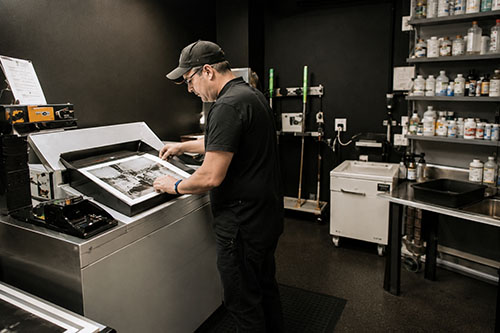
Carefully restored from historic photographic source material and professionally lab-developed, this museum-quality photograph is presented uncropped, preserving the complete image area contained in the source. Restoration recovers facial detail, headdress ornament, veil texture, embroidered fabric, jewelry and fur-trimmed costume detail while maintaining the natural color balance and character of the historic photograph. The finished photograph contains no AI-generated image content.
A richly detailed Hammer portrait combining Ingrid Pitt, Sandor Elès, Gothic costume and the doomed wedding climax, this photograph offers collectors an especially elegant piece of Countess Dracula imagery.
Product Enquiry
Kodak Professional Endura Paper
Kodak Endura papers provide an incredible amount of detail and smooth transition of tones. Designed for the professional photographer in mind, looking for a more traditional photo print style, Kodak Endura provides an extended print life and color gamut almost at the level of a high end fine art paper print.
Archival Matte Paper
Archival Matte Paper, also known as Moab Lasal Photo Matte, is our house stock fine art paper and is an economical favorite for fine art reproductions and photo prints. It features a smooth surface, heavy weight (230 g, 9.5-mil), neutral white, matte paper engineered for accurate color reproduction that provides high contrast and high-resolution output. This paper is acid-free, making it the perfect choice for both photography & fine art reproductions.
Giclee William Turner Paper by Hahnemühle
The William Turner by Hahnemühle is one of the most popular papers used in the Giclee printing industry. This is a 310g natural white mould made natural line paper with 100% rag content making it highly archival. It has a slight coarse texture which gives photos and artwork an elegant look. These fine art paper prints (also known as Giclee) are ordered by galleries, individual artists and photographers. The papers and inks are not only archival but use some of the most accurate print technology for full color prints.
- Giclee prints use very expensive archival pigmented inks.
- Highest level of color gamut available in printing (12 color printing).
- Exceptional black & white printing.
- Fade resistant, pigmented inks which provide a superior color range compared to other types of inks. Widely preferred in fine art and photography circles.
- We ONLY use professional grade fine art and photo paper that resist yellowing and aging.
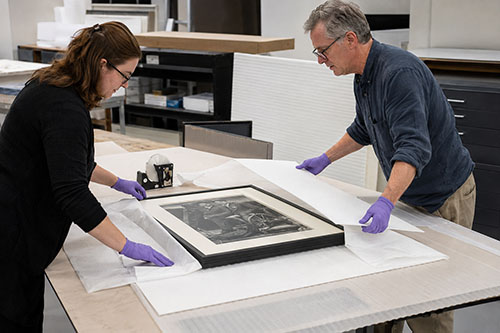
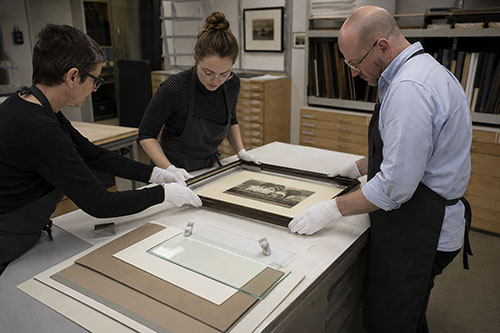
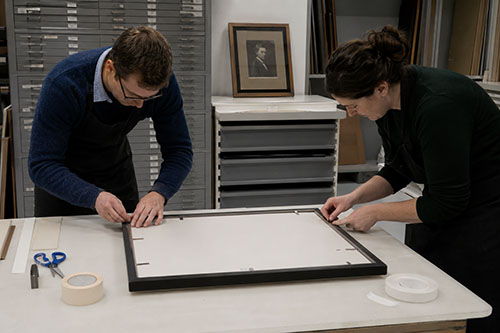
Framing
We offer wood and metal frames, custom cut & joined to order. Each framed print includes hanging hardware and foamcore backer.
Matting
We use conservation grade 100% virgin alpha-cellulose 2 ply mats with white core. Acid-free and lignin-free, these are both face resistant and meet all conservation quality standards set by the Fine Art Trade Guild. Mats are digitally cut for ultimate precision. The window will be 1/8″ smaller than the print dimensions.
Glazing (Acrylic Glass)
We offer custom cut panes of shatter-proof, acrylic glass, to protect your valuable artwork and prints.
Premium Clear
Framing grade clear acrylic is shatter resistant and lightweight.
Reflection Control
With its matte finish, Tru Vue Reflection Control® Acrylic scatters light to diminish unwanted glare.
Conservation Clear
Tru Vue Conservation Clear® Acrylic is a framing industry staple, blocking up to 99% of UV rays for ultimate protection.
Conservation Reflection Control
Tru Vue Conservation Reflection Control® Acrylic scatters and diffuses light to reduce unwanted glare. Blocks up to 99% of UV rays.
Related products
-

Peter Cushing – Frankenstein and the Monster from Hell (1974) Baron Frankenstein Top Hat Publicity Photo
$30.00 -
Ingrid Pitt, Peter Cushing & Dawn Addams – The Vampire Lovers (1970) Savoy Hotel Seated Cast Press Photo
$30.00 -
Klaus Kinski – Fitzcarraldo (1982) Brian Sweeney Fitzgerald Leopard Tapestry Publicity Photo
$25.00 -
Ingrid Pitt – The Vampire Lovers (1970) Bloodied Carmilla Vampire Fangs Photo
$25.00