

King Kong (1933) – Willis O’Brien Stop-Motion Kong Model Climbing Skull Island Mountain RKO Production Photo
Limited Edition Photograph (learn more)
In stock
King Kong climbs the rugged face of a Skull Island mountain miniature in this extraordinary black-and-white production photograph from King Kong (1933). The articulated Kong figure clings to the deeply textured rock surface while the constructed effects environment remains visible beyond portions of the miniature landscape. Rather than preserving the seamless illusion presented in the finished film, the photograph exposes the physical scale and craftsmanship of the stop-motion set, providing a remarkable view of Kong as an actual animation model working within RKO’s miniature Skull Island world.
The photograph is especially revealing because the artificial landscape becomes as important as Kong himself. Layers of heavily sculpted rock rise around the small figure, with unfinished production space visible beyond the miniature. Seen outside the completed composite photography, the scene demonstrates how carefully built sets, model animation and photographic effects were combined to transform a relatively compact studio construction into an immense prehistoric environment.
This exact composition has been documented as an RKO advance continuity key-set photograph showing Kong ascending a mountain peak on Skull Island. Heritage Auctions records that such imagery formed part of the studio’s internal continuity and effects documentation, helping track the integration of Willis O’Brien’s stop-motion work with the miniature environments required for the production.
Released in 1933, King Kong was directed by Merian C. Cooper and Ernest B. Schoedsack and stars Fay Wray as Ann Darrow, Robert Armstrong as Carl Denham and Bruce Cabot as Jack Driscoll. The film’s revolutionary effects work was led by Willis H. O’Brien, whose stop-motion animation transformed Kong and the creatures of Skull Island into convincing screen characters.
Modelmaker Marcel Delgado constructed an approximately 18-inch Kong miniature after earlier versions failed to satisfy Cooper. AFI records that the finished model used an articulated steel skeleton covered with cotton, liquid latex and fur, allowing animators to reposition the body incrementally for frame-by-frame photography. Two Kong miniatures were ultimately constructed because of the physical wear created by prolonged animation.
The miniature environments surrounding Kong were equally sophisticated. AFI documents Skull Island sets combining three-dimensional miniature construction, painted flats, glass paintings and live foliage, sometimes arranged across multiple planes to produce convincing depth. These physical elements allowed O’Brien’s animated creatures to inhabit landscapes that appeared vastly larger and more complex than their actual studio dimensions.
King Kong also became a milestone in combining animation with live-action photography. Its effects team used rear projection, traveling mattes, optical compositing and what AFI identifies as the pioneering use of miniature rear projection, allowing previously photographed human performers to appear inside miniature environments with animated creatures.
That technical achievement gives this production photograph exceptional historical interest. Instead of showing the finished illusion, it preserves one of the essential physical components behind it: the articulated Kong model surrounded by the hand-built mountain terrain against which the animation was photographed.
Carefully restored from historic photographic source material and professionally lab-developed, this museum-quality photograph is presented uncropped, preserving the complete image area contained in the source. Meticulous restoration recovers Kong model detail, rock texture, miniature construction, tonal range, shadow definition and photographic clarity while retaining the documentary character of the original black-and-white production image.
For collectors of King Kong, Willis O’Brien, stop-motion animation and motion-picture effects history, this is an exceptional production photograph—Kong physically climbing the miniature Skull Island mountainside, preserving the practical artistry behind one of cinema’s most influential visual-effects achievements.
Product Enquiry
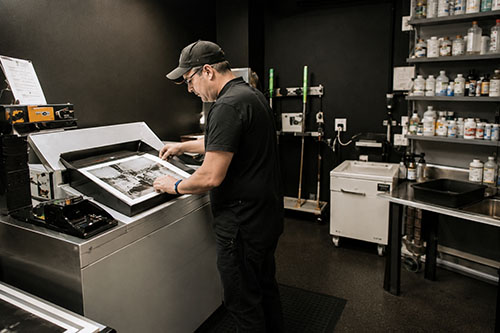
Kodak Professional Endura Paper
Kodak Endura papers provide an incredible amount of detail and smooth transition of tones. Designed for the professional photographer in mind, looking for a more traditional photo print style, Kodak Endura provides an extended print life and color gamut almost at the level of a high end fine art paper print.
Archival Matte Paper
Archival Matte Paper, also known as Moab Lasal Photo Matte, is our house stock fine art paper and is an economical favorite for fine art reproductions and photo prints. It features a smooth surface, heavy weight (230 g, 9.5-mil), neutral white, matte paper engineered for accurate color reproduction that provides high contrast and high-resolution output. This paper is acid-free, making it the perfect choice for both photography & fine art reproductions.
Giclee William Turner Paper by Hahnemühle
The William Turner by Hahnemühle is one of the most popular papers used in the Giclee printing industry. This is a 310g natural white mould made natural line paper with 100% rag content making it highly archival. It has a slight coarse texture which gives photos and artwork an elegant look. These fine art paper prints (also known as Giclee) are ordered by galleries, individual artists and photographers. The papers and inks are not only archival but use some of the most accurate print technology for full color prints.
- Giclee prints use very expensive archival pigmented inks.
- Highest level of color gamut available in printing (12 color printing).
- Exceptional black & white printing.
- Fade resistant, pigmented inks which provide a superior color range compared to other types of inks. Widely preferred in fine art and photography circles.
- We ONLY use professional grade fine art and photo paper that resist yellowing and aging.
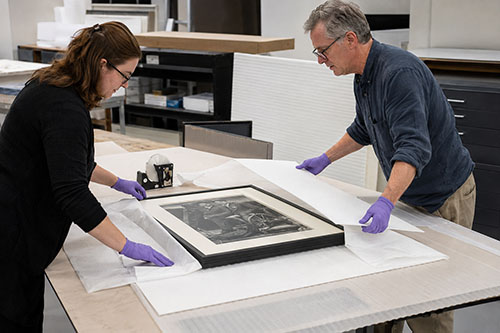
Framing
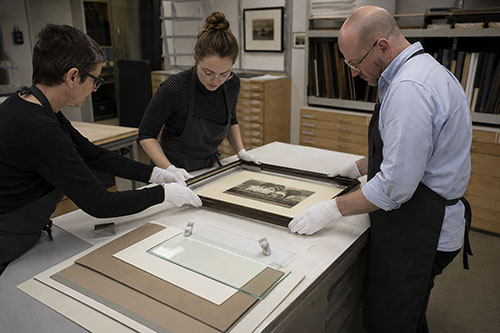
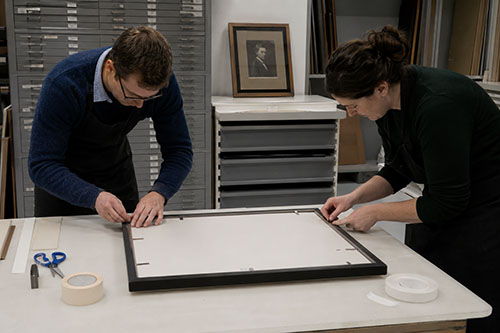
We offer wood and metal frames, custom cut & joined to order. Each framed print includes hanging hardware and foamcore backer.
Matting
We use conservation grade 100% virgin alpha-cellulose 2 ply mats with white core. Acid-free and lignin-free, these are both face resistant and meet all conservation quality standards set by the Fine Art Trade Guild. Mats are digitally cut for ultimate precision. The window will be 1/8″ smaller than the print dimensions.
Glazing (Acrylic Glass)
We offer custom cut panes of shatter-proof, acrylic glass, to protect your valuable artwork and prints.
Premium Clear
Framing grade clear acrylic is shatter resistant and lightweight.
Reflection Control
With its matte finish, Tru Vue Reflection Control® Acrylic scatters light to diminish unwanted glare.
Conservation Clear
Tru Vue Conservation Clear® Acrylic is a framing industry staple, blocking up to 99% of UV rays for ultimate protection.
Conservation Reflection Control
Tru Vue Conservation Reflection Control® Acrylic scatters and diffuses light to reduce unwanted glare. Blocks up to 99% of UV rays.
Related products
-

Fay Wray – King Kong (1933) Ann Darrow Torn Dress Skull Island Publicity Photo
$38.00 -
Peter Cushing – Frankenstein and the Monster from Hell (1974) Baron Frankenstein Top Hat Publicity Photo
$30.00 -
Yutte Stensgaard – Lust for a Vampire (1971) Mircalla White Nightgown Stone Steps Publicity Photo
$38.00 -
King Kong (1933) Ann Darrow Manhattan Empire State Building Promotional Artwork
$38.00