

Mary & Madeleine Collinson – Twins of Evil (1971) Matching Gold Dresses Publicity Photo
Limited Edition Photograph (learn more)
In stock
Mary Collinson and Madeleine Collinson appear together as Maria and Frieda Gellhorn in this striking color publicity photograph for Twins of Evil (1971), dressed in matching gold period gowns against a glowing red-orange studio background. Standing side by side with their hands gently clasped and their gazes turned in the same direction, the real-life identical twins create an image of near-perfect symmetry in which their extraordinary resemblance becomes the defining visual element. The result is an especially elegant and memorable piece of Hammer Films publicity built around duality, beauty and the unsettling sameness at the heart of the film.
The photograph’s appeal lies in its formal control and rich color design. The sisters are posed almost identically, each wearing a softly flowing gold dress with a fitted bodice, long sleeves and period styling that immediately evokes the film’s eighteenth-century setting. Their dark hair falls smoothly over their shoulders in nearly matching arrangements, while the luminous red-orange backdrop provides a bold contrast that separates the figures cleanly and gives the image a warm, theatrical glow. The balance between costume, pose and background makes the composition feel highly polished, with every element arranged to emphasize the twins as a matched pair.
This is a particularly effective publicity image because it reduces Maria and Frieda to their essential visual identity before the story divides them morally and emotionally. In the film, the twins’ physical sameness becomes one of its most powerful dramatic devices: Maria remains the gentler, more cautious sister, while Frieda is increasingly drawn toward the seductive influence of Count Karnstein and the corrupting world of vampirism. That contrast is not yet visible in the pose itself, which is precisely why the photograph is so successful. It presents the sisters in outward unity, allowing viewers familiar with the film to recognize how much dramatic conflict lies beneath such perfect visual harmony.
Directed by John Hough for Hammer Film Productions, Twins of Evil stars Mary Collinson as Maria Gellhorn and Madeleine Collinson—billed onscreen as Madelaine Collinson—as Frieda Gellhorn, opposite Peter Cushing as Gustav Weil and Damien Thomas as Count Karnstein. Released in 1971, the film completed Hammer’s celebrated Karnstein Trilogy, following The Vampire Lovers and Lust for a Vampire. Like the earlier entries, it draws loosely on Sheridan Le Fanu’s vampire tale “Carmilla,” while giving special prominence to the erotic and psychological tension created by the twin-sister relationship.
The publicity importance of the Collinson twins was central to the film from the outset. Their remarkable resemblance, screen presence and growing public profile made them ideal subjects for a campaign built around mirrored imagery, paired costumes and the tension between innocence and corruption. Photographs such as this one were therefore not incidental promotional material, but a key part of the film’s visual identity. The matching dresses, synchronized pose and saturated studio background all work together to present Mary and Madeleine Collinson as an inseparable yet potentially divided pair.
For collectors of Hammer horror photography, this image has exceptional value because it captures the twins in a highly stylized promotional setting rather than a dramatic scene. There is no action, no visible threat and no overt horror effect. Instead, the photograph relies entirely on the extraordinary visual power of the two sisters posed together in matching costume. The glowing color, poised expressions and elegant simplicity give the image a refined and unmistakable identity within the larger body of Twins of Evil publicity material.
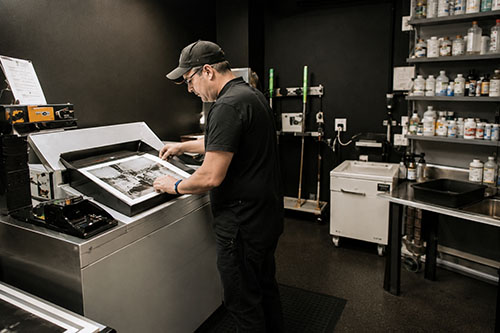
Carefully restored from historic photographic source material and professionally lab-developed, this museum-quality photograph is presented uncropped, preserving the complete image area contained in the source. Restoration recovers facial detail, gold-dress texture, warm studio color, hair detail and subtle tonal modeling while maintaining the natural color balance and authentic character of the historic photograph. The finished photograph contains no AI-generated image content.
Product Enquiry
Kodak Professional Endura Paper
Kodak Endura papers provide an incredible amount of detail and smooth transition of tones. Designed for the professional photographer in mind, looking for a more traditional photo print style, Kodak Endura provides an extended print life and color gamut almost at the level of a high end fine art paper print.
Archival Matte Paper
Archival Matte Paper, also known as Moab Lasal Photo Matte, is our house stock fine art paper and is an economical favorite for fine art reproductions and photo prints. It features a smooth surface, heavy weight (230 g, 9.5-mil), neutral white, matte paper engineered for accurate color reproduction that provides high contrast and high-resolution output. This paper is acid-free, making it the perfect choice for both photography & fine art reproductions.
Giclee William Turner Paper by Hahnemühle
The William Turner by Hahnemühle is one of the most popular papers used in the Giclee printing industry. This is a 310g natural white mould made natural line paper with 100% rag content making it highly archival. It has a slight coarse texture which gives photos and artwork an elegant look. These fine art paper prints (also known as Giclee) are ordered by galleries, individual artists and photographers. The papers and inks are not only archival but use some of the most accurate print technology for full color prints.
- Giclee prints use very expensive archival pigmented inks.
- Highest level of color gamut available in printing (12 color printing).
- Exceptional black & white printing.
- Fade resistant, pigmented inks which provide a superior color range compared to other types of inks. Widely preferred in fine art and photography circles.
- We ONLY use professional grade fine art and photo paper that resist yellowing and aging.
Framing
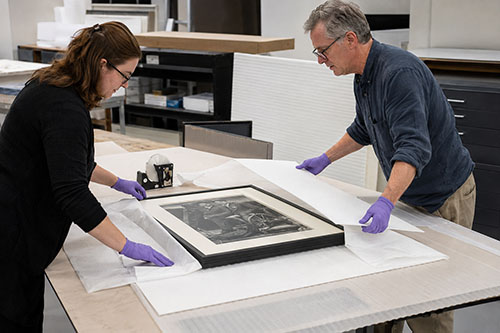
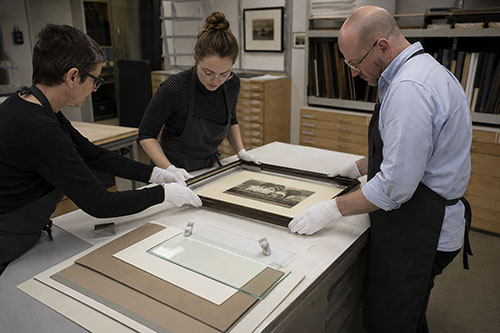
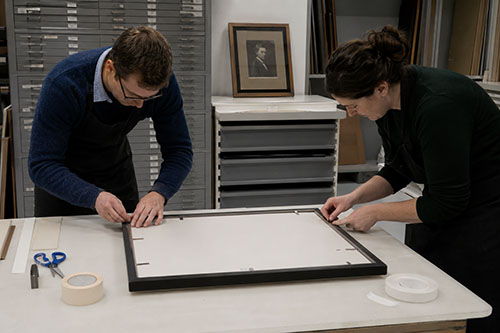
We offer wood and metal frames, custom cut & joined to order. Each framed print includes hanging hardware and foamcore backer.
Matting
We use conservation grade 100% virgin alpha-cellulose 2 ply mats with white core. Acid-free and lignin-free, these are both face resistant and meet all conservation quality standards set by the Fine Art Trade Guild. Mats are digitally cut for ultimate precision. The window will be 1/8″ smaller than the print dimensions.
Glazing (Acrylic Glass)
We offer custom cut panes of shatter-proof, acrylic glass, to protect your valuable artwork and prints.
Premium Clear
Framing grade clear acrylic is shatter resistant and lightweight.
Reflection Control
With its matte finish, Tru Vue Reflection Control® Acrylic scatters light to diminish unwanted glare.
Conservation Clear
Tru Vue Conservation Clear® Acrylic is a framing industry staple, blocking up to 99% of UV rays for ultimate protection.
Conservation Reflection Control
Tru Vue Conservation Reflection Control® Acrylic scatters and diffuses light to reduce unwanted glare. Blocks up to 99% of UV rays.
Related products
-

Peter Cushing, Ingrid Pitt & Dawn Addams – The Vampire Lovers (1970) Savoy Hotel Press Launch Photo
$30.00 -
Yutte Stensgaard – Lust for a Vampire (1971) Mircalla Carmilla Karnstein Yellow Bikini Garden Hammer Glamour Publicity Photo
$38.00 -
Roman Polanski – The Tenant (1976) Trelkovsky Jardin du Luxembourg Solitary Park Scene Photo
$25.00 -
Claudine Auger – Thunderball (1965) Domino Derval Black Dress Red Chair James Bond 007 Glamour Photo
$38.00


