

Roman Polanski – The Fearless Vampire Killers (1967) Alfred Nightshirt Camera Dolly Behind-the-Scenes Photo
Limited Edition Photograph (learn more)
In stock
Roman Polanski is captured directing The Fearless Vampire Killers (1967) from beside the motion-picture camera in this exceptional black-and-white behind-the-scenes production photograph. Still dressed as Alfred in his long white nightshirt, Polanski stands barefoot on the camera-dolly platform while leaning across the equipment toward the working crew. The camera, operators, track and surrounding technicians fill the composition, creating an unusually revealing image of Polanski moving directly between his responsibilities as leading performer and director.
The photograph is particularly compelling because Polanski remains completely embedded in the filmmaking environment. Rather than changing out of costume before supervising the next setup, he stands beside the camera as Alfred while crew members work immediately around him. The circular dolly base, camera mounting and tightly clustered technicians expose the physical mechanics behind the finished Gothic illusion and give the image a wonderfully immediate production-document quality.
Released in 1967, The Fearless Vampire Killers was directed by Roman Polanski, who also co-wrote the screenplay with Gérard Brach and appears as Professor Abronsius’s young assistant Alfred. Jack MacGowran plays Professor Abronsius, Sharon Tate appears as Sarah Shagal, Ferdy Mayne as Count von Krolock and Alfie Bass as Shagal. AFI confirms Polanski’s simultaneous credits as director, writer and performer.
That combination of roles makes photographs such as this especially significant. Polanski was not directing from a position removed from the action; he frequently had to perform within the scene and then immediately participate in decisions surrounding camera placement, framing and the next take. This image captures that unusual dual responsibility with exceptional clarity.
Douglas Slocombe served as director of photography, with Chic Waterson as camera operator. AFI records the production as photographed in Panavision and Metrocolor, giving the film the expansive widescreen compositions and richly colored Gothic environments that distinguish it from Polanski’s earlier black-and-white work.
Production began in February 1966, with extensive location work in the Italian Dolomites before filming moved to MGM Studios at Elstree in England. The schedule eventually expanded well beyond its original plan as Polanski pursued the elaborate snowbound landscapes, castle interiors and technically demanding sequences that gave the finished film its unusually lavish visual character.
Originally developed as The Dance of the Vampires, the film was ultimately released in the United States as The Fearless Vampire Killers, or Pardon Me, But Your Teeth Are in My Neck. Its mixture of vampire mythology, elaborate Gothic imagery, physical comedy and dark humor makes it both an affectionate parody of classic horror and a visually accomplished example of the genre in its own right.
As Alfred, Polanski plays the nervous young assistant to Professor Abronsius, joining his eccentric mentor in the search for vampires before becoming increasingly concerned with rescuing Sarah from Count von Krolock’s castle. The character’s awkwardness and vulnerability provide much of the film’s comedy, while his nightshirt costume seen here immediately recalls some of the production’s more frantic interior sequences.
The photograph therefore documents more than a generic director-at-work moment. Polanski is visibly still inside the fictional world as Alfred while simultaneously participating in the practical work required to create it. The juxtaposition of period costume and modern filmmaking machinery gives the photograph its distinctive visual appeal.
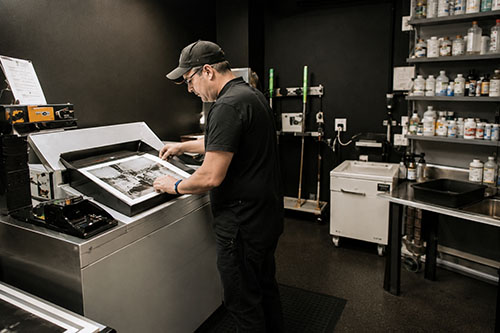
Carefully restored from historic photographic source material and professionally lab-developed, this museum-quality photograph is presented uncropped, preserving the complete image area contained in the source. Meticulous restoration recovers facial detail, nightshirt fabric, camera-equipment definition, dolly construction, crew detail, tonal range and photographic clarity while retaining the spontaneous documentary character of the original black-and-white production photograph.
For collectors of Roman Polanski, The Fearless Vampire Killers and motion-picture production history, this is an exceptional behind-the-scenes image—Polanski standing barefoot in Alfred’s nightshirt beside the camera on the dolly platform, preserving a rare and highly revealing moment in which his work as actor and director exists simultaneously within the same frame.
Product Enquiry
Kodak Professional Endura Paper
Kodak Endura papers provide an incredible amount of detail and smooth transition of tones. Designed for the professional photographer in mind, looking for a more traditional photo print style, Kodak Endura provides an extended print life and color gamut almost at the level of a high end fine art paper print.
Archival Matte Paper
Archival Matte Paper, also known as Moab Lasal Photo Matte, is our house stock fine art paper and is an economical favorite for fine art reproductions and photo prints. It features a smooth surface, heavy weight (230 g, 9.5-mil), neutral white, matte paper engineered for accurate color reproduction that provides high contrast and high-resolution output. This paper is acid-free, making it the perfect choice for both photography & fine art reproductions.
Giclee William Turner Paper by Hahnemühle
The William Turner by Hahnemühle is one of the most popular papers used in the Giclee printing industry. This is a 310g natural white mould made natural line paper with 100% rag content making it highly archival. It has a slight coarse texture which gives photos and artwork an elegant look. These fine art paper prints (also known as Giclee) are ordered by galleries, individual artists and photographers. The papers and inks are not only archival but use some of the most accurate print technology for full color prints.
- Giclee prints use very expensive archival pigmented inks.
- Highest level of color gamut available in printing (12 color printing).
- Exceptional black & white printing.
- Fade resistant, pigmented inks which provide a superior color range compared to other types of inks. Widely preferred in fine art and photography circles.
- We ONLY use professional grade fine art and photo paper that resist yellowing and aging.
Framing
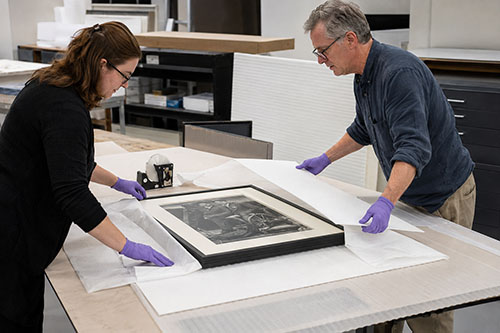
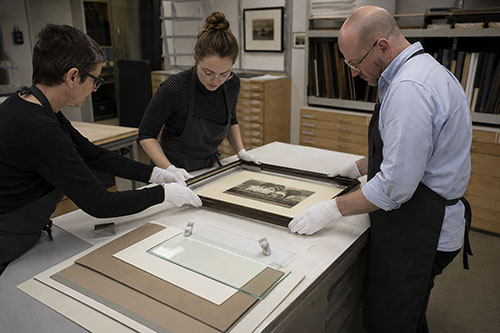
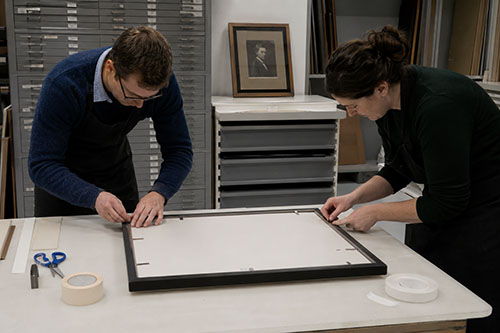
We offer wood and metal frames, custom cut & joined to order. Each framed print includes hanging hardware and foamcore backer.
Matting
We use conservation grade 100% virgin alpha-cellulose 2 ply mats with white core. Acid-free and lignin-free, these are both face resistant and meet all conservation quality standards set by the Fine Art Trade Guild. Mats are digitally cut for ultimate precision. The window will be 1/8″ smaller than the print dimensions.
Glazing (Acrylic Glass)
We offer custom cut panes of shatter-proof, acrylic glass, to protect your valuable artwork and prints.
Premium Clear
Framing grade clear acrylic is shatter resistant and lightweight.
Reflection Control
With its matte finish, Tru Vue Reflection Control® Acrylic scatters light to diminish unwanted glare.
Conservation Clear
Tru Vue Conservation Clear® Acrylic is a framing industry staple, blocking up to 99% of UV rays for ultimate protection.
Conservation Reflection Control
Tru Vue Conservation Reflection Control® Acrylic scatters and diffuses light to reduce unwanted glare. Blocks up to 99% of UV rays.
Related products
-

Sean Connery – Thunderball (1965) Scuba Equipment on Bahamas Beach Behind-the-Scenes James Bond 007 Photo
$38.00 -
Sean Connery & Luciana Paluzzi – Thunderball (1965) Fiona Volpe Bedroom Scene Pinewood Studios James Bond 007 Photo
$38.00 -
Martine Beswick – Thunderball (1965) Paula Caplan 007 Bond Girl Tiger-Stripe Swimsuit on Boat Bahamas Publicity Photo
$30.00 -
Clint Eastwood & Don Siegel – Dirty Harry (1971) Relaxed On-Set Conversation Behind-the-Scenes Photo
$38.00


