

Rosalba Neri – Lady Frankenstein (1971) Tania Frankenstein Gothic Stained-Glass Window Italian Horror Photo
Limited Edition Photograph (learn more)
In stock
Rosalba Neri appears as Tania Frankenstein in this sumptuous color photograph from Lady Frankenstein (1971), seated quietly on a window ledge beneath pointed Gothic arches and richly colored blue-and-turquoise glass. Dressed in a flowing white gown, Neri looks downward in contemplation while lace curtains frame her figure and a tall candle burns in the foreground. The gold upholstered furniture, carved architectural details and jewel-like window create remarkable depth, transforming the room into an opulent example of 1970s Italian Gothic horror design.
The photograph is particularly beautiful for its balance of color and atmosphere. Tania’s pale gown and red hair stand out against the deep blues of the window, while the single candle introduces a warm point of light across the elaborate furnishings. Rather than emphasizing laboratory horror or the Frankenstein Creature, the composition presents Tania within the aristocratic world surrounding her, giving the image an unusually romantic and contemplative quality.
Released in 1971, Lady Frankenstein stars Rosalba Neri as Tania Frankenstein, Joseph Cotten as Baron Frankenstein and Paul Muller as Dr. Charles Marshall, with Mickey Hargitay as Captain Harris. Neri was credited under the pseudonym Sara Bay. Mel Welles directed and produced the film, while Riccardo Pallottini served as cinematographer and Amedeo Mellone as production designer.
Tania returns home after completing her medical studies and reveals that she has long understood the true nature of her father’s experiments. Rather than recoiling from his attempts to create life, she wants to participate in the work herself. After Baron Frankenstein is killed by his first Creature, Tania continues the experiments with Dr. Marshall, placing Frankenstein’s daughter rather than the Baron at the center of the familiar story.
That reversal gives the film its distinctive identity. Tania is neither a conventional Gothic heroine nor simply a victim of her father’s experiments. She is intelligent, ambitious and willing to cross ethical boundaries in pursuit of her own scientific objectives, making Neri’s character one of the more unusual reinterpretations of the Frankenstein mythology produced during the European horror boom of the early 1970s.
The film is a very loose variation on Mary Shelley’s Frankenstein tradition, combining Gothic horror, mad science and exploitation-era sensibilities within an Italian production. Principal photography began in March 1971, with interiors filmed largely at De Paolis Studios in Rome and additional castle material photographed at Castello Piccolomini.
For Rosalba Neri, Tania Frankenstein became one of her most recognizable horror roles. Her commanding presence allows Tania to appear simultaneously aristocratic, sensual and intellectually assured, qualities especially evident in quieter photographs such as this one. The elegant surroundings reinforce the character’s privileged background while contrasting dramatically with the increasingly macabre experiments taking place elsewhere in the story.
This image therefore offers a particularly attractive counterpoint to the film’s laboratory and Creature photography. There are no surgical instruments, corpses or monsters visible—only Tania framed by candlelight, Gothic windows and richly appointed furnishings, preserving the romantic visual surface beneath which the film’s darker scientific obsession develops.
Carefully restored from historic photographic source material and professionally lab-developed, this museum-quality photograph is presented uncropped, preserving the complete image area contained in the source. Meticulous restoration recovers facial detail, gown texture, stained-glass color, lace curtains, furniture detail, candlelight, tonal balance and photographic clarity while retaining the lush atmosphere of the original color image.
For collectors of Rosalba Neri, Lady Frankenstein and Italian Gothic horror, this is an exceptionally elegant portrait of Tania Frankenstein—seated beneath the pointed stained-glass window in her flowing white gown, surrounded by candlelight and ornate furnishings that preserve the richly atmospheric visual world of this distinctive 1971 Frankenstein adaptation.
Product Enquiry
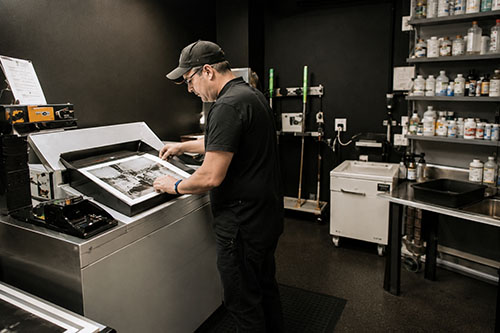
Kodak Professional Endura Paper
Kodak Endura papers provide an incredible amount of detail and smooth transition of tones. Designed for the professional photographer in mind, looking for a more traditional photo print style, Kodak Endura provides an extended print life and color gamut almost at the level of a high end fine art paper print.
Archival Matte Paper
Archival Matte Paper, also known as Moab Lasal Photo Matte, is our house stock fine art paper and is an economical favorite for fine art reproductions and photo prints. It features a smooth surface, heavy weight (230 g, 9.5-mil), neutral white, matte paper engineered for accurate color reproduction that provides high contrast and high-resolution output. This paper is acid-free, making it the perfect choice for both photography & fine art reproductions.
Giclee William Turner Paper by Hahnemühle
The William Turner by Hahnemühle is one of the most popular papers used in the Giclee printing industry. This is a 310g natural white mould made natural line paper with 100% rag content making it highly archival. It has a slight coarse texture which gives photos and artwork an elegant look. These fine art paper prints (also known as Giclee) are ordered by galleries, individual artists and photographers. The papers and inks are not only archival but use some of the most accurate print technology for full color prints.
- Giclee prints use very expensive archival pigmented inks.
- Highest level of color gamut available in printing (12 color printing).
- Exceptional black & white printing.
- Fade resistant, pigmented inks which provide a superior color range compared to other types of inks. Widely preferred in fine art and photography circles.
- We ONLY use professional grade fine art and photo paper that resist yellowing and aging.
Framing
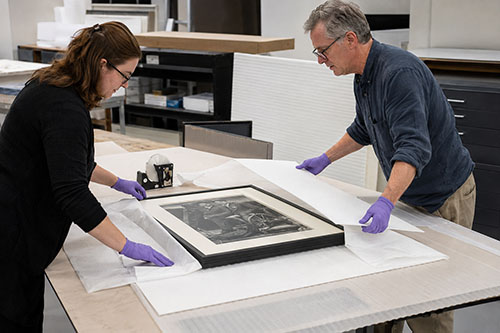
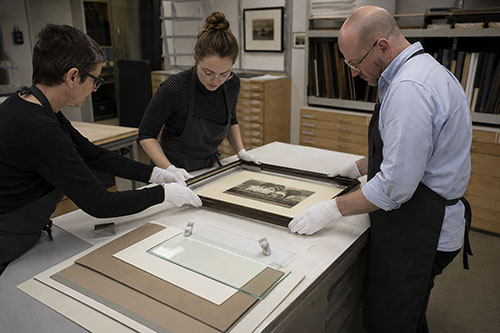
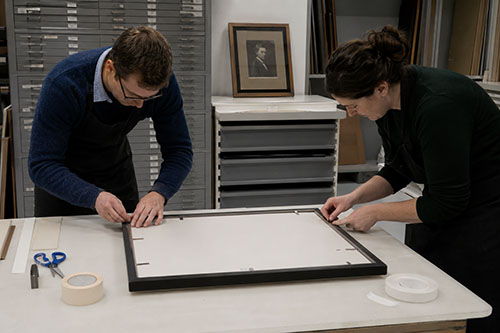
We offer wood and metal frames, custom cut & joined to order. Each framed print includes hanging hardware and foamcore backer.
Matting
We use conservation grade 100% virgin alpha-cellulose 2 ply mats with white core. Acid-free and lignin-free, these are both face resistant and meet all conservation quality standards set by the Fine Art Trade Guild. Mats are digitally cut for ultimate precision. The window will be 1/8″ smaller than the print dimensions.
Glazing (Acrylic Glass)
We offer custom cut panes of shatter-proof, acrylic glass, to protect your valuable artwork and prints.
Premium Clear
Framing grade clear acrylic is shatter resistant and lightweight.
Reflection Control
With its matte finish, Tru Vue Reflection Control® Acrylic scatters light to diminish unwanted glare.
Conservation Clear
Tru Vue Conservation Clear® Acrylic is a framing industry staple, blocking up to 99% of UV rays for ultimate protection.
Conservation Reflection Control
Tru Vue Conservation Reflection Control® Acrylic scatters and diffuses light to reduce unwanted glare. Blocks up to 99% of UV rays.
Related products
-

Ingrid Pitt – Countess Dracula (1971) Countess Elisabeth Nádasdy High-Collar Publicity Photo
$38.00 -
Barbara Steele – The Long Hair of Death (1964) Helen Karnstein Gothic Close-Up Photo
$38.00 -
Catherine Deneuve – Repulsion (1965) Carol Ledoux Uneasy Close-Up Photo
$30.00 -
King Kong (1933) Skull Island Log Bridge Chasm Attack Concept Artwork
$38.00