

The Howling (1981) Werewolf Venetian Blind Shadows Rob Bottin Creature Photo
Limited Edition Photograph (learn more)
In stock
The werewolf from The Howling (1981) emerges from darkness in this atmospheric color photograph, its snarling face, pointed ears and clawed hands revealed through narrow bands of light cast across the creature’s fur-covered body. Venetian-blind shadows slice diagonally through the composition, alternately exposing and concealing the monster as it looms within the dim interior. The combination of Rob Bottin’s practical creature work, deep blue-black shadow and sharply patterned illumination creates an exceptionally distinctive image from one of the defining werewolf films of modern horror cinema.
The photograph’s visual power comes from how selectively the creature is revealed. Rather than presenting the werewolf evenly illuminated, the light catches only portions of its head, muzzle, chest and arms. One eye glints from the darkness while the mouth opens to expose sharp teeth, and the long ears form a recognizable silhouette against the brighter horizontal bands behind it. The effect allows the monster to remain partly mysterious even though its physical form is clearly present.
The The Howling 1981 werewolf Rob Bottin imagery represented a major shift away from the smoother, more human-looking werewolves associated with many earlier films. Here the creature appears heavily furred, elongated and genuinely animalistic, with a pronounced muzzle, large ears, powerful forearms and clawed hands. Its proportions suggest something caught between human anatomy and a predatory beast rather than a performer merely wearing conventional wolf makeup.
Directed by Joe Dante, The Howling follows television reporter Karen White, played by Dee Wallace, after a traumatic encounter leads her to a secluded therapeutic retreat known as the Colony. What initially appears to be a place of recovery gradually reveals a community hiding a terrifying secret. The cast also includes Patrick Macnee, Dennis Dugan, Belinda Balaski, Elisabeth Brooks and Robert Picardo, whose character Eddie Quist becomes central to one of the film’s most celebrated transformation sequences.
The film’s lasting reputation is inseparable from Rob Bottin’s practical makeup and creature effects. Bottin and his team created werewolves that could be photographed as substantial physical presences rather than suggested only through editing or brief glimpses. Mechanical effects, prosthetic work, articulated creature elements and extensive makeup allowed the transformations and fully developed monsters to become central visual events within the film.
This photograph demonstrates another important strength of the effects: the creature remains convincing even when held relatively still and observed as a complete visual form. The layered fur, sculpted facial structure, teeth, ears and claws withstand close scrutiny, while the Venetian-blind lighting gives those textures additional depth. The alternating strips of illumination make the fur appear almost sculptural as different sections emerge from the surrounding darkness.
The interior lighting also separates this image from the more familiar transformation photographs associated with the film. Rather than emphasizing the mechanics of physical change, it presents the completed werewolf as a stalking supernatural presence. The darkness, partially concealed face and raised claws create a sense that the viewer has discovered the creature only moments before an attack.
For collectors of 1980s horror and practical creature-effects photography, the image has exceptional visual identity. The combination of Bottin’s werewolf, dramatic Venetian-blind shadows and rich low-light color photography immediately evokes the practical-effects era in which The Howling became a landmark of modern werewolf cinema.
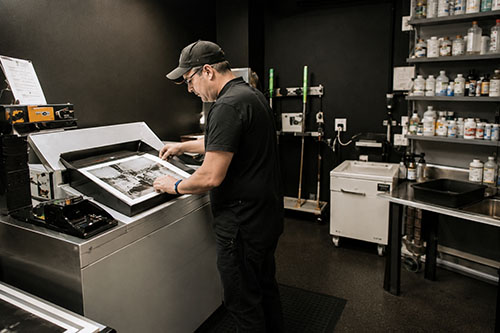
Carefully restored from historic photographic source material and professionally lab-developed, this museum-quality photograph is presented uncropped, preserving the complete image area contained in the source. Restoration recovers fur texture, facial detail, teeth and claw definition, blue-toned shadow detail and the distinctive Venetian-blind light pattern while maintaining the natural color balance and authentic character of the historic photograph. The finished photograph contains no AI-generated image content.
Product Enquiry
Kodak Professional Endura Paper
Kodak Endura papers provide an incredible amount of detail and smooth transition of tones. Designed for the professional photographer in mind, looking for a more traditional photo print style, Kodak Endura provides an extended print life and color gamut almost at the level of a high end fine art paper print.
Archival Matte Paper
Archival Matte Paper, also known as Moab Lasal Photo Matte, is our house stock fine art paper and is an economical favorite for fine art reproductions and photo prints. It features a smooth surface, heavy weight (230 g, 9.5-mil), neutral white, matte paper engineered for accurate color reproduction that provides high contrast and high-resolution output. This paper is acid-free, making it the perfect choice for both photography & fine art reproductions.
Giclee William Turner Paper by Hahnemühle
The William Turner by Hahnemühle is one of the most popular papers used in the Giclee printing industry. This is a 310g natural white mould made natural line paper with 100% rag content making it highly archival. It has a slight coarse texture which gives photos and artwork an elegant look. These fine art paper prints (also known as Giclee) are ordered by galleries, individual artists and photographers. The papers and inks are not only archival but use some of the most accurate print technology for full color prints.
- Giclee prints use very expensive archival pigmented inks.
- Highest level of color gamut available in printing (12 color printing).
- Exceptional black & white printing.
- Fade resistant, pigmented inks which provide a superior color range compared to other types of inks. Widely preferred in fine art and photography circles.
- We ONLY use professional grade fine art and photo paper that resist yellowing and aging.
Framing
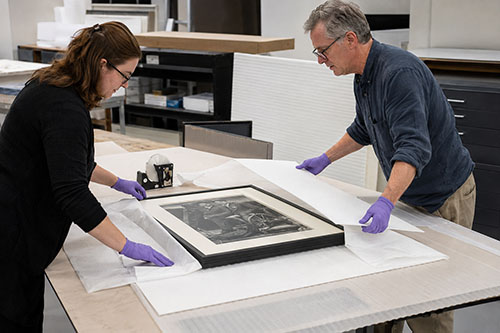
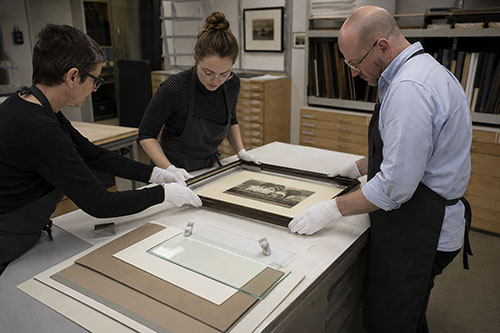
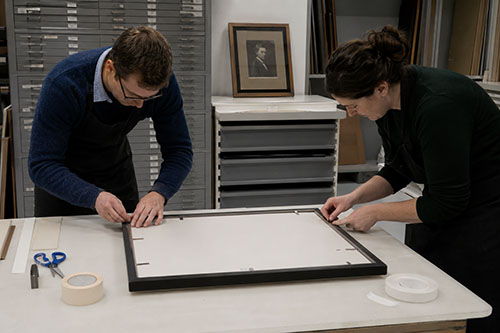
We offer wood and metal frames, custom cut & joined to order. Each framed print includes hanging hardware and foamcore backer.
Matting
We use conservation grade 100% virgin alpha-cellulose 2 ply mats with white core. Acid-free and lignin-free, these are both face resistant and meet all conservation quality standards set by the Fine Art Trade Guild. Mats are digitally cut for ultimate precision. The window will be 1/8″ smaller than the print dimensions.
Glazing (Acrylic Glass)
We offer custom cut panes of shatter-proof, acrylic glass, to protect your valuable artwork and prints.
Premium Clear
Framing grade clear acrylic is shatter resistant and lightweight.
Reflection Control
With its matte finish, Tru Vue Reflection Control® Acrylic scatters light to diminish unwanted glare.
Conservation Clear
Tru Vue Conservation Clear® Acrylic is a framing industry staple, blocking up to 99% of UV rays for ultimate protection.
Conservation Reflection Control
Tru Vue Conservation Reflection Control® Acrylic scatters and diffuses light to reduce unwanted glare. Blocks up to 99% of UV rays.
Related products
-

Ingrid Pitt – Countess Dracula (1971) Countess Elisabeth Nádasdy High-Collar Publicity Photo
$38.00 -
Christopher Lee – Horror of Dracula (1958) Bloodied Dracula Reaching Hands Photo
$30.00 -
Rosalba Neri – Lady Frankenstein (1971) Dr. Tania Crimson Gown Gothic Interior Photo
$30.00 -
Fay Wray – King Kong (1933) Ann Darrow Glamour Close-Up Publicity Photo
$38.00