

Ursula Andress – Dr. No (1962) Barefoot Jamaica Boat James Bond 007 Location Photo
Limited Edition Photograph (learn more)
In stock
URSULA ANDRESS is photographed on location in Jamaica during production of Dr. No (1962), standing barefoot atop a small open boat as she raises one hand above her eyes and looks across the water. Wearing a light floral sleeveless outfit, Andress occupies a commanding elevated position at the front of the composition while several Jamaican men sit casually aboard the boats behind her. The broad Caribbean water, distant mountainous coastline and expansive cloud-filled sky create an exceptional sense of place, making the tropical environment almost as important to the photograph as Andress herself. Her extended stance and searching gesture give the image natural movement, while the warm period color preserves the vivid atmosphere of the Jamaican location shoot.
The photograph is especially appealing because it does not isolate Andress in a conventional studio glamour setting. Instead, she is shown completely integrated into the real location environment that helped establish the visual identity of the first James Bond film. The boats, seated figures, open water and distant landscape provide documentary context without overwhelming the central subject. For collectors searching for Ursula Andress Dr. No 1962 photography, the image offers a distinctive combination of star presence, Jamaican scenery and genuine production-era atmosphere. It is best identified as location publicity photography associated with the Jamaican shoot, rather than assigning it to a particular completed scene without stronger original caption evidence. This photograph is also among the newly offered historic images now becoming available to collectors for the first time.
Directed by Terence Young and produced by Albert R. Broccoli and Harry Saltzman for Eon Productions, Dr. No introduced Sean Connery as James Bond 007 and Andress as Honey Ryder, alongside Joseph Wiseman as Dr. No, John Kitzmiller as Quarrel and Jack Lord as Felix Leiter. Production began in Jamaica in January 1962, with the island supplying many of the beaches, waterways and tropical landscapes used to create Bond’s investigation of the fictional Crab Key.
Andress arrived during the Jamaican production and soon became central to some of the film’s most recognizable imagery. Her celebrated entrance as Honey Ryder was photographed at Laughing Waters near Ocho Rios, St. Ann, where she emerges from the sea carrying shells in the famous white bikini. The official 007 archive documents the sequence as one of the defining images in Bond history. Surviving archives also preserve extensive location photography of Andress made in Jamaica during the production, demonstrating how strongly her image became connected with the island’s tropical setting.
That context gives this quieter boat image considerable collector interest. Rather than Honey Ryder confronting Bond or escaping Dr. No’s forces, Andress appears in a relaxed production environment, surrounded by the landscape and people of the Jamaican shoot. It captures the atmosphere behind the film without needing to recreate its narrative.
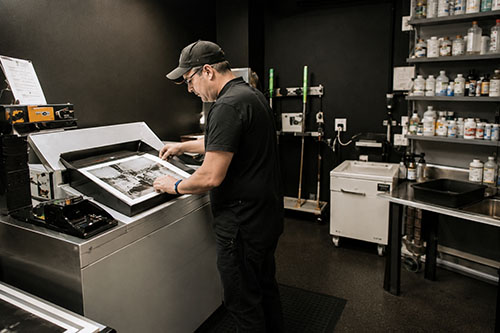
Carefully restored from historic photographic source material and professionally lab-developed, this museum-quality photograph is presented uncropped, preserving the complete image area contained in the source. Restoration recovers facial detail, floral fabric, boat surfaces, water texture and distant landscape while maintaining the natural color balance and authentic character of the historic photograph. The finished photograph contains no AI-generated image content.
Product Enquiry
Kodak Professional Endura Paper
Kodak Endura papers provide an incredible amount of detail and smooth transition of tones. Designed for the professional photographer in mind, looking for a more traditional photo print style, Kodak Endura provides an extended print life and color gamut almost at the level of a high end fine art paper print.
Archival Matte Paper
Archival Matte Paper, also known as Moab Lasal Photo Matte, is our house stock fine art paper and is an economical favorite for fine art reproductions and photo prints. It features a smooth surface, heavy weight (230 g, 9.5-mil), neutral white, matte paper engineered for accurate color reproduction that provides high contrast and high-resolution output. This paper is acid-free, making it the perfect choice for both photography & fine art reproductions.
Giclee William Turner Paper by Hahnemühle
The William Turner by Hahnemühle is one of the most popular papers used in the Giclee printing industry. This is a 310g natural white mould made natural line paper with 100% rag content making it highly archival. It has a slight coarse texture which gives photos and artwork an elegant look. These fine art paper prints (also known as Giclee) are ordered by galleries, individual artists and photographers. The papers and inks are not only archival but use some of the most accurate print technology for full color prints.
- Giclee prints use very expensive archival pigmented inks.
- Highest level of color gamut available in printing (12 color printing).
- Exceptional black & white printing.
- Fade resistant, pigmented inks which provide a superior color range compared to other types of inks. Widely preferred in fine art and photography circles.
- We ONLY use professional grade fine art and photo paper that resist yellowing and aging.
Framing
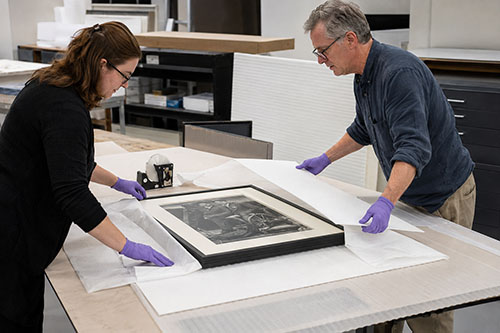
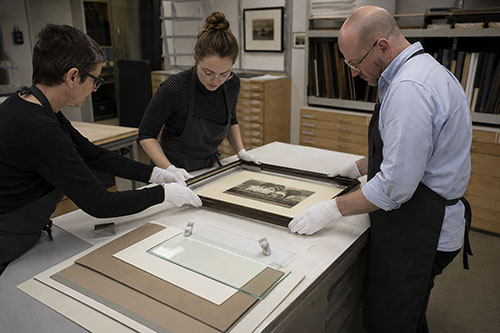
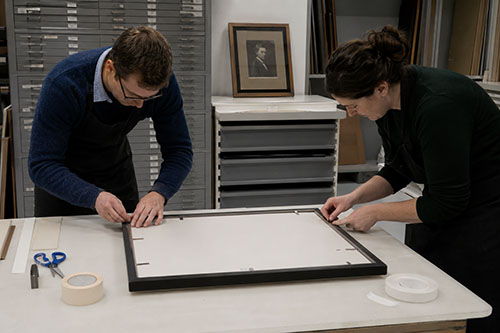
We offer wood and metal frames, custom cut & joined to order. Each framed print includes hanging hardware and foamcore backer.
Matting
We use conservation grade 100% virgin alpha-cellulose 2 ply mats with white core. Acid-free and lignin-free, these are both face resistant and meet all conservation quality standards set by the Fine Art Trade Guild. Mats are digitally cut for ultimate precision. The window will be 1/8″ smaller than the print dimensions.
Glazing (Acrylic Glass)
We offer custom cut panes of shatter-proof, acrylic glass, to protect your valuable artwork and prints.
Premium Clear
Framing grade clear acrylic is shatter resistant and lightweight.
Reflection Control
With its matte finish, Tru Vue Reflection Control® Acrylic scatters light to diminish unwanted glare.
Conservation Clear
Tru Vue Conservation Clear® Acrylic is a framing industry staple, blocking up to 99% of UV rays for ultimate protection.
Conservation Reflection Control
Tru Vue Conservation Reflection Control® Acrylic scatters and diffuses light to reduce unwanted glare. Blocks up to 99% of UV rays.
Related products
-

Ingrid Pitt – Countess Dracula (1971) Countess Elisabeth Nádasdy High-Collar Publicity Photo
$38.00 -
Fay Wray – King Kong (1933) Ann Darrow Torn Dress Skull Island Publicity Photo
$38.00 -
Boris Karloff – Frankenstein (1931) Monster Descending Stone Steps Film Still
$30.00 -
Fay Wray – King Kong (1933) Ann Darrow Glamour Close-Up Publicity Photo
$38.00