

Fay Wray – King Kong (1933) | Torn Dress, Screaming, Photoshoot BTS | RKO | Fine Art Photo
Limited Edition Photograph (learn more)
In stock
Iconic studio publicity photograph featuring Fay Wray (Ann Darrow) depicted wearing her torn dress and bra. Here's, she's laying down on the floor while showing off her great legs and cringing in fear.
King Kong is a 1933 American pre-Code adventure fantasy horror monster film directed and produced by Merian C. Cooper and Ernest B. Schoedsack. The screenplay by James Ashmore Creelman and Ruth Rose was developed from an idea conceived by Cooper and Edgar Wallace. It stars Fay Wray, Robert Armstrong and Bruce Cabot, and tells the story of a giant ape dubbed Kong who attempts to possess a beautiful young woman. It features stop-motion animation by Willis O'Brien and a music score by Max Steiner. It is the first entry in the King Kong franchise.
King Kong opened in New York City on March 2, 1933, to rave reviews, and has since been ranked by Rotten Tomatoes as the greatest horror film of all time and the fifty-sixth greatest film of all time. In 1991, it was deemed "culturally, historically and aesthetically significant" by the Library of Congress and selected for preservation in the National Film Registry. A sequel, titled Son of Kong, was fast-tracked and released the same year, with several more films made in the following decades, including two remakes that were made in 1976 and 2005 respectively, and a reboot in 2017.
Product Enquiry
Kodak Professional Endura Paper
Kodak Endura papers provide an incredible amount of detail and smooth transition of tones. Designed for the professional photographer in mind, looking for a more traditional photo print style, Kodak Endura provides an extended print life and color gamut almost at the level of a high end fine art paper print.
Archival Matte Paper
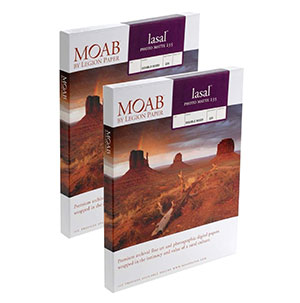
Archival Matte Paper, also known as Moab Lasal Photo Matte, is our house stock fine art paper and is an economical favorite for fine art reproductions and photo prints. It features a smooth surface, heavy weight (230 g, 9.5-mil), neutral white, matte paper engineered for accurate color reproduction that provides high contrast and high-resolution output. This paper is acid-free, making it the perfect choice for both photography & fine art reproductions.
Giclee William Turner Paper by Hahnemühle
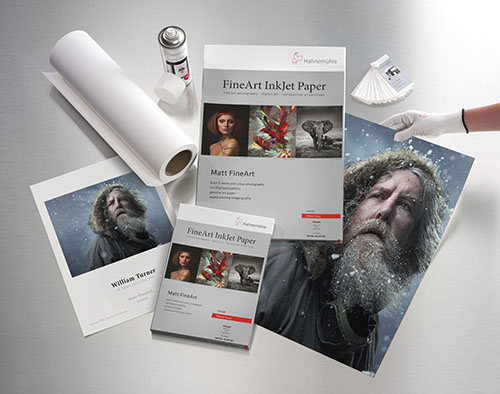
The William Turner by Hahnemühle is one of the most popular papers used in the Giclee printing industry. This is a 310g natural white mould made natural line paper with 100% rag content making it highly archival. It has a slight coarse texture which gives photos and artwork an elegant look. These fine art paper prints (also known as Giclee) are ordered by galleries, individual artists and photographers. The papers and inks are not only archival but use some of the most accurate print technology for full color prints.
- Giclee prints use very expensive archival pigmented inks.
- Highest level of color gamut available in printing (12 color printing).
- Exceptional black & white printing.
- Fade resistant, pigmented inks which provide a superior color range compared to other types of inks. Widely preferred in fine art and photography circles.
- We ONLY use professional grade fine art and photo paper that resist yellowing and aging.
Framing
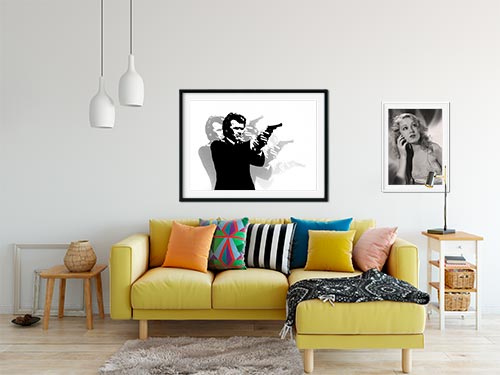
We offer wood and metal frames, custom cut & joined to order. Each framed print includes hanging hardware and foamcore backer.
Matting
We use conservation grade 100% virgin alpha-cellulose 2 ply mats with white core. Acid-free and lignin-free, these are both face resistant and meet all conservation quality standards set by the Fine Art Trade Guild. Mats are digitally cut for ultimate precision. The window will be 1/8″ smaller than the print dimensions.
Glazing (Acrylic Glass)
We offer custom cut panes of shatter-proof, acrylic glass, to protect your valuable artwork and prints.
Premium Clear
Framing grade clear acrylic is shatter resistant and lightweight.
Reflection Control
With its matte finish, Tru Vue Reflection Control® Acrylic scatters light to diminish unwanted glare.
Conservation Clear
Tru Vue Conservation Clear® Acrylic is a framing industry staple, blocking up to 99% of UV rays for ultimate protection.
Conservation Reflection Control
Tru Vue Conservation Reflection Control® Acrylic scatters and diffuses light to reduce unwanted glare. Blocks up to 99% of UV rays.
Related products
-

Peter Cushing – The Curse of Frankenstein (1957) | Baron Victor Frankenstein, Publicity Portrait | Hammer Horror | Fine Art Photo
$24.85 -
Yutte Stensgaard & Michael Johnson – Lust for a Vampire (1971) | Strange Love in Graveyard | Hammer Glamour | Fine Art Photo
$24.85 -
Peter Cushing – The Curse of Frankenstein (1957) | Baron Victor Frankenstein, Publicity Portrait | Hammer Horror | Fine Art Photo
$19.95 -
Fay Wray – King Kong (1933) | Promotional Art, New York City | Giant Monster | Fine Art Photo
$19.95