

Barbara Steele – Black Sunday (1960) Katia Vajda Reclining on Bed Gothic Interior Photo
Limited Edition Photograph (learn more)
In stock
Barbara Steele appears as Katia Vajda reclining on a bed within an ornate Gothic interior in this atmospheric black-and-white photograph from Black Sunday (1960). Dressed in a flowing dark costume, Steele rests against pale bedding while looking pensively beyond the frame, surrounded by carved furnishings, patterned fabrics, aged stonework and deep architectural shadow. The composition creates a striking study of Katia Vajda, emphasizing her vulnerability and melancholy within the oppressive ancestral world that surrounds the Vajda family.
The photograph’s visual strength comes from the contrast between Steele’s elegant reclining pose and the heavy Gothic environment. Her dark costume spreads across the bed in broad folds, sharply separating her figure from the pale sheets and pillows beneath her. One arm rests loosely across the bedding while the other extends toward the edge of the composition, giving the pose a natural, unforced quality. Behind her, richly patterned upholstery, carved wood, draped fabric and rough stone surfaces create layer upon layer of texture.
The image is particularly effective because the bed itself becomes an important part of the composition. Rather than presenting Steele formally posed upright, the photograph shows Katia reclining in a private interior, giving the scene a quieter and more intimate character. Her body stretches diagonally across the lower portion of the frame while the elaborate surroundings rise behind her, creating a visual tension between physical repose and the threatening atmosphere of the house.
Barbara Steele Katia Vajda Black Sunday 1960 imagery is especially compelling because Steele performs two dramatically opposed roles in the film. She appears both as Princess Asa Vajda, the condemned witch whose return drives the supernatural horror, and as Katia Vajda, Asa’s innocent descendant. Although the two women share the same face, Steele differentiates them through expression, posture and physical presence. Asa is commanding, predatory and openly malevolent, while Katia is presented with a quieter, more fragile emotional quality.
Directed by Mario Bava, Black Sunday was released in Italy as La maschera del demonio and became one of the defining works of Italian Gothic horror. Bava’s extraordinary control of monochrome lighting, architectural space and shadow gives the film its dreamlike visual character. Stone crypts, ruined corridors, candlelit rooms and heavily decorated interiors frequently seem to overwhelm the people occupying them, and this photograph captures that aesthetic beautifully.
The surrounding room is therefore more than decorative background. The massive stone surface at left, elaborate patterned chair or headboard behind Steele, candle and dense textile detail all contribute to the feeling that Katia is enclosed within an ancient world shaped by family history and supernatural threat. Even in a moment of apparent rest, the setting prevents the image from ever feeling completely peaceful.
The photograph also provides an unusually elegant alternative to the more famous images of Steele associated with the film’s horrific opening, the Mask of Satan and Asa’s resurrection. Here there are no visible wounds, supernatural effects or overt violence. Instead, the power of the image comes from Steele’s expressive face, reclining posture, dark costume and the richness of Bava’s Gothic environment.
For collectors of Barbara Steele and classic Italian horror photography, this photograph has particular appeal because it captures the romantic and melancholic side of Black Sunday. The bed, carved furnishings, patterned fabrics and shadowed architecture surround Steele with unmistakable Gothic atmosphere while allowing Katia Vajda’s quiet presence to remain the emotional center of the composition.
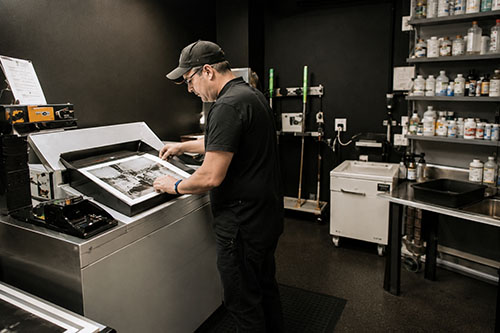
Carefully restored from historic photographic source material and professionally lab-developed, this museum-quality photograph is presented uncropped, preserving the complete image area contained in the source. Restoration recovers facial detail, dark costume texture, bedding folds, carved furnishing detail, stone texture and subtle architectural shadow while maintaining the natural tonal gradation and character of the historic black-and-white photograph. The finished photograph contains no AI-generated image content.
Product Enquiry
Kodak Professional Endura Paper
Kodak Endura papers provide an incredible amount of detail and smooth transition of tones. Designed for the professional photographer in mind, looking for a more traditional photo print style, Kodak Endura provides an extended print life and color gamut almost at the level of a high end fine art paper print.
Archival Matte Paper
Archival Matte Paper, also known as Moab Lasal Photo Matte, is our house stock fine art paper and is an economical favorite for fine art reproductions and photo prints. It features a smooth surface, heavy weight (230 g, 9.5-mil), neutral white, matte paper engineered for accurate color reproduction that provides high contrast and high-resolution output. This paper is acid-free, making it the perfect choice for both photography & fine art reproductions.
Giclee William Turner Paper by Hahnemühle
The William Turner by Hahnemühle is one of the most popular papers used in the Giclee printing industry. This is a 310g natural white mould made natural line paper with 100% rag content making it highly archival. It has a slight coarse texture which gives photos and artwork an elegant look. These fine art paper prints (also known as Giclee) are ordered by galleries, individual artists and photographers. The papers and inks are not only archival but use some of the most accurate print technology for full color prints.
- Giclee prints use very expensive archival pigmented inks.
- Highest level of color gamut available in printing (12 color printing).
- Exceptional black & white printing.
- Fade resistant, pigmented inks which provide a superior color range compared to other types of inks. Widely preferred in fine art and photography circles.
- We ONLY use professional grade fine art and photo paper that resist yellowing and aging.
Framing
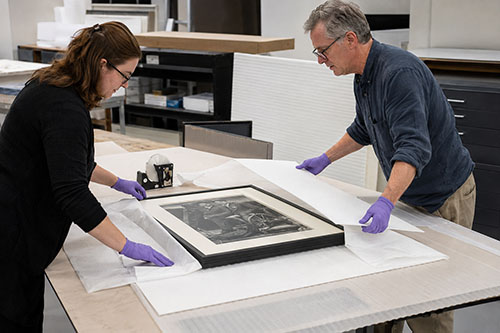
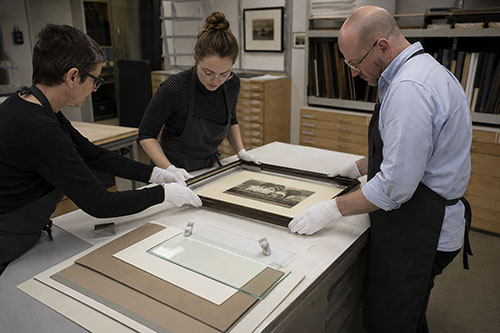
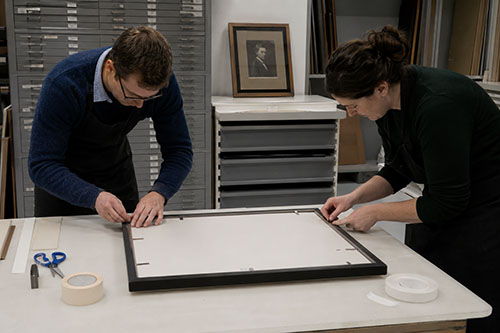
We offer wood and metal frames, custom cut & joined to order. Each framed print includes hanging hardware and foamcore backer.
Matting
We use conservation grade 100% virgin alpha-cellulose 2 ply mats with white core. Acid-free and lignin-free, these are both face resistant and meet all conservation quality standards set by the Fine Art Trade Guild. Mats are digitally cut for ultimate precision. The window will be 1/8″ smaller than the print dimensions.
Glazing (Acrylic Glass)
We offer custom cut panes of shatter-proof, acrylic glass, to protect your valuable artwork and prints.
Premium Clear
Framing grade clear acrylic is shatter resistant and lightweight.
Reflection Control
With its matte finish, Tru Vue Reflection Control® Acrylic scatters light to diminish unwanted glare.
Conservation Clear
Tru Vue Conservation Clear® Acrylic is a framing industry staple, blocking up to 99% of UV rays for ultimate protection.
Conservation Reflection Control
Tru Vue Conservation Reflection Control® Acrylic scatters and diffuses light to reduce unwanted glare. Blocks up to 99% of UV rays.
Related products
-

KLAUS KINSKI – NOSFERATU THE VAMPYRE (1979) Count Dracula Coffin Scene Gothic Horror Photo
$38.00 -
Katya Wyeth & Damien Thomas – Twins of Evil (1971) Mircalla Vampire Bite Photo
$30.00 -
SYLVIA KRISTEL – 1970s Topless Profile with Layered Necklace Black-and-White Glamour Photo
$30.00 -
Yutte Stensgaard, Michael Johnson & Jimmy Sangster – Lust for a Vampire (1971) Mircalla & Richard Kiss Scene Behind-the-Scenes Photo
$38.00


