

Barbara Steele – Black Sunday (1960) Princess Asa Vajda Mask of Satan Wounds Close-Up Photo
Limited Edition Photograph (learn more)
In stock
BARBARA STEELE appears as Princess Asa Vajda in this haunting black-and-white close-up from BLACK SUNDAY (1960), her face marked by the terrible wounds associated with the infamous Mask of Satan. Steele’s enormous, staring eyes, dark flowing hair and damaged features dominate the stark composition, while the tight framing strips away distraction and turns the image into a direct confrontation with one of horror cinema’s most unforgettable faces. The result is an exceptionally concentrated study of Asa’s mixture of suffering, menace and supernatural endurance.
The photograph’s power lies in its simplicity. Steele fills the frame almost completely, allowing every detail of expression to register with unnerving force. The puncture wounds across her face immediately recall the brutality of Asa’s execution, while her fixed gaze gives the impression not of defeat, but of a malign presence returning from beyond death. The lack of elaborate background detail makes the image feel even more severe, pushing all attention onto Steele’s extraordinary features and Bava’s stark Gothic atmosphere.
This is an especially important Barbara Steele Black Sunday 1960 image because it centers on Princess Asa Vajda, the role that helped define Steele’s lasting place in horror history. In BLACK SUNDAY, she appears both as the condemned witch Asa Vajda and as her innocent descendant Katia Vajda, with the resemblance between the two women becoming central to the film’s supernatural drama. Asa is the darker and more terrifying figure: a woman executed for witchcraft who returns centuries later to seek revenge and renewed life.
Directed by MARIO BAVA, BLACK SUNDAY was released in Italy as LA MASCHERA DEL DEMONIO and also became known internationally as THE MASK OF SATAN. The film opens in the seventeenth century with Asa condemned as a witch and vampire, then subjected to the horrifying punishment that gives the film one of its most famous visual motifs: the spiked iron Mask of Satan hammered onto her face before burial. That act of cruelty becomes the foundation of the entire story and makes images emphasizing Asa’s facial wounds especially powerful within the film’s iconography.
What makes this photograph so memorable is the way it combines horror and beauty in a single image. Steele’s face is visibly damaged, yet her bone structure, enormous eyes and controlled expression remain strikingly elegant. That contrast helped make Asa a uniquely enduring screen villain—she is not simply monstrous, but mesmerizing. The image captures precisely the quality that made Steele such a singular presence in Gothic horror cinema.
Bava’s mastery of monochrome cinematography also plays a major role here. The black-and-white palette heightens the contrast between Steele’s pale skin, dark hair and the shadowed background, while the directional lighting sharpens every wound and contour. The visual style transforms a close-up into something almost sculptural, emphasizing the baroque severity that made BLACK SUNDAY a landmark of Italian Gothic horror.
For collectors of Barbara Steele and classic horror photography, this still has special appeal because it isolates one of the film’s defining visual ideas: Asa’s wounded face after the Mask of Satan. Rather than presenting a wider Gothic tableau, it reduces the horror to expression, injury and presence. That concentration gives the image extraordinary force, preserving not only a memorable moment from the film, but the essence of Asa herself.
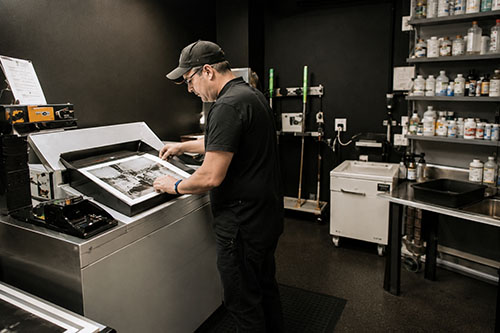
Carefully restored from historic photographic source material and professionally lab-developed, this museum-quality photograph is presented uncropped, preserving the complete image area contained in the source. Restoration recovers facial detail, wound definition, hair texture, eye clarity and subtle grayscale separation while maintaining the natural tonal range and authentic character of the historic black-and-white photograph. The finished photograph contains no AI-generated image content.
Product Enquiry
Kodak Professional Endura Paper
Kodak Endura papers provide an incredible amount of detail and smooth transition of tones. Designed for the professional photographer in mind, looking for a more traditional photo print style, Kodak Endura provides an extended print life and color gamut almost at the level of a high end fine art paper print.
Archival Matte Paper
Archival Matte Paper, also known as Moab Lasal Photo Matte, is our house stock fine art paper and is an economical favorite for fine art reproductions and photo prints. It features a smooth surface, heavy weight (230 g, 9.5-mil), neutral white, matte paper engineered for accurate color reproduction that provides high contrast and high-resolution output. This paper is acid-free, making it the perfect choice for both photography & fine art reproductions.
Giclee William Turner Paper by Hahnemühle
The William Turner by Hahnemühle is one of the most popular papers used in the Giclee printing industry. This is a 310g natural white mould made natural line paper with 100% rag content making it highly archival. It has a slight coarse texture which gives photos and artwork an elegant look. These fine art paper prints (also known as Giclee) are ordered by galleries, individual artists and photographers. The papers and inks are not only archival but use some of the most accurate print technology for full color prints.
- Giclee prints use very expensive archival pigmented inks.
- Highest level of color gamut available in printing (12 color printing).
- Exceptional black & white printing.
- Fade resistant, pigmented inks which provide a superior color range compared to other types of inks. Widely preferred in fine art and photography circles.
- We ONLY use professional grade fine art and photo paper that resist yellowing and aging.
Framing
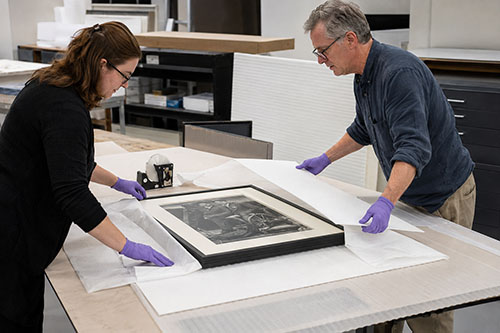
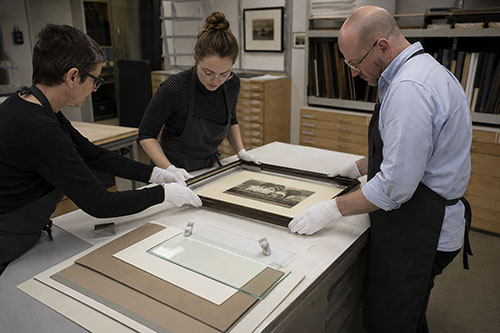
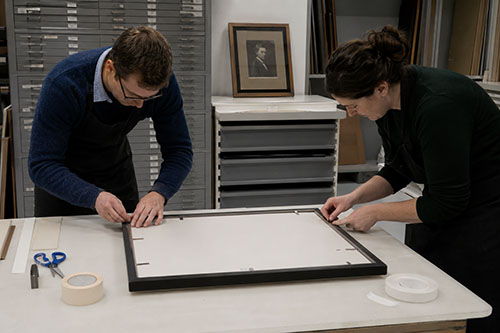
We offer wood and metal frames, custom cut & joined to order. Each framed print includes hanging hardware and foamcore backer.
Matting
We use conservation grade 100% virgin alpha-cellulose 2 ply mats with white core. Acid-free and lignin-free, these are both face resistant and meet all conservation quality standards set by the Fine Art Trade Guild. Mats are digitally cut for ultimate precision. The window will be 1/8″ smaller than the print dimensions.
Glazing (Acrylic Glass)
We offer custom cut panes of shatter-proof, acrylic glass, to protect your valuable artwork and prints.
Premium Clear
Framing grade clear acrylic is shatter resistant and lightweight.
Reflection Control
With its matte finish, Tru Vue Reflection Control® Acrylic scatters light to diminish unwanted glare.
Conservation Clear
Tru Vue Conservation Clear® Acrylic is a framing industry staple, blocking up to 99% of UV rays for ultimate protection.
Conservation Reflection Control
Tru Vue Conservation Reflection Control® Acrylic scatters and diffuses light to reduce unwanted glare. Blocks up to 99% of UV rays.
Related products
-

Barbara Steele – An Angel for Satan (1966) Horseback Italian Gothic Horror Photo
$38.00 -
Barbara Steele (1970) – Italian Gothic Horror Queen Intense Eyes Black & White Glamour Portrait
$38.00 -
King Kong (1933) Ann Darrow Manhattan Empire State Building Promotional Artwork
$38.00 -
Barbara Steele & Georges Rivière – Castle of Blood (1964) Elisabeth Blackwood & Alan Foster Gothic Bedroom Scene Photo
$25.00


