

Boris Karloff – Frankenstein (1931) Monster Reaching for Sunlight Universal Horror Photo
Limited Edition Photograph (learn more)
In stock
Boris Karloff as Frankenstein’s Monster raises his face and enormous hands toward the light in this extraordinary black-and-white image associated with Frankenstein (1931). Photographed dramatically from below, Karloff’s dark costume nearly disappears into the surrounding shadow while the illumination isolates his unmistakable face, upturned expression and outstretched hands. The composition captures one of the most moving qualities of Karloff’s performance: beneath the Monster’s frightening appearance is a newly created being responding to the world with curiosity, confusion and almost childlike wonder.
The image recalls the celebrated sequence in which Henry Frankenstein allows his newly animated creation to experience daylight. As an overhead opening admits sunlight into the dark room, the Monster slowly rises and reaches upward, attempting to follow the light with his hands. When the opening is closed and darkness returns, his reaction transforms a simple visual gesture into an unexpectedly poignant moment of deprivation and longing.
Released in 1931, Frankenstein was directed by James Whale for Universal Pictures and produced by Carl Laemmle Jr. Boris Karloff stars as the Monster alongside Colin Clive as Henry Frankenstein, Mae Clarke as Elizabeth, Edward Van Sloan as Dr. Waldman and Dwight Frye as Fritz. Arthur Edeson served as cinematographer, Charles D. Hall as art director and Jack Pierce created the Monster’s makeup.
Karloff’s performance became extraordinary precisely because so much of it is conveyed without dialogue. Movement, posture, facial expression and carefully controlled gestures give the Monster an emotional life that extends far beyond his physical appearance. AFI has emphasized the humanity and terror Karloff brought to the character, while BFI identifies his performance beneath Pierce’s makeup as central to the film’s lasting power.
Jack Pierce’s Monster design became one of the most recognizable images in motion-picture history. The flattened head, heavy brow, scarred forehead and neck electrodes created a visual identity so influential that it became synonymous with Frankenstein’s Monster throughout popular culture. Yet Karloff’s expressive performance prevented that design from becoming merely grotesque; photographs such as this reveal how effectively the makeup could communicate vulnerability as well as menace.
James Whale’s direction also gave the film a visual sophistication that distinguished it from many early sound productions. Strong shadows, dramatic angles and expressionistic environments turn Henry Frankenstein’s laboratory and surrounding world into extensions of the story’s emotional tension. Arthur Edeson’s cinematography and Charles D. Hall’s production design were essential to that atmosphere.
Frankenstein became one of the foundational films of the Universal Horror cycle, following the success of Dracula earlier in 1931 and paving the way for The Mummy, The Invisible Man, Bride of Frankenstein and generations of subsequent monster films. BFI calls Whale’s Frankenstein an indispensable starting point for understanding Universal’s classic horror tradition.
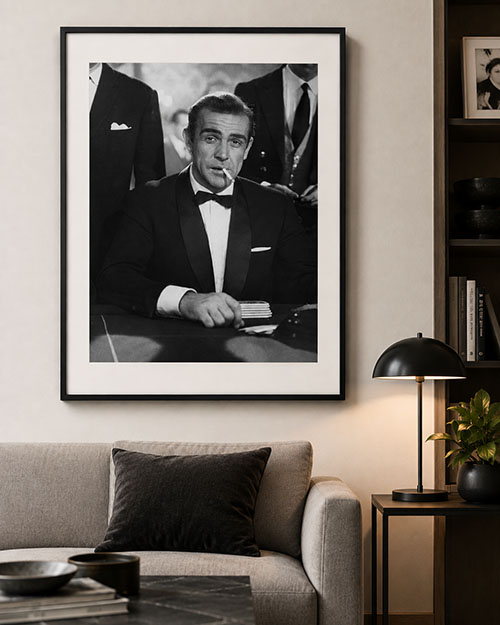
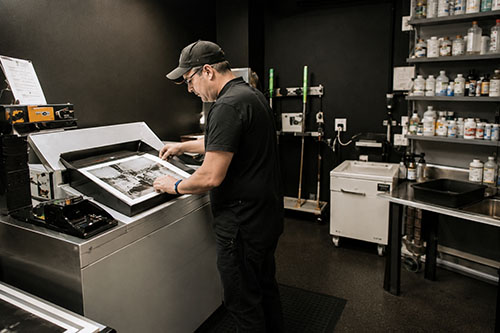
Carefully restored from historic photographic source material and professionally lab-developed, this museum-quality photograph is presented uncropped, preserving the complete image area contained in the source. Meticulous restoration recovers Karloff’s facial makeup, hand detail, costume texture, tonal gradation, shadow separation and photographic clarity while retaining the dramatic character of the original black-and-white image.
For collectors of Boris Karloff, Frankenstein and Universal Horror, this is an exceptional Monster portrait—Karloff reaching upward toward the sunlight, preserving the rare combination of terror, innocence and humanity that made his 1931 performance one of the defining achievements of classic horror cinema.
Product Enquiry
Kodak Professional Endura Paper
Kodak Endura papers provide an incredible amount of detail and smooth transition of tones. Designed for the professional photographer in mind, looking for a more traditional photo print style, Kodak Endura provides an extended print life and color gamut almost at the level of a high end fine art paper print.
Archival Matte Paper
Archival Matte Paper, also known as Moab Lasal Photo Matte, is our house stock fine art paper and is an economical favorite for fine art reproductions and photo prints. It features a smooth surface, heavy weight (230 g, 9.5-mil), neutral white, matte paper engineered for accurate color reproduction that provides high contrast and high-resolution output. This paper is acid-free, making it the perfect choice for both photography & fine art reproductions.
Giclee William Turner Paper by Hahnemühle
The William Turner by Hahnemühle is one of the most popular papers used in the Giclee printing industry. This is a 310g natural white mould made natural line paper with 100% rag content making it highly archival. It has a slight coarse texture which gives photos and artwork an elegant look. These fine art paper prints (also known as Giclee) are ordered by galleries, individual artists and photographers. The papers and inks are not only archival but use some of the most accurate print technology for full color prints.
- Giclee prints use very expensive archival pigmented inks.
- Highest level of color gamut available in printing (12 color printing).
- Exceptional black & white printing.
- Fade resistant, pigmented inks which provide a superior color range compared to other types of inks. Widely preferred in fine art and photography circles.
- We ONLY use professional grade fine art and photo paper that resist yellowing and aging.
Framing
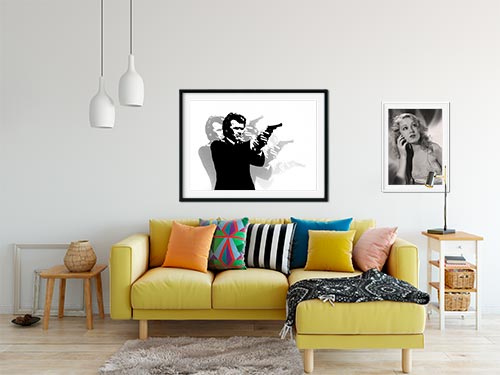
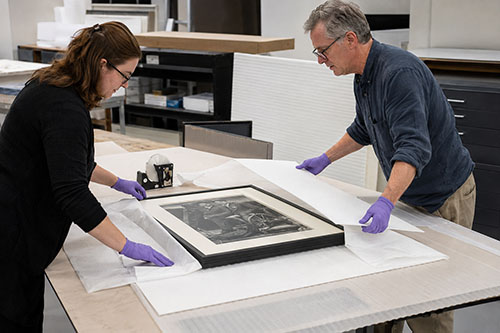
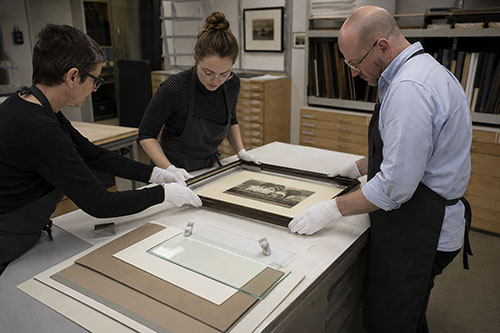
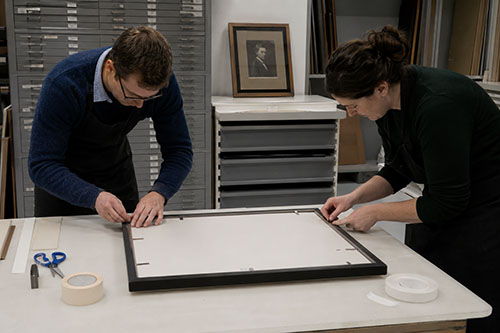
We offer wood and metal frames, custom cut & joined to order. Each framed print includes hanging hardware and foamcore backer.
Matting
We use conservation grade 100% virgin alpha-cellulose 2 ply mats with white core. Acid-free and lignin-free, these are both face resistant and meet all conservation quality standards set by the Fine Art Trade Guild. Mats are digitally cut for ultimate precision. The window will be 1/8″ smaller than the print dimensions.
Glazing (Acrylic Glass)
We offer custom cut panes of shatter-proof, acrylic glass, to protect your valuable artwork and prints.
Premium Clear
Framing grade clear acrylic is shatter resistant and lightweight.
Reflection Control
With its matte finish, Tru Vue Reflection Control® Acrylic scatters light to diminish unwanted glare.
Conservation Clear
Tru Vue Conservation Clear® Acrylic is a framing industry staple, blocking up to 99% of UV rays for ultimate protection.
Conservation Reflection Control
Tru Vue Conservation Reflection Control® Acrylic scatters and diffuses light to reduce unwanted glare. Blocks up to 99% of UV rays.
Related products
-

CHRISTOPHER LEE – HORROR OF DRACULA (1958) Count Dracula with Stone Eagle Publicity Photo
$30.00 -
Susan Denberg – Frankenstein Created Woman (1967) Christina Hammer Glamour Publicity Portrait
$30.00 -
BARBARA STEELE – THE HORRIBLE DR. HICHCOCK (1962) Cynthia Hichcock Coffin Confinement Scene Photo
$30.00 -
Sean Connery & Ursula Andress – Dr. No (1962) Between Takes in Jamaica James Bond 007 BTS Photo
$30.00