

Ingrid Pitt, Peter Cushing & Dawn Addams – The Vampire Lovers (1970) Savoy Hotel Seated Cast Press Photo
Limited Edition Photograph (learn more)
In stock
Ingrid Pitt, Peter Cushing and Dawn Addams sit closely together at London’s Savoy Hotel in this wonderfully relaxed black-and-white press photograph made during the January 13, 1970 launch associated with The Vampire Lovers. Pitt and Addams flank a broadly smiling Cushing as all three face the camera directly, creating a compact group composition that places the performers themselves—rather than their Gothic screen characters—at the center of the image. Taken only days before principal photography began, the photograph preserves three important cast members at the very beginning of one of Hammer Films’ defining early-1970s vampire productions.
The appeal of the photograph comes from its extraordinary warmth and informality. Ingrid Pitt sits at left, her long hair framing her face as she leans slightly toward Cushing in a dark textured outfit over a light blouse. Peter Cushing occupies the center, smiling openly toward the photographer in a dark three-piece suit, waistcoat and tie. At right, Dawn Addams wears a dark fur-trimmed outfit and hat, her light gloves resting across her lap as she smiles directly toward the camera. Cushing’s arms extend comfortably behind both actresses, reinforcing the relaxed atmosphere of the press gathering.
The straightforward seated pose distinguishes this photograph from more formal publicity arrangements made at the same event. Rather than turning toward one another or appearing caught in conversation, all three performers engage directly with the camera. Their close placement produces an almost family-like group portrait, while the simple interior background keeps attention concentrated on their expressions, clothing and easy camaraderie.
The Ingrid Pitt Peter Cushing Dawn Addams Savoy Hotel photographs have particular production-history significance because the Savoy event took place on Tuesday, January 13, 1970. Contemporary production research records that Hammer’s co-production arrangement with American International Pictures was formally launched there, with members of the company and cast appearing before the press. Principal photography on The Vampire Lovers began in London on January 19, 1970, only six days later.
Directed by Roy Ward Baker, the finished film casts Ingrid Pitt as the Karnstein vampire who appears under the identities Mircalla, Marcilla and Carmilla, Peter Cushing as General von Spielsdorf, and Dawn Addams as the Countess whose arrival helps introduce Marcilla into Spielsdorf’s household. Their cheerful off-camera appearance here creates a striking contrast with the deception, bereavement and supernatural violence that connect their characters in the film.
Adapted from Sheridan Le Fanu’s celebrated vampire story “Carmilla,” The Vampire Lovers became the opening film in Hammer’s Karnstein Trilogy, later followed by Lust for a Vampire and Twins of Evil. Pitt’s performance established the central Karnstein vampire identity for the cycle and became one of her defining screen roles.
For collectors of Hammer horror and Peter Cushing photography, this photograph has unusual documentary value because it records the production before filming had begun. There are no costumes, Gothic sets, fangs or supernatural effects—only three performers gathered for the public introduction of the project. The direct gazes, relaxed seating and Cushing’s unmistakable smile turn the image into a particularly personable record of Hammer history immediately before the cameras rolled.
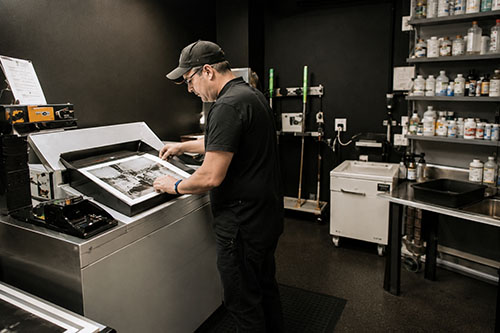
Carefully restored from historic photographic source material and professionally lab-developed, this museum-quality photograph is presented uncropped, preserving the complete image area contained in the source. Restoration recovers facial detail, clothing texture, fur and glove detail, suit fabric and subtle background tonal separation while maintaining the natural tonal gradation and character of the historic black-and-white photograph. The finished photograph contains no AI-generated image content.
Product Enquiry
Kodak Professional Endura Paper
Kodak Endura papers provide an incredible amount of detail and smooth transition of tones. Designed for the professional photographer in mind, looking for a more traditional photo print style, Kodak Endura provides an extended print life and color gamut almost at the level of a high end fine art paper print.
Archival Matte Paper
Archival Matte Paper, also known as Moab Lasal Photo Matte, is our house stock fine art paper and is an economical favorite for fine art reproductions and photo prints. It features a smooth surface, heavy weight (230 g, 9.5-mil), neutral white, matte paper engineered for accurate color reproduction that provides high contrast and high-resolution output. This paper is acid-free, making it the perfect choice for both photography & fine art reproductions.
Giclee William Turner Paper by Hahnemühle
The William Turner by Hahnemühle is one of the most popular papers used in the Giclee printing industry. This is a 310g natural white mould made natural line paper with 100% rag content making it highly archival. It has a slight coarse texture which gives photos and artwork an elegant look. These fine art paper prints (also known as Giclee) are ordered by galleries, individual artists and photographers. The papers and inks are not only archival but use some of the most accurate print technology for full color prints.
- Giclee prints use very expensive archival pigmented inks.
- Highest level of color gamut available in printing (12 color printing).
- Exceptional black & white printing.
- Fade resistant, pigmented inks which provide a superior color range compared to other types of inks. Widely preferred in fine art and photography circles.
- We ONLY use professional grade fine art and photo paper that resist yellowing and aging.
Framing
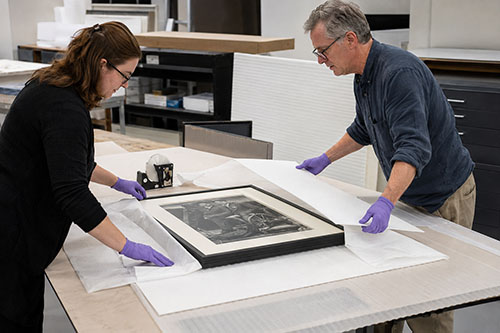
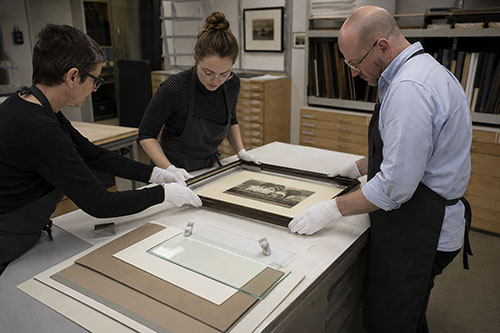
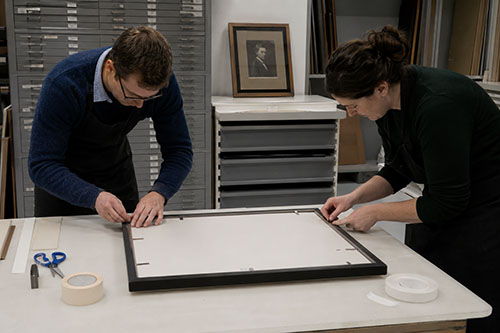
We offer wood and metal frames, custom cut & joined to order. Each framed print includes hanging hardware and foamcore backer.
Matting
We use conservation grade 100% virgin alpha-cellulose 2 ply mats with white core. Acid-free and lignin-free, these are both face resistant and meet all conservation quality standards set by the Fine Art Trade Guild. Mats are digitally cut for ultimate precision. The window will be 1/8″ smaller than the print dimensions.
Glazing (Acrylic Glass)
We offer custom cut panes of shatter-proof, acrylic glass, to protect your valuable artwork and prints.
Premium Clear
Framing grade clear acrylic is shatter resistant and lightweight.
Reflection Control
With its matte finish, Tru Vue Reflection Control® Acrylic scatters light to diminish unwanted glare.
Conservation Clear
Tru Vue Conservation Clear® Acrylic is a framing industry staple, blocking up to 99% of UV rays for ultimate protection.
Conservation Reflection Control
Tru Vue Conservation Reflection Control® Acrylic scatters and diffuses light to reduce unwanted glare. Blocks up to 99% of UV rays.
Related products
-

Christopher Lee – Dracula Has Risen from the Grave (1968) Count Dracula Staked in Coffin Scene Photo
$38.00 -
Sean Connery & Ursula Andress – Dr. No (1962) Relaxing Between Takes in Jamaica James Bond 007 Behind-the-Scenes Photo
$30.00 -
Yutte Stensgaard & Michael Johnson – Lust for a Vampire (1971) Mircalla & Richard Outdoor Embrace Photo
$38.00 -
Catherine Deneuve – Repulsion (1965) Carol Ledoux Apartment Floor Camera BTS Photo
$30.00


