

Christopher Lee – Dracula Has Risen from the Grave (1968) Count Dracula Staked in Coffin Scene Photo
Limited Edition Photograph (learn more)
In stock
Christopher Lee writhes as Count Dracula with a wooden stake driven into his chest in this visceral color scene photograph from Dracula Has Risen from the Grave (1968). Confined tightly within his coffin, Lee reaches toward the stake as pain and fury transform his normally controlled features, while the brilliant red lining of Dracula’s cape cuts dramatically through the surrounding darkness. The extreme proximity, exposed fangs and violent physical performance make this one of the film’s most immediate images of Dracula stripped of his aristocratic composure.
The composition places the viewer almost directly over the coffin, creating an unusually claustrophobic perspective. Dracula’s body is compressed within the narrow enclosure, his head resting against the pale lining while his arms rise toward the foreground. One hand reaches upward in an instinctive reaction to the attack, and the stake becomes the central point around which the entire image is organized. Lee’s expression is especially powerful: the bared fangs, tightened features and open mouth communicate both agony and supernatural rage without the need for any additional figure to appear within the frame.
Color plays an important role in the photograph. The deep black of Dracula’s clothing and the coffin surround his face in darkness, while the vivid red strip of his cape creates a sharp diagonal accent across his chest. Pale shirt cuffs and coffin lining provide additional highlights, focusing attention on the vampire’s face and hands. The result is a compact but highly dramatic Hammer image in which costume, facial expression and confined space combine to make the violence feel immediate.
The Dracula Has Risen from the Grave coffin staking scene represents an important failed attempt to destroy the Count. Paul, played by Barry Andrews, drives a stake through Dracula’s heart while the vampire lies inside his coffin. The act initially appears successful, but the necessary religious ritual is not completed. Dracula subsequently revives and removes the stake himself, turning what would normally represent the vampire’s final destruction into a temporary and horrifying setback.
That distinction is important because Dracula’s actual death comes later in a separate sequence. During the climax at his castle, he falls from the battlements and is impaled upon the large cross below. As the priest recites the prayer, Dracula finally succumbs. The coffin staking and the later impalement are therefore visually related but narratively separate moments, and this photograph specifically records the earlier unsuccessful attempt to destroy him.
Directed by Freddie Francis for Hammer Film Productions, Dracula Has Risen from the Grave was released in 1968 and marked Christopher Lee’s third appearance as Count Dracula for Hammer. The film also stars Veronica Carlson as Maria Mueller, Barry Andrews as Paul, Rupert Davies as Monsignor Ernst Mueller, Barbara Ewing as Zena and Ewan Hooper as the priest. Francis’s direction and Arthur Grant’s cinematography gave the film a rich visual identity built around saturated color, expressive lighting and deep Gothic shadow.
For collectors of Christopher Lee and Hammer Dracula imagery, this photograph captures an unusually physical moment in Lee’s performance. Rather than presenting Dracula as remote, composed or predatory, it shows him vulnerable, enraged and fighting against apparent destruction at point-blank range.
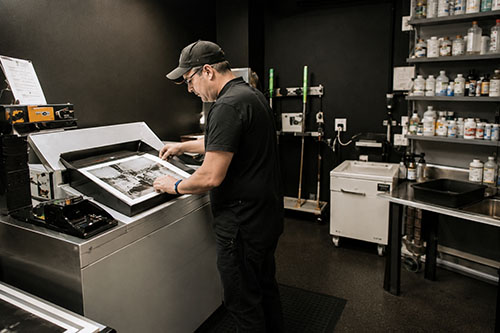
Carefully restored from historic photographic source material and professionally lab-developed, this museum-quality photograph is presented uncropped, preserving the complete image area contained in the source. Restoration recovers Lee’s facial detail, exposed fangs, hand and costume definition, coffin lining, stake detail and the vivid red cape accent while maintaining the natural color balance and authentic character of the historic photograph. The finished photograph contains no AI-generated image content.
Product Enquiry
Kodak Professional Endura Paper
Kodak Endura papers provide an incredible amount of detail and smooth transition of tones. Designed for the professional photographer in mind, looking for a more traditional photo print style, Kodak Endura provides an extended print life and color gamut almost at the level of a high end fine art paper print.
Archival Matte Paper
Archival Matte Paper, also known as Moab Lasal Photo Matte, is our house stock fine art paper and is an economical favorite for fine art reproductions and photo prints. It features a smooth surface, heavy weight (230 g, 9.5-mil), neutral white, matte paper engineered for accurate color reproduction that provides high contrast and high-resolution output. This paper is acid-free, making it the perfect choice for both photography & fine art reproductions.
Giclee William Turner Paper by Hahnemühle
The William Turner by Hahnemühle is one of the most popular papers used in the Giclee printing industry. This is a 310g natural white mould made natural line paper with 100% rag content making it highly archival. It has a slight coarse texture which gives photos and artwork an elegant look. These fine art paper prints (also known as Giclee) are ordered by galleries, individual artists and photographers. The papers and inks are not only archival but use some of the most accurate print technology for full color prints.
- Giclee prints use very expensive archival pigmented inks.
- Highest level of color gamut available in printing (12 color printing).
- Exceptional black & white printing.
- Fade resistant, pigmented inks which provide a superior color range compared to other types of inks. Widely preferred in fine art and photography circles.
- We ONLY use professional grade fine art and photo paper that resist yellowing and aging.
Framing
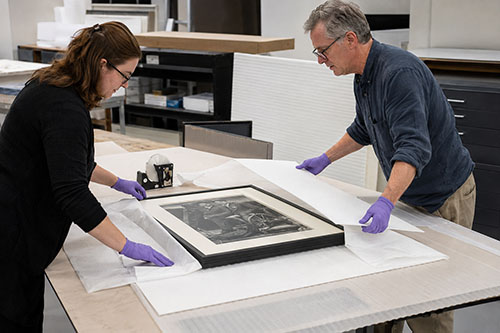
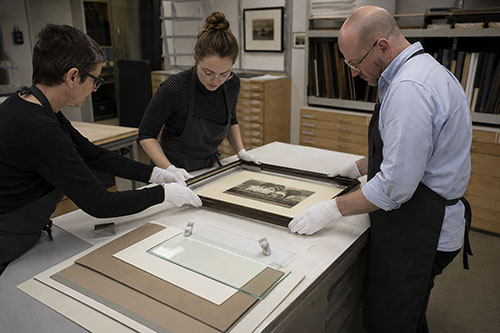
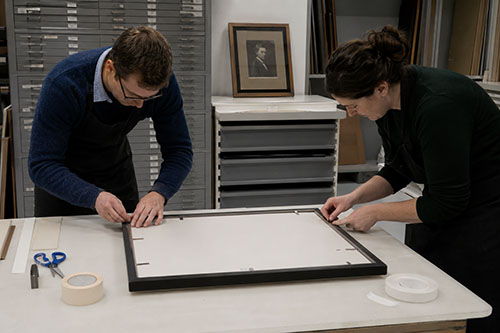
We offer wood and metal frames, custom cut & joined to order. Each framed print includes hanging hardware and foamcore backer.
Matting
We use conservation grade 100% virgin alpha-cellulose 2 ply mats with white core. Acid-free and lignin-free, these are both face resistant and meet all conservation quality standards set by the Fine Art Trade Guild. Mats are digitally cut for ultimate precision. The window will be 1/8″ smaller than the print dimensions.
Glazing (Acrylic Glass)
We offer custom cut panes of shatter-proof, acrylic glass, to protect your valuable artwork and prints.
Premium Clear
Framing grade clear acrylic is shatter resistant and lightweight.
Reflection Control
With its matte finish, Tru Vue Reflection Control® Acrylic scatters light to diminish unwanted glare.
Conservation Clear
Tru Vue Conservation Clear® Acrylic is a framing industry staple, blocking up to 99% of UV rays for ultimate protection.
Conservation Reflection Control
Tru Vue Conservation Reflection Control® Acrylic scatters and diffuses light to reduce unwanted glare. Blocks up to 99% of UV rays.
Related products
-

Jayne Mansfield – 1950s Leopard-Print Pants with Puppy Hollywood Glamour Photo
$30.00 -
Ingrid Pitt – The Vampire Lovers (1970) Bloodied Carmilla Vampire Fangs Photo
$25.00 -
Sean Connery & Ursula Andress – Dr. No (1962) Crab Key Water Scene Jamaica Behind-the-Scenes Photo
$38.00 -
Terence Fisher, Janina Faye & Robert Lynn – Horror of Dracula (1958) Candid Behind-the-Scenes Photo
$30.00