

Barbara Steele – The Horrible Dr. Hichcock (1962) Skull Discovery Bedroom Scene Photo
Limited Edition Photograph (learn more)
In stock
Barbara Steele appears as Cynthia Hichcock in this extraordinary color bedroom scene from The Horrible Dr. Hichcock (1962), drawing back the bed covering to reveal a human skull resting grotesquely upon the pillow. Dressed in an elegant black period gown with long white gloves, Steele stands between warm lamplight and deep surrounding shadow as the pale bedding directs the eye toward the macabre discovery. The combination of Gothic elegance, death imagery and Cynthia’s apprehensive expression creates one of the film’s most visually distinctive compositions.
The photograph’s power comes from the contrast between beauty and corruption. Steele occupies the right side of the image, her dark gown outlined by delicate white trim while her gloved hands gather the heavy bed covering in front of her. At left, the bed emerges from the surrounding darkness, its white sheets and pillow illuminated strongly enough to expose the skull lying where a sleeping figure might normally be expected. That simple substitution transforms the bedroom from a place of domestic security into something unmistakably threatening.
The setting is especially important to the image. The bed, hanging lamp, decorated wall surfaces and shadowed furnishings establish a richly appointed nineteenth-century bedroom, but the room never feels safe. Large areas remain submerged in darkness, while the strongest illumination falls precisely on Cynthia, the bed and the skull. The lighting makes the bedroom itself feel secretive and hostile, as though the house is revealing only the fragments of its history that Cynthia is not meant to discover.
This Barbara Steele The Horrible Dr. Hichcock 1962 photograph is especially effective because it places Cynthia at the center of the mystery surrounding her husband’s home. Steele plays the second wife of Dr. Bernard Hichcock, portrayed by Robert Flemyng, whose past is tied to the death of his first wife and to increasingly disturbing secrets that Cynthia begins to uncover after entering his household. Steele’s character therefore functions as both participant and terrified witness as the respectable Victorian world around her gives way to obsession, death and psychological horror.
Directed by Riccardo Freda, The Horrible Dr. Hichcock was originally released in Italy as L’orribile segreto del Dr. Hichcock. The film was written by Ernesto Gastaldi and stars Steele alongside Robert Flemyng, Silvano Tranquilli, Maria Teresa Vianello and Harriet Medin. Its carefully controlled color cinematography and elaborate period interiors helped make it one of the defining examples of early-1960s Italian Gothic horror.
Steele is particularly well suited to this bedroom scene because her performance depends as much on stillness and observation as overt terror. Her body remains poised and elegant, yet her downward attention toward the bed and the restrained tension in her posture communicate the horror of the discovery. Unlike a conventional monster image, the photograph derives its menace from the intrusion of death into an intimate domestic space.
The skull on the pillow gives the composition its unforgettable identity. Rather than using an elaborate supernatural effect, the film transforms a familiar bedroom object—the bed itself—into the location of a macabre revelation. The pale linen, dark gown, white gloves and exposed skull create a carefully balanced arrangement in which Gothic beauty and death occupy the same frame.
For collectors of Barbara Steele and Italian Gothic horror photography, this photograph has particularly strong appeal because it captures a true narrative moment rather than a neutral publicity pose. The black gown, white gloves, skull, bed covering and shadow-filled bedroom combine into an image that is immediately recognizable as classic Gothic cinema. It preserves Steele confronting the hidden horror of the house at the exact point where domestic elegance gives way to the macabre.
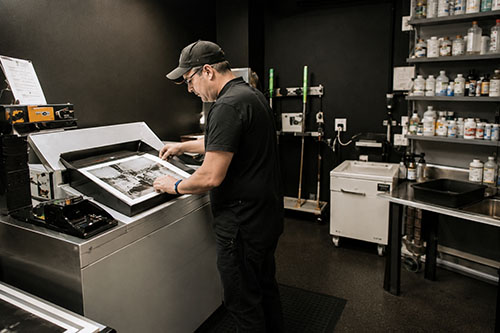
Carefully restored from historic photographic source material and professionally lab-developed, this museum-quality photograph is presented uncropped, preserving the complete image area contained in the source. Restoration recovers facial detail, black-gown texture, white-glove definition, bedding folds, skull detail and warm bedroom shadow gradation while maintaining the natural color balance and authentic character of the historic photograph. The finished photograph contains no AI-generated image content.
Product Enquiry
Kodak Professional Endura Paper
Kodak Endura papers provide an incredible amount of detail and smooth transition of tones. Designed for the professional photographer in mind, looking for a more traditional photo print style, Kodak Endura provides an extended print life and color gamut almost at the level of a high end fine art paper print.
Archival Matte Paper
Archival Matte Paper, also known as Moab Lasal Photo Matte, is our house stock fine art paper and is an economical favorite for fine art reproductions and photo prints. It features a smooth surface, heavy weight (230 g, 9.5-mil), neutral white, matte paper engineered for accurate color reproduction that provides high contrast and high-resolution output. This paper is acid-free, making it the perfect choice for both photography & fine art reproductions.
Giclee William Turner Paper by Hahnemühle
The William Turner by Hahnemühle is one of the most popular papers used in the Giclee printing industry. This is a 310g natural white mould made natural line paper with 100% rag content making it highly archival. It has a slight coarse texture which gives photos and artwork an elegant look. These fine art paper prints (also known as Giclee) are ordered by galleries, individual artists and photographers. The papers and inks are not only archival but use some of the most accurate print technology for full color prints.
- Giclee prints use very expensive archival pigmented inks.
- Highest level of color gamut available in printing (12 color printing).
- Exceptional black & white printing.
- Fade resistant, pigmented inks which provide a superior color range compared to other types of inks. Widely preferred in fine art and photography circles.
- We ONLY use professional grade fine art and photo paper that resist yellowing and aging.
Framing
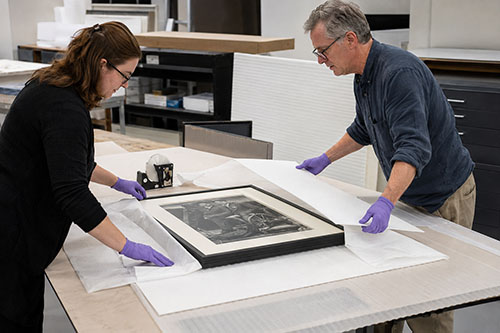
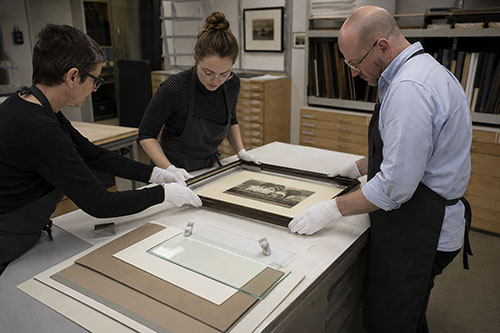
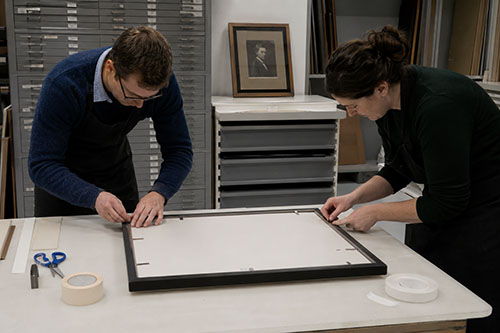
We offer wood and metal frames, custom cut & joined to order. Each framed print includes hanging hardware and foamcore backer.
Matting
We use conservation grade 100% virgin alpha-cellulose 2 ply mats with white core. Acid-free and lignin-free, these are both face resistant and meet all conservation quality standards set by the Fine Art Trade Guild. Mats are digitally cut for ultimate precision. The window will be 1/8″ smaller than the print dimensions.
Glazing (Acrylic Glass)
We offer custom cut panes of shatter-proof, acrylic glass, to protect your valuable artwork and prints.
Premium Clear
Framing grade clear acrylic is shatter resistant and lightweight.
Reflection Control
With its matte finish, Tru Vue Reflection Control® Acrylic scatters light to diminish unwanted glare.
Conservation Clear
Tru Vue Conservation Clear® Acrylic is a framing industry staple, blocking up to 99% of UV rays for ultimate protection.
Conservation Reflection Control
Tru Vue Conservation Reflection Control® Acrylic scatters and diffuses light to reduce unwanted glare. Blocks up to 99% of UV rays.
Related products
-

Christopher Lee – Dracula Has Risen from the Grave (1968) Count Dracula Staked in Coffin Scene Photo
$38.00 -
Clint Eastwood – Dirty Harry (1971) Aiming .44 Magnum with Motorcycle Officers Behind-the-Scenes Photo
$38.00 -
Susan Denberg – Frankenstein Created Woman (1967) Christina Hammer Glamour Publicity Portrait
$30.00 -
Anthony Higgins, Laurence Payne & Robert Tayman – Vampire Circus (1972) Crypt Battle Stake Photo
$25.00


