

Elisabeth Brooks – The Howling (1981) Marsha Quist Werewolf Fangs Publicity Photo
Limited Edition Photograph (learn more)
In stock
Elisabeth Brooks appears as Marsha Quist in this striking color publicity photograph for The Howling (1981), her glamorous human appearance transformed by the unmistakable reveal of prominent werewolf fangs. Posed against a clean pink studio background, Brooks turns toward the camera with her mouth open to expose the elongated teeth, while her long dark hair, dramatic eye makeup, black costume and distinctive necklace preserve the seductive appearance associated with Marsha throughout the film. The contrast between beauty and lycanthropic menace gives the image an especially distinctive identity within the film’s extensive werewolf publicity imagery.
The photograph is unusually effective because it combines polished studio glamour with a single unmistakable horror element. Brooks is presented in a carefully controlled pose, her body angled slightly away while her face turns directly toward the viewer. The dark sleeveless costume and cascading black hair stand sharply against the pale pink background, while the necklace of beads and pointed ornaments creates an additional decorative accent across the neckline. Everything initially suggests conventional star publicity—until the exposed fangs completely alter the image.
The simplicity of the background makes those teeth impossible to overlook. There is no Gothic setting, no visible transformation machinery and no completed wolf creature competing for attention. Instead, the photograph depends on Brooks’s expression and the sudden intrusion of the supernatural into an otherwise glamorous portrait. That restraint makes the image particularly memorable and separates it from the more elaborate practical-effects photographs associated with Eddie Quist’s transformation.
Elisabeth Brooks Marsha Quist The Howling 1981 imagery is central to the film’s combination of sexuality, danger and werewolf mythology. Marsha is the sister of Eddie Quist, played by Robert Picardo, and one of the werewolves associated with the secluded community known as the Colony. Unlike characters who fear or resist their condition, Marsha embraces her predatory nature, giving Brooks’s performance an openly confident and dangerous quality.
Directed by Joe Dante, The Howling follows television reporter Karen White, played by Dee Wallace, after a traumatic encounter with Eddie Quist leads her to Dr. George Waggner’s remote therapeutic retreat. What initially appears to be a peaceful community gradually reveals itself as a haven for werewolves. The cast also includes Patrick Macnee, Dennis Dugan, Belinda Balaski, Robert Picardo and Brooks, whose Marsha becomes one of the film’s most visually memorable inhabitants of the Colony.
The film’s reputation is inseparable from Rob Bottin’s groundbreaking practical makeup and creature effects, particularly the extended physical transformation of Eddie Quist. Yet this publicity photograph demonstrates another side of the production’s werewolf imagery. Marsha requires no elaborate full transformation to communicate danger; the fangs alone are enough to reveal what lies beneath her seductive human appearance.
That contrast is exactly what makes the photograph work. Brooks remains poised, attractive and self-assured, but the exposed teeth turn the glamour pose into something predatory. The result captures one of The Howling’s recurring ideas—that the monstrous can exist directly beneath an appealing and recognizably human exterior.
For collectors of 1980s horror and werewolf photography, the image has strong visual appeal because it combines a principal character, unmistakable creature detail and a highly controlled studio composition. The long dark hair, black costume, pink backdrop and prominent fangs create a photograph that is immediately identifiable while remaining distinctly different from the film’s transformation and full-creature stills.
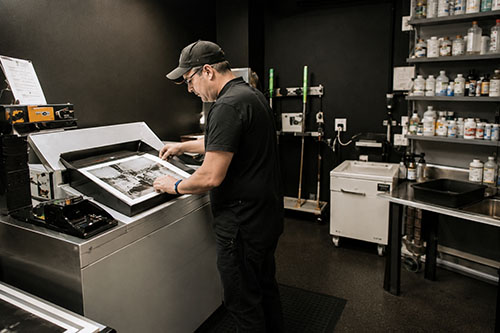
Carefully restored from historic photographic source material and professionally lab-developed, this museum-quality photograph is presented uncropped, preserving the complete image area contained in the source. Restoration recovers facial detail, fang definition, individual hair strands, costume texture, necklace detail and subtle studio color gradation while maintaining the natural color balance and authentic character of the historic photograph. The finished photograph contains no AI-generated image content.
Product Enquiry
Kodak Professional Endura Paper
Kodak Endura papers provide an incredible amount of detail and smooth transition of tones. Designed for the professional photographer in mind, looking for a more traditional photo print style, Kodak Endura provides an extended print life and color gamut almost at the level of a high end fine art paper print.
Archival Matte Paper
Archival Matte Paper, also known as Moab Lasal Photo Matte, is our house stock fine art paper and is an economical favorite for fine art reproductions and photo prints. It features a smooth surface, heavy weight (230 g, 9.5-mil), neutral white, matte paper engineered for accurate color reproduction that provides high contrast and high-resolution output. This paper is acid-free, making it the perfect choice for both photography & fine art reproductions.
Giclee William Turner Paper by Hahnemühle
The William Turner by Hahnemühle is one of the most popular papers used in the Giclee printing industry. This is a 310g natural white mould made natural line paper with 100% rag content making it highly archival. It has a slight coarse texture which gives photos and artwork an elegant look. These fine art paper prints (also known as Giclee) are ordered by galleries, individual artists and photographers. The papers and inks are not only archival but use some of the most accurate print technology for full color prints.
- Giclee prints use very expensive archival pigmented inks.
- Highest level of color gamut available in printing (12 color printing).
- Exceptional black & white printing.
- Fade resistant, pigmented inks which provide a superior color range compared to other types of inks. Widely preferred in fine art and photography circles.
- We ONLY use professional grade fine art and photo paper that resist yellowing and aging.
Framing
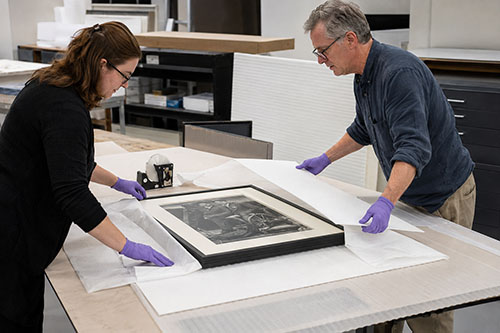
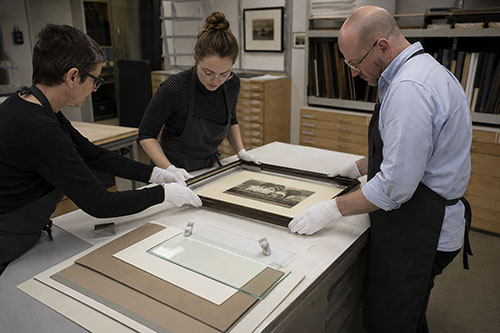
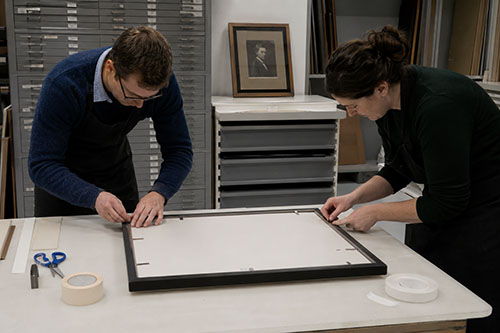
We offer wood and metal frames, custom cut & joined to order. Each framed print includes hanging hardware and foamcore backer.
Matting
We use conservation grade 100% virgin alpha-cellulose 2 ply mats with white core. Acid-free and lignin-free, these are both face resistant and meet all conservation quality standards set by the Fine Art Trade Guild. Mats are digitally cut for ultimate precision. The window will be 1/8″ smaller than the print dimensions.
Glazing (Acrylic Glass)
We offer custom cut panes of shatter-proof, acrylic glass, to protect your valuable artwork and prints.
Premium Clear
Framing grade clear acrylic is shatter resistant and lightweight.
Reflection Control
With its matte finish, Tru Vue Reflection Control® Acrylic scatters light to diminish unwanted glare.
Conservation Clear
Tru Vue Conservation Clear® Acrylic is a framing industry staple, blocking up to 99% of UV rays for ultimate protection.
Conservation Reflection Control
Tru Vue Conservation Reflection Control® Acrylic scatters and diffuses light to reduce unwanted glare. Blocks up to 99% of UV rays.
Related products
-

SYLVIA KRISTEL – 1970s Topless Profile with Layered Necklace Black-and-White Glamour Photo
$30.00 -
Peter Cushing – Torture Garden (1967) Lancelot Canning Poe Collector Close-Up Photo
$30.00 -
Ingrid Pitt – The Vampire Lovers (1970) Carmilla Ferocious Close-Up Photo
$30.00 -
Jimmy Sangster, Ralph Bates & Michael Johnson – Lust for a Vampire (1971) Lawn Horseplay Behind-the-Scenes Photo
$30.00