

Ingrid Pitt & Dawn Addams – The Vampire Lovers (1970) Marcilla & Countess Moor Park Ball Behind-the-Scenes Photo
Limited Edition Photograph (learn more)
In stock
Ingrid Pitt and Dawn Addams are captured together in this exceptional black-and-white behind-the-scenes photograph from The Vampire Lovers (1970), appearing as Marcilla and the Countess during the elegant ball sequence associated with General Spielsdorf’s household. Pitt stands at left in a flowing light gown with jeweled headpiece and long hair falling over her shoulders, while Addams appears beside her in a dramatically contrasting dark formal dress with elaborate hairstyle and jewelry. The richly decorated interior, ornate candelabrum and formal costume styling create an immediately recognizable Hammer Gothic atmosphere, while the visible production equipment at the upper edge gives the image an especially revealing behind-the-scenes character.
The photograph is particularly appealing because of the visual contrast between the two women. Pitt’s softer, lighter costume gives Marcilla an almost ethereal appearance, while Addams’ darker gown and more formal bearing create a stronger aristocratic presence beside her. Their side-by-side pose preserves the deceptive social elegance through which Marcilla enters respectable society, and the glimpse of production hardware above them reminds the viewer that this polished Gothic world was being carefully constructed within the practical environment of a working film set.
Released in 1970, The Vampire Lovers was directed by Roy Ward Baker and stars Ingrid Pitt as Carmilla / Mircalla / Marcilla Karnstein alongside Dawn Addams as the Countess, Peter Cushing as General Spielsdorf, Pippa Steel as Laura, Madeline Smith as Emma Morton, George Cole as Roger Morton and Kate O’Mara as the Governess. The film was produced by Hammer Film Productions in association with American International Pictures.
In the story, the Countess introduces Marcilla into General Spielsdorf’s household during the opening social sequence, presenting her as a refined young woman before arranging circumstances that leave her behind at the estate. Marcilla is, of course, one of the identities assumed by Carmilla Karnstein, and that deceptive entrance is central to the structure of the film: elegance, beauty and aristocratic manners conceal a predatory vampire moving quietly through upper-class society.
The Moor Park Mansion connection gives this image added collector interest. Filming records identify Moor Park Mansion in Hertfordshire as a location used for General Spielsdorf’s estate material in The Vampire Lovers, making “Moor Park Ball” a useful and relevant identification for this early aristocratic sequence even when individual stills focus more closely on the performers themselves.
The Vampire Lovers was adapted from Sheridan Le Fanu’s classic vampire novella Carmilla and became the first entry in Hammer’s celebrated Karnstein cycle, followed by Lust for a Vampire and Twins of Evil in 1971. The film shifted Hammer’s vampire mythology away from Dracula and toward the Karnstein legend, with Ingrid Pitt’s Carmilla becoming one of the defining female vampires of British Gothic horror.
For Ingrid Pitt, Carmilla Karnstein became the role most closely associated with her screen legacy. Her combination of elegance, sensuality and quiet menace gave the character exceptional power, and photographs from the ball sequence are especially attractive because they show Marcilla at her most outwardly refined. There are no fangs, no blood and no attack here—only the aristocratic surface that makes the character’s hidden identity so effective.
Dawn Addams brings equal value to the image. As the Countess, she helps establish the world into which Marcilla is introduced, and her poised, formal appearance beside Pitt strengthens the film’s atmosphere of noble privilege and hidden corruption. The pairing of the two actresses in full costume, framed by period décor and candlelight imagery, makes this photograph particularly rich as both a Hammer Horror collectible and a costume-and-production study.
The behind-the-scenes nature of the photograph makes it especially distinctive. Rather than a finished film still or purely staged publicity pose, it preserves the actresses within the ball setting while also allowing the filmmaking apparatus to intrude slightly into the frame. That small breach in the illusion gives collectors a more intimate record of Hammer at work—stars, costumes, set dressing and production equipment existing together in the same moment.
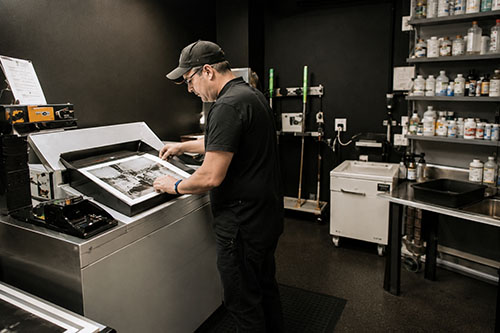
Carefully restored from historic photographic source material and professionally lab-developed, this museum-quality photograph is presented uncropped, preserving the complete image area contained in the source. Meticulous restoration recovers facial detail, hair texture, costume definition, jewelry, candelabrum detail, decorative plasterwork, tonal range and photographic clarity while retaining the authentic character of the original black-and-white behind-the-scenes image.
For collectors of Ingrid Pitt, Dawn Addams, The Vampire Lovers and Hammer Horror, this is an exceptional behind-the-scenes photograph—Marcilla and the Countess walking side by side in elegant ball costume, surrounded by richly appointed décor and preserving the aristocratic visual world through which Carmilla Karnstein first enters the story.
Product Enquiry
Kodak Professional Endura Paper
Kodak Endura papers provide an incredible amount of detail and smooth transition of tones. Designed for the professional photographer in mind, looking for a more traditional photo print style, Kodak Endura provides an extended print life and color gamut almost at the level of a high end fine art paper print.
Archival Matte Paper
Archival Matte Paper, also known as Moab Lasal Photo Matte, is our house stock fine art paper and is an economical favorite for fine art reproductions and photo prints. It features a smooth surface, heavy weight (230 g, 9.5-mil), neutral white, matte paper engineered for accurate color reproduction that provides high contrast and high-resolution output. This paper is acid-free, making it the perfect choice for both photography & fine art reproductions.
Giclee William Turner Paper by Hahnemühle
The William Turner by Hahnemühle is one of the most popular papers used in the Giclee printing industry. This is a 310g natural white mould made natural line paper with 100% rag content making it highly archival. It has a slight coarse texture which gives photos and artwork an elegant look. These fine art paper prints (also known as Giclee) are ordered by galleries, individual artists and photographers. The papers and inks are not only archival but use some of the most accurate print technology for full color prints.
- Giclee prints use very expensive archival pigmented inks.
- Highest level of color gamut available in printing (12 color printing).
- Exceptional black & white printing.
- Fade resistant, pigmented inks which provide a superior color range compared to other types of inks. Widely preferred in fine art and photography circles.
- We ONLY use professional grade fine art and photo paper that resist yellowing and aging.
Framing
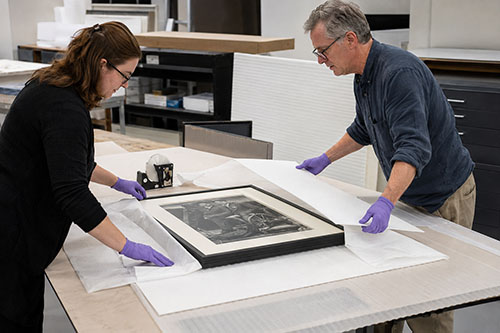
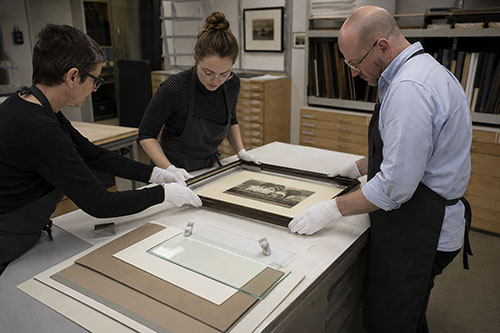
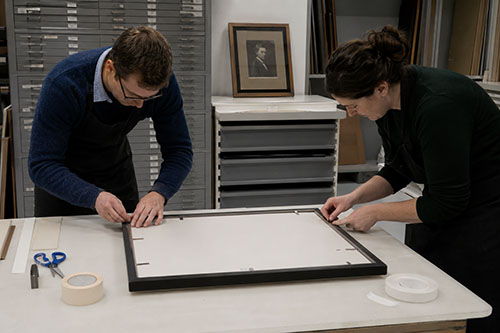
We offer wood and metal frames, custom cut & joined to order. Each framed print includes hanging hardware and foamcore backer.
Matting
We use conservation grade 100% virgin alpha-cellulose 2 ply mats with white core. Acid-free and lignin-free, these are both face resistant and meet all conservation quality standards set by the Fine Art Trade Guild. Mats are digitally cut for ultimate precision. The window will be 1/8″ smaller than the print dimensions.
Glazing (Acrylic Glass)
We offer custom cut panes of shatter-proof, acrylic glass, to protect your valuable artwork and prints.
Premium Clear
Framing grade clear acrylic is shatter resistant and lightweight.
Reflection Control
With its matte finish, Tru Vue Reflection Control® Acrylic scatters light to diminish unwanted glare.
Conservation Clear
Tru Vue Conservation Clear® Acrylic is a framing industry staple, blocking up to 99% of UV rays for ultimate protection.
Conservation Reflection Control
Tru Vue Conservation Reflection Control® Acrylic scatters and diffuses light to reduce unwanted glare. Blocks up to 99% of UV rays.
Related products
-

Peter Cushing & Simon Ward – Frankenstein Must Be Destroyed (1969) Professor Richter Skull-Drilling Brain Surgery Photo
$30.00 -
Sean Connery – Thunderball (1965) Scuba Equipment on Bahamas Beach Behind-the-Scenes James Bond 007 Photo
$38.00 -
Peter Cushing, Susan Denberg, Anthony Nelson Keys & Terence Fisher – Frankenstein Created Woman (1967) Frensham Ponds Guillotine Behind-the-Scenes Photo
$30.00 -
Martine Beswick – Thunderball (1965) Paula Caplan 007 Bond Girl Reclining Tiger-Stripe Swimsuit Boat Bahamas Publicity Photo
$30.00