

Sean Connery & Ursula Andress – Dr. No (1962) Relaxing Between Takes in Jamaica James Bond 007 Behind-the-Scenes Photo
Limited Edition Photograph (learn more)
In stock
SEAN CONNERY and URSULA ANDRESS share an unusually relaxed moment during location production of Dr. No (1962) in Jamaica in this vivid color behind-the-scenes photograph. Connery sits above Andress smiling broadly toward the camera while Andress bends forward beside him, her long hair falling across her face as the two performers pause between filming. Both are dressed casually for the tropical location, and the surrounding production environment remains plainly visible: another member of the company stands in the background, while boats, rigging and low waterfront structures establish the working location rather than a carefully controlled publicity setting. The photograph feels immediate and spontaneous, presenting the actors behind James Bond and Honey Ryder rather than the polished characters seen in the finished film.
The appeal of the composition lies in that informality. Connery’s broad smile and relaxed posture are far removed from Bond’s controlled screen persona, while Andress appears equally removed from the carefully staged introduction that made Honey Ryder one of the most recognizable figures in early Bond cinema. Nothing in the frame attempts to conceal the circumstances of production. Instead, the photograph preserves a brief human moment amid the practical business of location filmmaking. For collectors searching for Sean Connery Ursula Andress Dr. No 1962 material, it offers a particularly engaging view of the two principal stars together during the creation of the first Eon Productions James Bond adventure.
Directed by Terence Young and produced by Albert R. Broccoli and Harry Saltzman, Dr. No introduced Sean Connery as James Bond 007 and Ursula Andress as Honey Ryder, with Joseph Wiseman as Dr. No, Jack Lord as Felix Leiter, John Kitzmiller as Quarrel and Bernard Lee as M. AFI confirms that the production used Jamaican locations including Ocho Rios, Falmouth, Kingston and St. Ann, while contemporary production records cited by AFI show that the film was scheduled for extensive location work in Jamaica before continuing production in England.
The official James Bond archive records that filming began in Jamaica on January 16, 1962, before moving to Pinewood Studios for interiors. That Jamaican production established much of the tropical atmosphere associated with Bond’s first screen mission and helped create a visual pattern of international locations that became fundamental to the later series.
Andress’s most celebrated sequence was also created during this period. The official 007 archive identifies Laughing Waters Beach near Ocho Rios, St. Ann as the location where Honey Ryder emerges from the sea and first encounters Bond, photographed on February 6, 1962. That scene became one of the enduring images of the franchise. The exact waterfront location shown in this behind-the-scenes photograph should remain unspecified without original production identification, but its Jamaican setting places it firmly within the same important period of location work.
For collectors, this image provides a valuable contrast with the finished movie. Connery and Andress are not performing Bond and Honey for the camera; instead, the photograph reveals the lighter atmosphere surrounding production and the practical environment in which the film was being made. It is both a portrait of two rising international stars and a document from the beginning of one of cinema’s longest-running franchises.
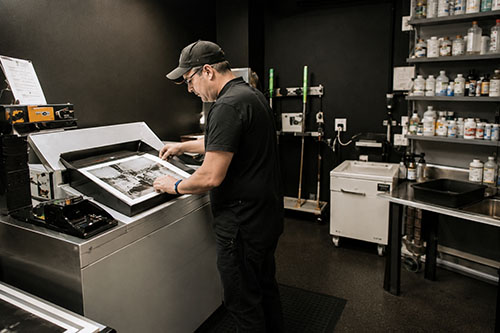
Carefully restored from historic photographic source material and professionally lab-developed, this museum-quality photograph is presented uncropped, preserving the complete image area contained in the source. Restoration recovers facial detail, hair texture, clothing, surrounding equipment, waterfront structures and the natural warmth of the Jamaican light while maintaining the authentic color balance and character of the historic photograph. The finished photograph contains no AI-generated image content.
Product Enquiry
Kodak Professional Endura Paper
Kodak Endura papers provide an incredible amount of detail and smooth transition of tones. Designed for the professional photographer in mind, looking for a more traditional photo print style, Kodak Endura provides an extended print life and color gamut almost at the level of a high end fine art paper print.
Archival Matte Paper
Archival Matte Paper, also known as Moab Lasal Photo Matte, is our house stock fine art paper and is an economical favorite for fine art reproductions and photo prints. It features a smooth surface, heavy weight (230 g, 9.5-mil), neutral white, matte paper engineered for accurate color reproduction that provides high contrast and high-resolution output. This paper is acid-free, making it the perfect choice for both photography & fine art reproductions.
Giclee William Turner Paper by Hahnemühle
The William Turner by Hahnemühle is one of the most popular papers used in the Giclee printing industry. This is a 310g natural white mould made natural line paper with 100% rag content making it highly archival. It has a slight coarse texture which gives photos and artwork an elegant look. These fine art paper prints (also known as Giclee) are ordered by galleries, individual artists and photographers. The papers and inks are not only archival but use some of the most accurate print technology for full color prints.
- Giclee prints use very expensive archival pigmented inks.
- Highest level of color gamut available in printing (12 color printing).
- Exceptional black & white printing.
- Fade resistant, pigmented inks which provide a superior color range compared to other types of inks. Widely preferred in fine art and photography circles.
- We ONLY use professional grade fine art and photo paper that resist yellowing and aging.
Framing
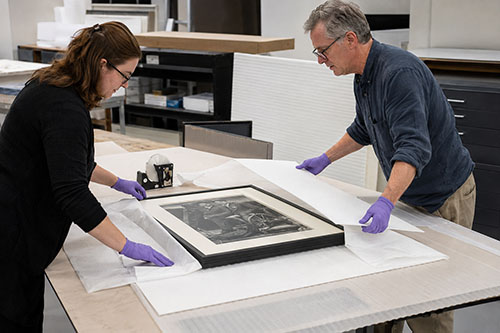
We offer wood and metal frames, custom cut & joined to order. Each framed print includes hanging hardware and foamcore backer.
Matting
We use conservation grade 100% virgin alpha-cellulose 2 ply mats with white core. Acid-free and lignin-free, these are both face resistant and meet all conservation quality standards set by the Fine Art Trade Guild. Mats are digitally cut for ultimate precision. The window will be 1/8″ smaller than the print dimensions.
Glazing (Acrylic Glass)
We offer custom cut panes of shatter-proof, acrylic glass, to protect your valuable artwork and prints.
Premium Clear
Framing grade clear acrylic is shatter resistant and lightweight.
Reflection Control
With its matte finish, Tru Vue Reflection Control® Acrylic scatters light to diminish unwanted glare.
Conservation Clear
Tru Vue Conservation Clear® Acrylic is a framing industry staple, blocking up to 99% of UV rays for ultimate protection.
Conservation Reflection Control
Tru Vue Conservation Reflection Control® Acrylic scatters and diffuses light to reduce unwanted glare. Blocks up to 99% of UV rays.
Related products
-

Jayne Mansfield – 1950s Leopard-Print Pants with Puppy Hollywood Glamour Photo
$30.00 -
Susan Denberg – Frankenstein Created Woman (1967) Christina Hammer Glamour Publicity Portrait
$30.00 -
Ursula Andress – Dr. No (1962) Relaxing in Bikini on Jamaica Location Behind-the-Scenes Photo
$38.00 -
Ingrid Pitt – The Vampire Lovers (1970) Bloodied Carmilla Vampire Fangs Photo
$25.00


