

Ingrid Pitt – The Vampire Lovers (1970) Bloodied Carmilla Vampire Fangs Photo
Limited Edition Photograph (learn more)
In stock
Ingrid Pitt is captured as Carmilla Karnstein in this ferocious color close-up from The Vampire Lovers (1970), her vampire fangs fully exposed and fresh blood streaking across her lips and chin. Pitt’s widened blue eyes, tousled auburn hair and bloodied mouth dominate the extraordinarily tight composition, stripping away almost every surrounding detail and concentrating the photograph entirely on Carmilla’s predatory transformation. The result is one of the most direct and visually aggressive images associated with Hammer’s celebrated Karnstein vampire cycle.
The photograph’s impact comes from the extraordinary proximity of the camera to Pitt’s face. Her expression is caught at full intensity, eyes opened wide and fixed beyond the frame while her mouth remains partially open to reveal the prominent upper fangs. Bright red blood marks her lips, teeth and chin, standing in vivid contrast to her pale complexion and the warmer tones of her hair. Only fragments of her shoulders and extended arm remain visible around the edges, making the face itself almost the entire subject of the photograph.
Unlike the elegant publicity portraits and aristocratic costume images associated with the character, this close-up presents Carmilla as an unmistakable vampire. Pitt’s beauty remains recognizable, but it is overtaken by hunger, blood and physical menace. That contrast between sensual glamour and supernatural ferocity became one of the defining visual qualities of The Vampire Lovers and of Pitt’s performance in particular.
Ingrid Pitt Carmilla The Vampire Lovers 1970 imagery occupies an important place in the history of Hammer horror. Directed by Roy Ward Baker for Hammer Film Productions and American International Pictures, the film casts Pitt as the Karnstein vampire who moves through society under the identities Mircalla, Marcilla and Carmilla, entering aristocratic households before preying upon the young women who live there.
Adapted from Sheridan Le Fanu’s celebrated vampire novella “Carmilla,” the film became the first entry in Hammer’s Karnstein Trilogy, followed by Lust for a Vampire and Twins of Evil. Pitt’s performance gave the cycle its defining original vampire figure, combining sophistication and seductive charm with sudden moments of unmistakable predatory violence.
The fangs themselves became a memorable part of the film’s production history. Pitt later became associated with the story of the prosthetic vampire teeth repeatedly refusing to remain securely in place during filming. During the attack on Madame Perrodot, played by Kate O’Mara, the fangs reportedly came loose repeatedly, turning an intended moment of horror into considerable amusement between takes. That practical difficulty stands in amusing contrast to photographs such as this one, where the fangs appear completely convincing and form one of the image’s strongest visual elements.
The extremely close framing also makes this photograph valuable as a study of Hammer vampire makeup and performance. The effect relies on relatively simple components—fangs, stage blood, disordered hair, lighting and Pitt’s expression—rather than elaborate creature prosthetics. Her widened eyes and open mouth provide most of the transformation, allowing the recognizable human face to remain visible beneath the supernatural identity.
For collectors of Ingrid Pitt and Hammer horror photography, this is an exceptionally concentrated image. There is virtually no costume, architecture or narrative scenery to distract from the subject. Instead, the photograph preserves Carmilla’s bloodied face, exposed fangs and predatory stare at extraordinarily close range, creating a striking visual counterpoint to the character’s more elegant and seductive appearances elsewhere in the film.
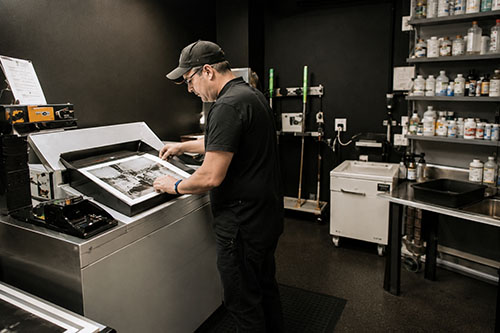
Carefully restored from historic photographic source material and professionally lab-developed, this museum-quality photograph is presented uncropped, preserving the complete image area contained in the source. Restoration recovers blue-eye definition, fang detail, blood tones, individual hair strands, facial texture and subtle skin tones while maintaining the natural color balance and authentic character of the historic photograph. The finished photograph contains no AI-generated image content.
Product Enquiry
Kodak Professional Endura Paper
Kodak Endura papers provide an incredible amount of detail and smooth transition of tones. Designed for the professional photographer in mind, looking for a more traditional photo print style, Kodak Endura provides an extended print life and color gamut almost at the level of a high end fine art paper print.
Archival Matte Paper
Archival Matte Paper, also known as Moab Lasal Photo Matte, is our house stock fine art paper and is an economical favorite for fine art reproductions and photo prints. It features a smooth surface, heavy weight (230 g, 9.5-mil), neutral white, matte paper engineered for accurate color reproduction that provides high contrast and high-resolution output. This paper is acid-free, making it the perfect choice for both photography & fine art reproductions.
Giclee William Turner Paper by Hahnemühle
The William Turner by Hahnemühle is one of the most popular papers used in the Giclee printing industry. This is a 310g natural white mould made natural line paper with 100% rag content making it highly archival. It has a slight coarse texture which gives photos and artwork an elegant look. These fine art paper prints (also known as Giclee) are ordered by galleries, individual artists and photographers. The papers and inks are not only archival but use some of the most accurate print technology for full color prints.
- Giclee prints use very expensive archival pigmented inks.
- Highest level of color gamut available in printing (12 color printing).
- Exceptional black & white printing.
- Fade resistant, pigmented inks which provide a superior color range compared to other types of inks. Widely preferred in fine art and photography circles.
- We ONLY use professional grade fine art and photo paper that resist yellowing and aging.
Framing
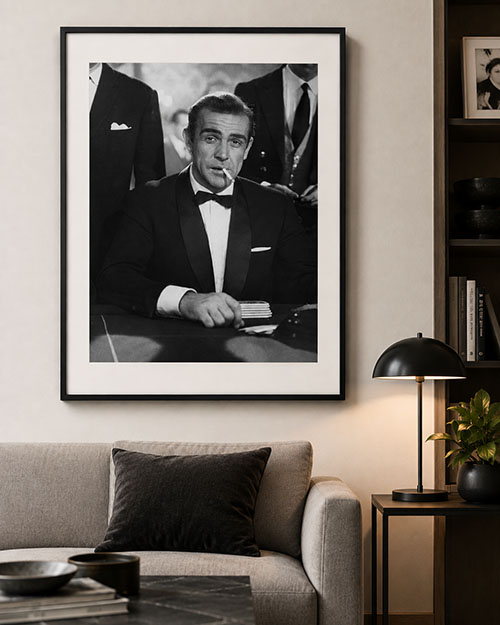
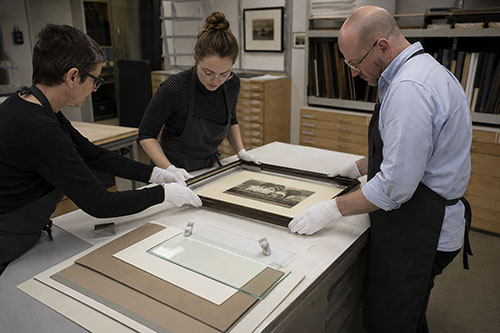
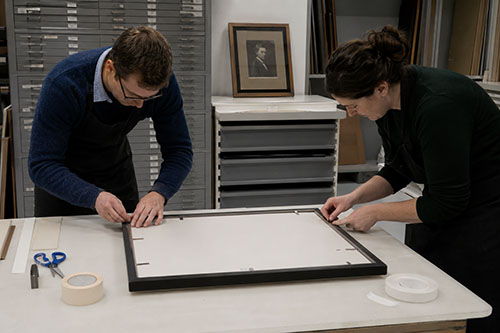
We offer wood and metal frames, custom cut & joined to order. Each framed print includes hanging hardware and foamcore backer.
Matting
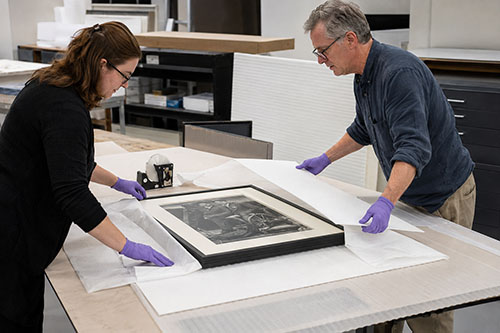
We use conservation grade 100% virgin alpha-cellulose 2 ply mats with white core. Acid-free and lignin-free, these are both face resistant and meet all conservation quality standards set by the Fine Art Trade Guild. Mats are digitally cut for ultimate precision. The window will be 1/8″ smaller than the print dimensions.
Glazing (Acrylic Glass)
We offer custom cut panes of shatter-proof, acrylic glass, to protect your valuable artwork and prints.
Premium Clear
Framing grade clear acrylic is shatter resistant and lightweight.
Reflection Control
With its matte finish, Tru Vue Reflection Control® Acrylic scatters light to diminish unwanted glare.
Conservation Clear
Tru Vue Conservation Clear® Acrylic is a framing industry staple, blocking up to 99% of UV rays for ultimate protection.
Conservation Reflection Control
Tru Vue Conservation Reflection Control® Acrylic scatters and diffuses light to reduce unwanted glare. Blocks up to 99% of UV rays.
Related products
-

Colin Clive, Boris Karloff & Dwight Frye – Frankenstein (1931) Monster Creation Laboratory Wide View
$38.00 -
Sean Connery & Ursula Andress – Dr. No (1962) Relaxing Between Takes in Jamaica James Bond 007 Behind-the-Scenes Photo
$30.00 -
Christopher Lee – Dracula Has Risen from the Grave (1968) Count Dracula Staked in Coffin Scene Photo
$38.00 -
Sean Connery & Ursula Andress – Dr. No (1962) Crab Key Water Scene Jamaica Behind-the-Scenes Photo
$38.00