

Barbara Steele – Black Sunday (1960) Princess Asa Vajda Execution Stake Scene Photo
Limited Edition Photograph (learn more)
In stock
BARBARA STEELE is captured as Princess Asa Vajda during the legendary execution sequence from BLACK SUNDAY (1960), bound against the wooden stake before the supernatural curse that will define Mario Bava’s Gothic masterpiece. With one arm raised against the rough timber and her intense gaze fixed forward, Steele presents Asa not as a broken prisoner but as a defiant figure of vengeance and supernatural power. The stark black-and-white composition transforms the witch-trial scene into one of the most unforgettable images in Italian horror cinema.
The force of the image comes from Steele’s posture, expression and the raw simplicity of the setting. Her raised arm, exposed shoulder and dark hair create a powerful visual contrast against the rough vertical surface of the stake, while her direct, unwavering gaze gives the moment an extraordinary sense of resistance. Rather than emphasizing panic or helplessness, the photograph captures Asa Vajda’s fierce self-possession, suggesting the terrible revenge that will continue long after the execution itself.
This is especially powerful Barbara Steele Black Sunday 1960 imagery because it belongs to the film’s opening act—the sequence that establishes the entire legend of Princess Asa Vajda. Condemned as a witch and vampire, Asa is brought before her accusers, chained and prepared for execution before the infamous Mask of Satan is driven onto her face. That brutal punishment becomes the defining trauma of the story, and this image preserves the final moments of Asa’s mortal life at the threshold of her supernatural afterlife.
Directed by MARIO BAVA, BLACK SUNDAY—released in Italy as LA MASCHERA DEL DEMONIO and also known as THE MASK OF SATAN—stars Steele in the dual roles of Princess Asa Vajda and her innocent descendant Katia Vajda. The execution sequence is one of the most celebrated openings in Gothic horror, introducing the curse, the family line and the terrible injustice that fuels Asa’s return two centuries later.
What makes this photograph so memorable is the way Steele conveys menace even while bound for death. Her expression is not passive. There is anger, intelligence and a chilling sense of promise in the way she faces the scene. This quality helped make Asa one of horror cinema’s most enduring female villains: she is not merely a victim of cruelty, but a powerful presence whose will appears stronger than the forces trying to destroy her.
The composition also reveals Mario Bava’s remarkable visual control. Even in a relatively simple setup, the film’s black-and-white photography creates rich tonal contrast between pale skin, dark hair, rough wood and the shadowed forms behind Asa. The scene’s visual economy gives it exceptional power. Instead of crowding the frame with spectacle, the image concentrates attention on Steele’s face, the stake and the gesture of restraint, allowing the emotional and symbolic force of the execution to dominate.
For collectors of Barbara Steele and classic Italian Gothic horror photography, this still has special significance because it captures Asa at the very beginning of the legend. Before the resurrection, before the attacks and before the supernatural revenge fully unfolds, this image shows the condemned princess at the stake—still human, yet already carrying the aura of the monstrous and the immortal. It is one of the essential visual expressions of BLACK SUNDAY and of Steele’s lasting horror iconography.
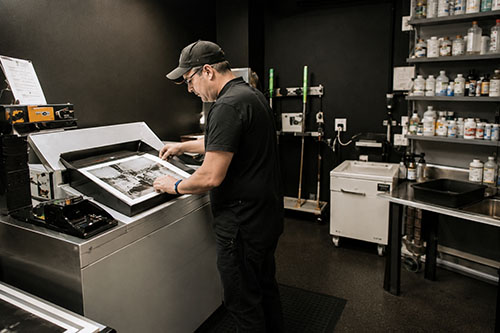
Carefully restored from historic photographic source material and professionally lab-developed, this museum-quality photograph is presented uncropped, preserving the complete image area contained in the source. Restoration recovers facial detail, hair texture, fabric folds, rope definition, wood grain and subtle grayscale separation while maintaining the natural tonal range and authentic character of the historic black-and-white photograph. The finished photograph contains no AI-generated image content.
Product Enquiry
Kodak Professional Endura Paper
Kodak Endura papers provide an incredible amount of detail and smooth transition of tones. Designed for the professional photographer in mind, looking for a more traditional photo print style, Kodak Endura provides an extended print life and color gamut almost at the level of a high end fine art paper print.
Archival Matte Paper
Archival Matte Paper, also known as Moab Lasal Photo Matte, is our house stock fine art paper and is an economical favorite for fine art reproductions and photo prints. It features a smooth surface, heavy weight (230 g, 9.5-mil), neutral white, matte paper engineered for accurate color reproduction that provides high contrast and high-resolution output. This paper is acid-free, making it the perfect choice for both photography & fine art reproductions.
Giclee William Turner Paper by Hahnemühle
The William Turner by Hahnemühle is one of the most popular papers used in the Giclee printing industry. This is a 310g natural white mould made natural line paper with 100% rag content making it highly archival. It has a slight coarse texture which gives photos and artwork an elegant look. These fine art paper prints (also known as Giclee) are ordered by galleries, individual artists and photographers. The papers and inks are not only archival but use some of the most accurate print technology for full color prints.
- Giclee prints use very expensive archival pigmented inks.
- Highest level of color gamut available in printing (12 color printing).
- Exceptional black & white printing.
- Fade resistant, pigmented inks which provide a superior color range compared to other types of inks. Widely preferred in fine art and photography circles.
- We ONLY use professional grade fine art and photo paper that resist yellowing and aging.
Framing
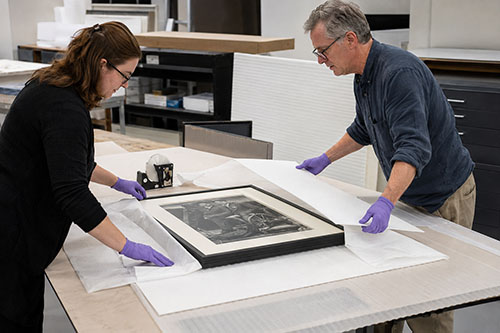
We offer wood and metal frames, custom cut & joined to order. Each framed print includes hanging hardware and foamcore backer.
Matting
We use conservation grade 100% virgin alpha-cellulose 2 ply mats with white core. Acid-free and lignin-free, these are both face resistant and meet all conservation quality standards set by the Fine Art Trade Guild. Mats are digitally cut for ultimate precision. The window will be 1/8″ smaller than the print dimensions.
Glazing (Acrylic Glass)
We offer custom cut panes of shatter-proof, acrylic glass, to protect your valuable artwork and prints.
Premium Clear
Framing grade clear acrylic is shatter resistant and lightweight.
Reflection Control
With its matte finish, Tru Vue Reflection Control® Acrylic scatters light to diminish unwanted glare.
Conservation Clear
Tru Vue Conservation Clear® Acrylic is a framing industry staple, blocking up to 99% of UV rays for ultimate protection.
Conservation Reflection Control
Tru Vue Conservation Reflection Control® Acrylic scatters and diffuses light to reduce unwanted glare. Blocks up to 99% of UV rays.
Related products
-

Peter Cushing – Frankenstein and the Monster from Hell (1974) Baron Frankenstein Top Hat Publicity Photo
$30.00 -
Barbara Steele (1970) – Italian Gothic Horror Queen Intense Eyes Black & White Glamour Portrait
$38.00 -
King Kong (1933) New York Exhibition Escape Pre-Production Concept Artwork
$38.00 -
Barbara Steele – The Horrible Dr. Hichcock (1962) Coffin Confinement Scene Photo
$30.00


