

Boris Karloff – Frankenstein (1931) Monster Descending Stone Steps Film Still
Limited Edition Photograph (learn more)
In stock
Boris Karloff appears as Frankenstein’s Monster in this extraordinary black-and-white scene photograph from Frankenstein (1931), descending a steep flight of stone steps with both arms dramatically raised above him. Towering masonry closes around the Monster from either side, while the narrow staircase plunges downward through the composition, creating an exceptionally powerful combination of movement, confinement and Gothic architecture. Karloff’s raised-arm silhouette seems immense against the constricted passage, making the Monster appear simultaneously threatening and trapped within the world that created him.
The architecture is fundamental to the photograph’s impact. Rough stone walls rise almost vertically around Karloff, leaving only a narrow corridor of steps through which the Monster can descend. The sharply angled masonry on the left pushes inward toward the figure, while the darker wall at right reinforces the claustrophobic quality of the setting. Each irregular step leads the eye upward toward Karloff, making his relatively distant figure the unmistakable center of the composition.
The raised hands give the image its most distinctive identity. Rather than the familiar stiff-armed walk often associated with later popular representations of Frankenstein’s Monster, Karloff’s body is caught in a far more expressive pose. His arms extend high above his head while his legs remain spread across the uneven steps, producing a striking silhouette that conveys physical instability, agitation and immense strength.
This Boris Karloff Frankenstein 1931 Monster photograph is documented among Universal’s numbered production stills as 310-1-62, identifying the image as the Monster descending the steps with his arms raised. That production-still number gives the photograph additional historical interest, connecting it directly to Universal’s organized photographic record for the film.
Within the story, the image belongs to the period after the Monster’s confrontation with Dr. Waldman, as he makes his way down from the laboratory and ultimately escapes the tower into the outside world. The descending staircase therefore represents more than an atmospheric setting: it becomes part of the Monster’s movement away from the controlled environment of Frankenstein’s experiments and toward the unfamiliar world beyond.
Directed by James Whale for Universal Pictures, Frankenstein stars Boris Karloff as the Monster, Colin Clive as Henry Frankenstein, Mae Clarke as Elizabeth, Edward Van Sloan as Dr. Waldman and Dwight Frye as Fritz. Karloff’s performance, combined with Jack Pierce’s celebrated makeup design, created one of the most recognizable figures in motion-picture history.
The photograph also demonstrates how effectively Whale’s visual world uses architecture to define the Monster. Stone walls, towers, laboratories and steep passages repeatedly surround him, reinforcing the sense of a being created by humans but never truly belonging among them. Here, the converging masonry makes that isolation almost physical.
For collectors of Universal Horror, Boris Karloff and classic Frankenstein photography, still 310-1-62 has especially strong visual identity. The raised arms, descending steps and massive enclosing stonework distinguish it immediately from conventional Monster close-ups and laboratory imagery.
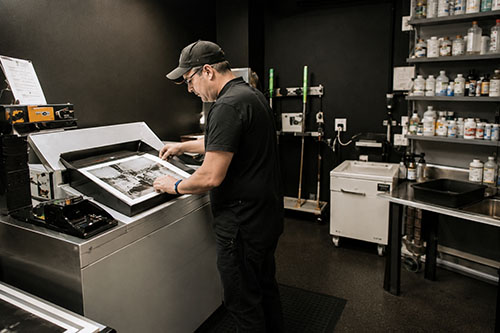
Carefully restored from historic photographic source material and professionally lab-developed, this museum-quality photograph is presented uncropped, preserving the complete image area contained in the source. Restoration recovers Monster makeup detail, costume texture, individual stone surfaces, staircase definition and deep architectural shadow gradation while maintaining the natural tonal gradation and character of the historic black-and-white photograph. The finished photograph contains no AI-generated image content.
Product Enquiry
Kodak Professional Endura Paper
Kodak Endura papers provide an incredible amount of detail and smooth transition of tones. Designed for the professional photographer in mind, looking for a more traditional photo print style, Kodak Endura provides an extended print life and color gamut almost at the level of a high end fine art paper print.
Archival Matte Paper
Archival Matte Paper, also known as Moab Lasal Photo Matte, is our house stock fine art paper and is an economical favorite for fine art reproductions and photo prints. It features a smooth surface, heavy weight (230 g, 9.5-mil), neutral white, matte paper engineered for accurate color reproduction that provides high contrast and high-resolution output. This paper is acid-free, making it the perfect choice for both photography & fine art reproductions.
Giclee William Turner Paper by Hahnemühle
The William Turner by Hahnemühle is one of the most popular papers used in the Giclee printing industry. This is a 310g natural white mould made natural line paper with 100% rag content making it highly archival. It has a slight coarse texture which gives photos and artwork an elegant look. These fine art paper prints (also known as Giclee) are ordered by galleries, individual artists and photographers. The papers and inks are not only archival but use some of the most accurate print technology for full color prints.
- Giclee prints use very expensive archival pigmented inks.
- Highest level of color gamut available in printing (12 color printing).
- Exceptional black & white printing.
- Fade resistant, pigmented inks which provide a superior color range compared to other types of inks. Widely preferred in fine art and photography circles.
- We ONLY use professional grade fine art and photo paper that resist yellowing and aging.
Framing
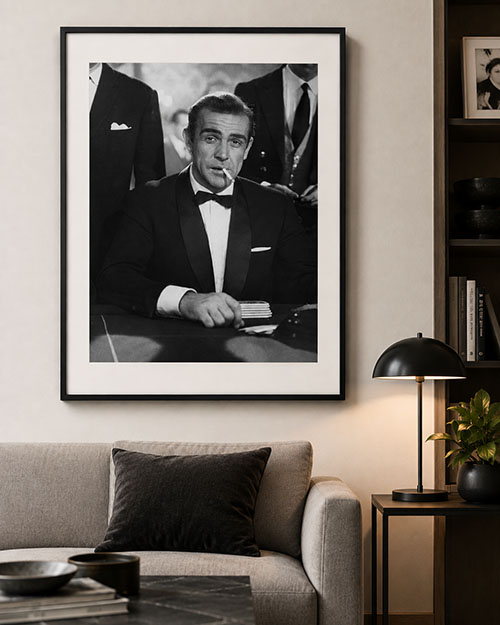
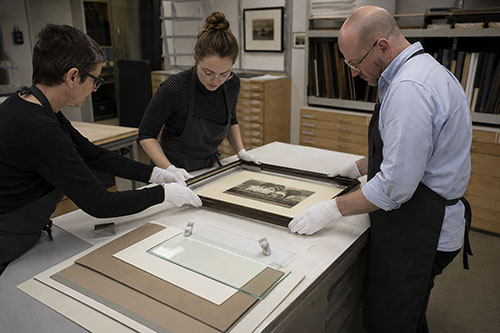
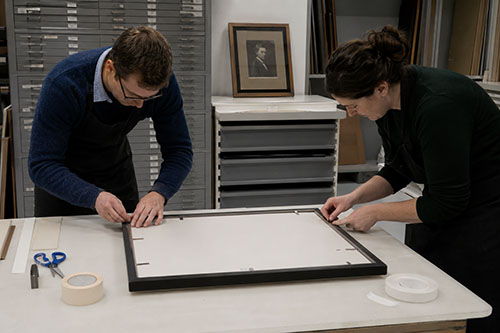
We offer wood and metal frames, custom cut & joined to order. Each framed print includes hanging hardware and foamcore backer.
Matting
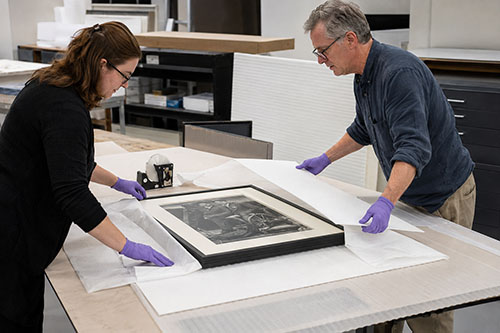
We use conservation grade 100% virgin alpha-cellulose 2 ply mats with white core. Acid-free and lignin-free, these are both face resistant and meet all conservation quality standards set by the Fine Art Trade Guild. Mats are digitally cut for ultimate precision. The window will be 1/8″ smaller than the print dimensions.
Glazing (Acrylic Glass)
We offer custom cut panes of shatter-proof, acrylic glass, to protect your valuable artwork and prints.
Premium Clear
Framing grade clear acrylic is shatter resistant and lightweight.
Reflection Control
With its matte finish, Tru Vue Reflection Control® Acrylic scatters light to diminish unwanted glare.
Conservation Clear
Tru Vue Conservation Clear® Acrylic is a framing industry staple, blocking up to 99% of UV rays for ultimate protection.
Conservation Reflection Control
Tru Vue Conservation Reflection Control® Acrylic scatters and diffuses light to reduce unwanted glare. Blocks up to 99% of UV rays.
Related products
-

King Kong Escapes (1967) Mechani-Kong Battle Toho Kaiju Promotional Artwork
$25.00 -
Klaus Kinski – Fitzcarraldo (1982) Brian Sweeney Fitzgerald Leopard Tapestry Publicity Photo
$25.00 -
Catherine Deneuve – Repulsion (1965) Carol Ledoux Profile Close-Up Photo
$30.00 -
Boris Karloff – Frankenstein (1931) Monster Reaching for Sunlight Universal Horror Photo
$38.00