

Ingrid Pitt (c. 1971) – Gothic Horror Queen Topless Tapestry Glamour Photo
Limited Edition Photograph (learn more)
In stock
Ingrid Pitt is captured in this striking circa-1971 black-and-white glamour photograph, posed topless against an intricately patterned floral tapestry while drawing dark fabric across the front of her body. Her tousled blonde hair falls around her face as one finger rests lightly against her lips, while the turned pose reveals the graceful line of her bare shoulder and back. The contrast between Pitt’s pale skin, the dark drapery and the richly detailed tapestry creates an exceptionally distinctive composition, balancing intimate glamour with the commanding presence that made her one of British Gothic horror’s most recognizable stars.
The photograph is particularly effective because of its textures and tightly controlled pose. The elaborate woven background fills almost the entire frame with dense floral patterning, while Pitt’s figure creates a smooth, sculptural contrast against it. Her hand-to-mouth gesture and direct engagement with the camera give the portrait an informal sensuality, but there are none of the elaborate costumes, castles or supernatural settings associated with her screen roles. Instead, the image concentrates entirely on Ingrid Pitt as a glamorous photographic subject.
By the beginning of the 1970s, Ingrid Pitt had become one of the defining women associated with British Gothic horror. Her breakthrough Hammer role came in Roy Ward Baker’s The Vampire Lovers (1970), in which Pitt played the seductive vampire Carmilla / Mircalla Karnstein. The performance became one of her most celebrated screen appearances and established an enduring association between Pitt and Gothic horror cinema.
She followed it with the title role in Countess Dracula (1971), directed by Peter Sasdy and inspired by the legend of Elizabeth Báthory. Together, The Vampire Lovers and Countess Dracula placed Pitt at the center of Hammer’s more provocative early-1970s Gothic period and helped secure her reputation as an enduring Gothic Horror Queen.
Pitt’s screen career was broader than those two films. She had previously appeared in Where Eagles Dare (1968) and later featured in the Amicus anthology The House That Dripped Blood (1971), the cult British horror film The Wicker Man (1973), and numerous subsequent film and television productions. Nevertheless, it was her charismatic presence in early-1970s horror that secured her lasting cult reputation.
That history gives this independent glamour photograph particular collector appeal. Rather than presenting Pitt as Carmilla, Countess Dracula or another fictional character, it captures the actress herself during the period when her international horror reputation was rapidly developing. Her blonde hair, confident pose and direct interaction with the camera preserve the distinctive combination of glamour, individuality and screen charisma that collectors immediately associate with Ingrid Pitt.
The portrait also reflects the changing visual culture of British cinema during the early 1970s, when glamour photography and horror publicity increasingly embraced greater sensuality than had been customary during the previous decade. Pitt’s screen image was particularly suited to that transition, combining an unmistakably modern confidence with the Gothic associations that defined much of her most celebrated work.
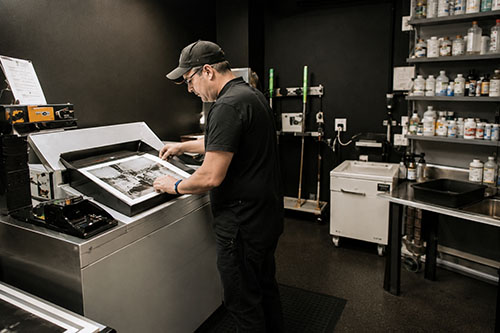
Carefully restored from historic photographic source material and professionally lab-developed, this museum-quality photograph is presented uncropped, preserving the complete image area contained in the source. Meticulous restoration recovers facial detail, hair texture, skin tones, tapestry pattern, tonal range and photographic clarity while retaining the natural character and rich contrasts of the original black-and-white glamour photograph.
For collectors of Ingrid Pitt, Gothic horror and classic British cinema, this is an especially memorable piece of 1970s glamour photography—Pitt posed against an ornate floral tapestry with dark fabric drawn across her body, her tousled blonde hair and intimate hand-to-lips gesture preserving a distinctive image of one of the genre’s most enduring Gothic Horror Queens.
Product Enquiry
Kodak Professional Endura Paper
Kodak Endura papers provide an incredible amount of detail and smooth transition of tones. Designed for the professional photographer in mind, looking for a more traditional photo print style, Kodak Endura provides an extended print life and color gamut almost at the level of a high end fine art paper print.
Archival Matte Paper
Archival Matte Paper, also known as Moab Lasal Photo Matte, is our house stock fine art paper and is an economical favorite for fine art reproductions and photo prints. It features a smooth surface, heavy weight (230 g, 9.5-mil), neutral white, matte paper engineered for accurate color reproduction that provides high contrast and high-resolution output. This paper is acid-free, making it the perfect choice for both photography & fine art reproductions.
Giclee William Turner Paper by Hahnemühle
The William Turner by Hahnemühle is one of the most popular papers used in the Giclee printing industry. This is a 310g natural white mould made natural line paper with 100% rag content making it highly archival. It has a slight coarse texture which gives photos and artwork an elegant look. These fine art paper prints (also known as Giclee) are ordered by galleries, individual artists and photographers. The papers and inks are not only archival but use some of the most accurate print technology for full color prints.
- Giclee prints use very expensive archival pigmented inks.
- Highest level of color gamut available in printing (12 color printing).
- Exceptional black & white printing.
- Fade resistant, pigmented inks which provide a superior color range compared to other types of inks. Widely preferred in fine art and photography circles.
- We ONLY use professional grade fine art and photo paper that resist yellowing and aging.
Framing
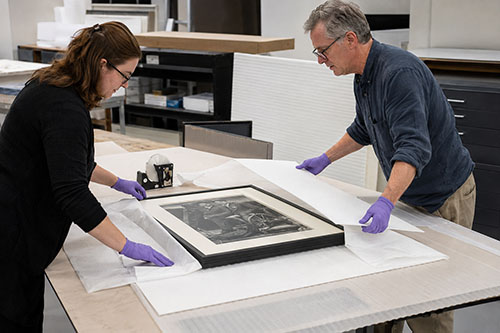
We offer wood and metal frames, custom cut & joined to order. Each framed print includes hanging hardware and foamcore backer.
Matting
We use conservation grade 100% virgin alpha-cellulose 2 ply mats with white core. Acid-free and lignin-free, these are both face resistant and meet all conservation quality standards set by the Fine Art Trade Guild. Mats are digitally cut for ultimate precision. The window will be 1/8″ smaller than the print dimensions.
Glazing (Acrylic Glass)
We offer custom cut panes of shatter-proof, acrylic glass, to protect your valuable artwork and prints.
Premium Clear
Framing grade clear acrylic is shatter resistant and lightweight.
Reflection Control
With its matte finish, Tru Vue Reflection Control® Acrylic scatters light to diminish unwanted glare.
Conservation Clear
Tru Vue Conservation Clear® Acrylic is a framing industry staple, blocking up to 99% of UV rays for ultimate protection.
Conservation Reflection Control
Tru Vue Conservation Reflection Control® Acrylic scatters and diffuses light to reduce unwanted glare. Blocks up to 99% of UV rays.
Related products
-

Sylvia Kristel & Catherine Rivet – Emmanuelle 2 (1975) Intimate Close-Up Paramount Publicity Photo
$30.00 -
Robert Hossein & Marie-France Pisier – Le Vampire de Düsseldorf (1965) Peter Kürten & Anna Death Scene High-Angle Crime Thriller Photo
$30.00 -
Julie Ege – Creatures the World Forgot (1971) Topless “1971” Hammer Glamour Publicity Photo
$25.00 -
Hazel Court – Holiday Camp (1947) Joan Huggett Two-Piece Swimsuit Ladder Glamour Publicity Photo
$30.00