

Katya Wyeth & Damien Thomas – Twins of Evil (1971) Mircalla Vampire Bite Photo
Limited Edition Photograph (learn more)
In stock
Katya Wyeth as Countess Mircalla Karnstein confronts Damien Thomas as Count Karnstein in this ferocious color photograph from Twins of Evil (1971), capturing the bloodied vampire immediately surrounding the bite that transforms Karnstein into one of the undead. Mircalla’s wide-eyed expression, fully exposed fangs and blood-smeared mouth dominate the composition, while Karnstein is seen from behind at exceptionally close range, his shoulder and hand enclosing the lower foreground. The result is an unusually concentrated image of Hammer vampire horror, reducing the scene almost entirely to Mircalla’s terrifying face and the physical proximity between predator and victim.
The photograph’s impact comes from the collision of beauty and monstrosity. Wyeth’s pale features and carefully arranged hair initially retain the elegance associated with the Karnstein lineage, but the extended fangs, blood around her mouth and almost ecstatic stare completely transform that appearance. Her eyes are opened intensely toward Karnstein, while the warm color photography makes the fresh red blood especially prominent against her skin and white costume. Thomas’s dark hair and black clothing create a strong foreground silhouette, directing the viewer immediately toward Mircalla.
The tightly cropped composition makes the encounter feel almost claustrophobic. Little of the surrounding chamber can be seen beyond patches of dark blue patterned material and shadow, leaving the actors’ faces, hands and costumes to carry nearly all of the visual information. Karnstein’s hand rests prominently in the foreground while Mircalla appears to hold or draw him toward her, giving the image a sense of movement even though the photograph isolates a single instant.
Katya Wyeth Damien Thomas Twins of Evil 1971 imagery from this sequence is especially significant because Mircalla’s brief appearance establishes the supernatural transformation that drives the remainder of the film. Count Karnstein’s occult ritual and blood sacrifice restore his vampire ancestor, Countess Mircalla Karnstein, who then initiates him into the undead world. After their encounter, Mircalla bites Karnstein, and the disappearance of his reflection confirms that he has crossed fully into vampirism.
Directed by John Hough for Hammer Film Productions, Twins of Evil places Karnstein’s transformation at the foundation of its central vampire narrative. Damien Thomas plays the decadent Count whose fascination with Satanism and forbidden ritual gives way to genuine supernatural evil, while Katya Wyeth’s Mircalla provides the direct link to the ancient Karnstein bloodline. Karnstein subsequently becomes the vampire who draws Frieda Gellhorn, played by Madeleine Collinson, into the same world of corruption and bloodlust.
The scene also connects Twins of Evil to Hammer’s broader Karnstein cycle, following The Vampire Lovers and Lust for a Vampire, all drawing loosely upon Sheridan Le Fanu’s “Carmilla.” Mircalla’s appearance is comparatively brief, but her role is decisive: she turns Karnstein from an occult dilettante into the supernatural force whose actions shape the remainder of the story.
For collectors of Hammer horror photography, this image has exceptional visual force because it places the vampire transformation itself at center stage. Wyeth’s exposed fangs, blood-covered mouth, fixed stare and close physical contact with Thomas make the photograph unmistakably identifiable even without elaborate scenery. It is a concentrated study of vampirism, transformation and predatory intensity from one of Hammer’s defining late-period Gothic productions.
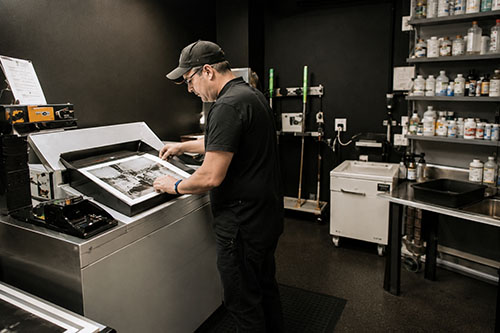
Carefully restored from historic photographic source material and professionally lab-developed, this museum-quality photograph is presented uncropped, preserving the complete image area contained in the source. Restoration recovers facial detail, fang definition, blood tones, hair texture, costume detail and subtle background shadow while maintaining the natural color balance and authentic character of the historic photograph. The finished photograph contains no AI-generated image content.
Product Enquiry
Kodak Professional Endura Paper
Kodak Endura papers provide an incredible amount of detail and smooth transition of tones. Designed for the professional photographer in mind, looking for a more traditional photo print style, Kodak Endura provides an extended print life and color gamut almost at the level of a high end fine art paper print.
Archival Matte Paper
Archival Matte Paper, also known as Moab Lasal Photo Matte, is our house stock fine art paper and is an economical favorite for fine art reproductions and photo prints. It features a smooth surface, heavy weight (230 g, 9.5-mil), neutral white, matte paper engineered for accurate color reproduction that provides high contrast and high-resolution output. This paper is acid-free, making it the perfect choice for both photography & fine art reproductions.
Giclee William Turner Paper by Hahnemühle
The William Turner by Hahnemühle is one of the most popular papers used in the Giclee printing industry. This is a 310g natural white mould made natural line paper with 100% rag content making it highly archival. It has a slight coarse texture which gives photos and artwork an elegant look. These fine art paper prints (also known as Giclee) are ordered by galleries, individual artists and photographers. The papers and inks are not only archival but use some of the most accurate print technology for full color prints.
- Giclee prints use very expensive archival pigmented inks.
- Highest level of color gamut available in printing (12 color printing).
- Exceptional black & white printing.
- Fade resistant, pigmented inks which provide a superior color range compared to other types of inks. Widely preferred in fine art and photography circles.
- We ONLY use professional grade fine art and photo paper that resist yellowing and aging.
Framing
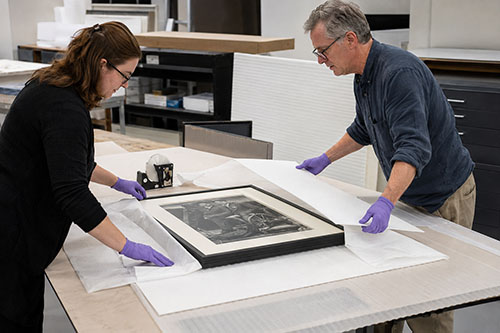
We offer wood and metal frames, custom cut & joined to order. Each framed print includes hanging hardware and foamcore backer.
Matting
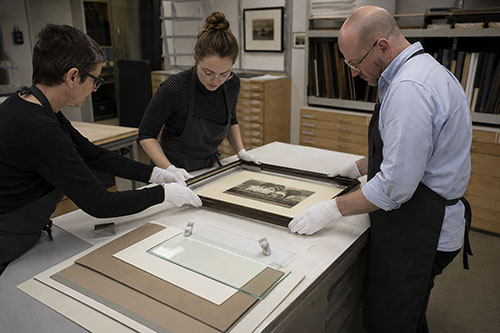
We use conservation grade 100% virgin alpha-cellulose 2 ply mats with white core. Acid-free and lignin-free, these are both face resistant and meet all conservation quality standards set by the Fine Art Trade Guild. Mats are digitally cut for ultimate precision. The window will be 1/8″ smaller than the print dimensions.
Glazing (Acrylic Glass)
We offer custom cut panes of shatter-proof, acrylic glass, to protect your valuable artwork and prints.
Premium Clear
Framing grade clear acrylic is shatter resistant and lightweight.
Reflection Control
With its matte finish, Tru Vue Reflection Control® Acrylic scatters light to diminish unwanted glare.
Conservation Clear
Tru Vue Conservation Clear® Acrylic is a framing industry staple, blocking up to 99% of UV rays for ultimate protection.
Conservation Reflection Control
Tru Vue Conservation Reflection Control® Acrylic scatters and diffuses light to reduce unwanted glare. Blocks up to 99% of UV rays.

Related products
-

Peter Cushing – Torture Garden (1967) Lancelot Canning Poe Collector Close-Up Photo
$30.00 -
Robert Hossein – Le Vampire de Düsseldorf (1965) Peter Kürten Night Street Crime Thriller Photo
$25.00 -
KLAUS KINSKI – NOSFERATU THE VAMPYRE (1979) Count Dracula Coffin Scene Gothic Horror Photo
$38.00 -
Peter Cushing & Susan Denberg – Frankenstein Created Woman (1967) Christina Bandage Experiment Publicity Photo
$30.00


