

Kiwi Kingston – The Evil of Frankenstein (1964) Frankenstein Creature Metal Stake Hammer Horror Photo
Limited Edition Photograph (learn more)
In stock
Kiwi Kingston appears as Frankenstein’s Creature in this imposing black-and-white photograph from The Evil of Frankenstein (1964), dramatically photographed from below while gripping a long metal stake. The low camera angle exaggerates Kingston’s towering physical presence, while harsh illumination catches the Creature’s scarred, patchwork face against the surrounding darkness. His heavy dark costume, massive shoulders and raised weapon create an exceptionally forceful character portrait, concentrating almost entirely on the size, makeup and physical menace of Hammer’s 1964 Frankenstein monster.
The image is particularly striking because very little competes with the Creature himself. Architectural detail is visible behind him, but Kingston fills most of the frame, and the upward viewpoint makes his head and shoulders appear even more formidable. The metal stake gives the portrait a direct connection to the film’s violent climax rather than functioning merely as a generic monster prop.
Released in 1964, The Evil of Frankenstein was directed by Freddie Francis for Hammer Film Productions and stars Peter Cushing as Baron Victor Frankenstein, Kiwi Kingston as the Creature, Peter Woodthorpe as Zoltan, Sandor Elès as Hans and Katy Wild as Rena. Anthony Hinds produced the film and wrote the screenplay under his familiar pseudonym John Elder. It was the third entry in Hammer’s Frankenstein series, following The Curse of Frankenstein (1957) and The Revenge of Frankenstein (1958).
The story finds Frankenstein returning to Karlstaad and discovering his earlier Creature preserved in ice. Although he succeeds in reviving the body, its mind remains unresponsive, leading him to enlist the hypnotist Zoltan. Zoltan gains control of the Creature and exploits that power for robbery and revenge, eventually ordering it to kill Frankenstein.
During the confrontation, the Creature attacks Frankenstein with the metal stake seen here, but Frankenstein drives it back with fire. When Zoltan attempts to regain control, the Creature turns on him and kills him with the same weapon. The stake therefore belongs to one of the film’s most important confrontations and gives this photograph unusually specific narrative significance.
The Creature’s appearance also makes The Evil of Frankenstein distinctive within Hammer history. Unlike the earlier Hammer Frankenstein films, this production benefited from an agreement with Universal Pictures that permitted the filmmakers to evoke the famous monster imagery associated with Universal’s 1931 Frankenstein. MoMA specifically notes that the agreement allowed Hammer’s Creature to resemble the classic Universal design more closely.
Makeup artist Roy Ashton developed numerous concepts for Kingston’s Creature. The Science Museum Group preserves Ashton’s original sketches and sculptural studies, documenting his work on the character and his conscious reference to the earlier Universal Frankenstein tradition.
Kingston’s unusual casting added significantly to the Creature’s physical impact. A New Zealand professional wrestler as well as an actor, he brought an imposing stature and heavy, deliberate movement to the role, giving Hammer a Frankenstein monster visually distinct from Christopher Lee’s Creature in The Curse of Frankenstein.
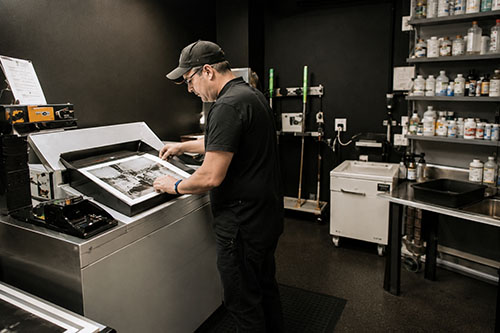
Carefully restored from historic photographic source material and professionally lab-developed, this museum-quality photograph is presented uncropped, preserving the complete image area contained in the source. Meticulous restoration recovers facial makeup, costume texture, metal-stake detail, architectural definition, shadow separation and photographic clarity while retaining the dramatic character of the original black-and-white image.
For collectors of Kiwi Kingston, The Evil of Frankenstein and Hammer Horror, this is a commanding Creature portrait—Kingston towering above the camera with the metal stake from the film’s climactic confrontation, preserving the distinctive combination of Hammer Gothic horror and classic Universal Frankenstein influence that makes the 1964 production unique.
Product Enquiry
Kodak Professional Endura Paper
Kodak Endura papers provide an incredible amount of detail and smooth transition of tones. Designed for the professional photographer in mind, looking for a more traditional photo print style, Kodak Endura provides an extended print life and color gamut almost at the level of a high end fine art paper print.
Archival Matte Paper
Archival Matte Paper, also known as Moab Lasal Photo Matte, is our house stock fine art paper and is an economical favorite for fine art reproductions and photo prints. It features a smooth surface, heavy weight (230 g, 9.5-mil), neutral white, matte paper engineered for accurate color reproduction that provides high contrast and high-resolution output. This paper is acid-free, making it the perfect choice for both photography & fine art reproductions.
Giclee William Turner Paper by Hahnemühle
The William Turner by Hahnemühle is one of the most popular papers used in the Giclee printing industry. This is a 310g natural white mould made natural line paper with 100% rag content making it highly archival. It has a slight coarse texture which gives photos and artwork an elegant look. These fine art paper prints (also known as Giclee) are ordered by galleries, individual artists and photographers. The papers and inks are not only archival but use some of the most accurate print technology for full color prints.
- Giclee prints use very expensive archival pigmented inks.
- Highest level of color gamut available in printing (12 color printing).
- Exceptional black & white printing.
- Fade resistant, pigmented inks which provide a superior color range compared to other types of inks. Widely preferred in fine art and photography circles.
- We ONLY use professional grade fine art and photo paper that resist yellowing and aging.
Framing
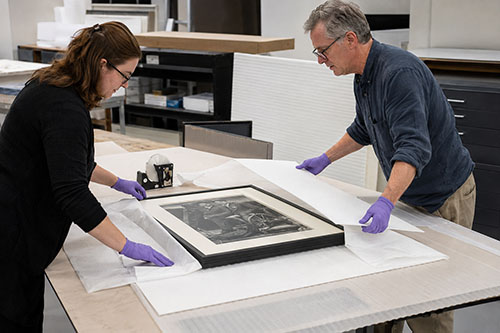
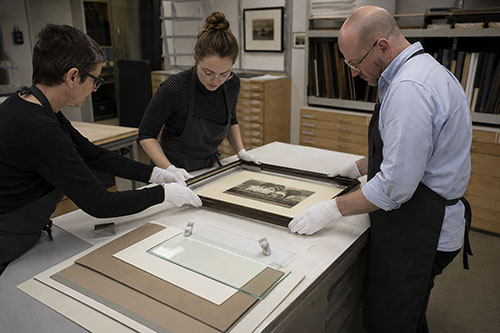
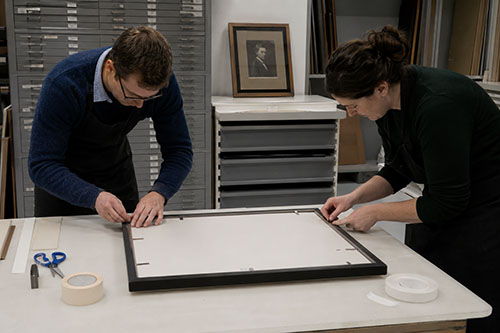
We offer wood and metal frames, custom cut & joined to order. Each framed print includes hanging hardware and foamcore backer.
Matting
We use conservation grade 100% virgin alpha-cellulose 2 ply mats with white core. Acid-free and lignin-free, these are both face resistant and meet all conservation quality standards set by the Fine Art Trade Guild. Mats are digitally cut for ultimate precision. The window will be 1/8″ smaller than the print dimensions.
Glazing (Acrylic Glass)
We offer custom cut panes of shatter-proof, acrylic glass, to protect your valuable artwork and prints.
Premium Clear
Framing grade clear acrylic is shatter resistant and lightweight.
Reflection Control
With its matte finish, Tru Vue Reflection Control® Acrylic scatters light to diminish unwanted glare.
Conservation Clear
Tru Vue Conservation Clear® Acrylic is a framing industry staple, blocking up to 99% of UV rays for ultimate protection.
Conservation Reflection Control
Tru Vue Conservation Reflection Control® Acrylic scatters and diffuses light to reduce unwanted glare. Blocks up to 99% of UV rays.
Related products
-

Fay Wray – King Kong (1933) Ann Darrow Glamour Close-Up Publicity Photo
$38.00 -
Peter Cushing – The Curse of Frankenstein (1957) Baron Victor Frankenstein Top Hat Publicity Photo
$30.00 -
The Revenge of Frankenstein (1958) Peter Cushing Original Belgian Theatrical Design Hammer Horror 15×22 Fine Art Poster
$149.85 -
Yutte Stensgaard – Lust for a Vampire (1971) Mircalla White Nightgown Stone Steps Publicity Photo
$38.00


