

Maria Rohm, Marie Liljedahl – Eugenie… The Story of Her Journey Into Perversion (1970) Jess Franco Publicity Photograph
Limited Edition Photograph (learn more)
In stock
Maria Rohm and Marie Liljedahl appear together in this exceptionally provocative color publicity photograph associated with Jess Franco’s Eugenie... The Story of Her Journey Into Perversion (1970). Seated closely together outdoors and wrapped loosely in white towels, the two actresses are captured sharing an intimate kiss in an image that immediately reflects the film’s deliberately transgressive approach to sexuality, temptation and forbidden experience. The natural daylight, green grass and almost casual outdoor setting create a striking contrast with the uninhibited nature of the scene, giving the photograph an immediacy that distinguishes it from conventional studio glamour portraits.
For collectors familiar with the cinema of Jess Franco, the image is unmistakably connected to the director’s visual world. Franco repeatedly blurred the boundaries between horror, erotic cinema, psychological drama and exploitation filmmaking, using sensual imagery as an integral part of atmosphere and character rather than merely as decoration. This photograph captures that philosophy particularly well: visually beautiful, intentionally provocative and completely characteristic of the freedom that defined much of European cult cinema at the end of the 1960s and beginning of the 1970s.
Eugenie... The Story of Her Journey Into Perversion was directed by Jesús “Jess” Franco from a screenplay by producer Harry Alan Towers and was inspired by the Marquis de Sade’s controversial 1795 work Philosophy in the Bedroom. The film stars Marie Liljedahl as Eugenie, Maria Rohm as Madame Saint Ange, Jack Taylor as Mirvel and Christopher Lee as Dolmance. Its story follows the inexperienced Eugenie after she accepts an invitation to visit an island retreat and enters a seductive but increasingly dangerous world controlled by the people around her.
The film occupies an important place in Franco’s long fascination with the writings and themes of the Marquis de Sade. Rather than approaching the material as conventional period literature, Franco relocates its ideas into a contemporary environment and filters them through his own unmistakable combination of glamour, voyeurism, psychological manipulation and dreamlike imagery. The resulting film became one of the director’s better-known early excursions into erotic exploitation cinema and remains closely associated with both Maria Rohm and Marie Liljedahl.
The relationship between the two women is central to much of the film’s imagery. Maria Rohm’s Madame Saint Ange represents sophistication, experience and temptation, while Marie Liljedahl’s Eugenie begins the story as the more innocent figure drawn progressively into a world she does not fully understand. Photographs such as this one visually communicate that contrast without requiring elaborate sets or theatrical staging. The performers themselves dominate the composition, making it especially attractive to collectors interested in Jess Franco photography, European cult cinema and vintage exploitation publicity.
Maria Rohm was a frequent presence in productions associated with Harry Alan Towers, while Swedish actress Marie Liljedahl became internationally recognized during the late 1960s through European erotic cinema. Their pairing in Eugenie gives the photograph additional collector significance, particularly because the image captures both principal actresses together rather than presenting either performer in a conventional solo portrait.
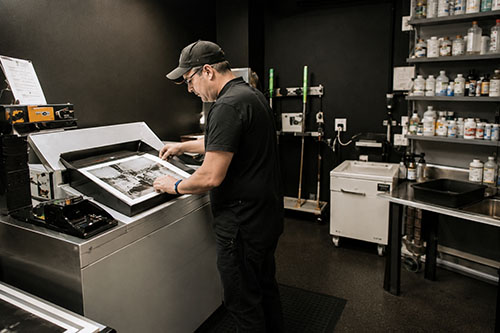
Carefully restored from historic photographic source material and professionally lab-developed, this museum-quality photograph is presented uncropped, preserving the complete image area contained in the source. Restoration recovers natural color balance, facial detail, skin tone, fabric texture and original photographic clarity while maintaining the authentic character of the historic image. The finished photograph contains no AI-generated image content.
A distinctive addition for collectors of Maria Rohm, Marie Liljedahl, Jess Franco, Eugenie, Christopher Lee, Marquis de Sade adaptations, European cult cinema and vintage glamour photography, this image preserves the uninhibited visual style that made Franco’s films immediately recognizable. It is provocative, historically representative of its production and unmistakably connected to an era of European filmmaking in which directors were deliberately challenging conventional boundaries of sexuality and screen censorship.
Product Enquiry
Kodak Professional Endura Paper
Kodak Endura papers provide an incredible amount of detail and smooth transition of tones. Designed for the professional photographer in mind, looking for a more traditional photo print style, Kodak Endura provides an extended print life and color gamut almost at the level of a high end fine art paper print.
Archival Matte Paper
Archival Matte Paper, also known as Moab Lasal Photo Matte, is our house stock fine art paper and is an economical favorite for fine art reproductions and photo prints. It features a smooth surface, heavy weight (230 g, 9.5-mil), neutral white, matte paper engineered for accurate color reproduction that provides high contrast and high-resolution output. This paper is acid-free, making it the perfect choice for both photography & fine art reproductions.
Giclee William Turner Paper by Hahnemühle
The William Turner by Hahnemühle is one of the most popular papers used in the Giclee printing industry. This is a 310g natural white mould made natural line paper with 100% rag content making it highly archival. It has a slight coarse texture which gives photos and artwork an elegant look. These fine art paper prints (also known as Giclee) are ordered by galleries, individual artists and photographers. The papers and inks are not only archival but use some of the most accurate print technology for full color prints.
- Giclee prints use very expensive archival pigmented inks.
- Highest level of color gamut available in printing (12 color printing).
- Exceptional black & white printing.
- Fade resistant, pigmented inks which provide a superior color range compared to other types of inks. Widely preferred in fine art and photography circles.
- We ONLY use professional grade fine art and photo paper that resist yellowing and aging.
Framing
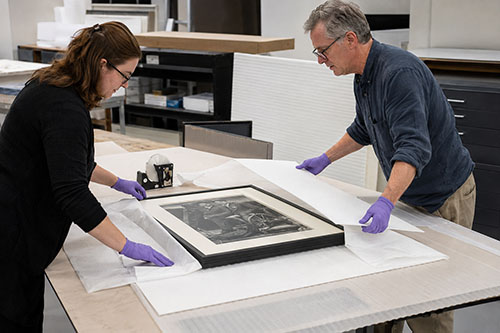
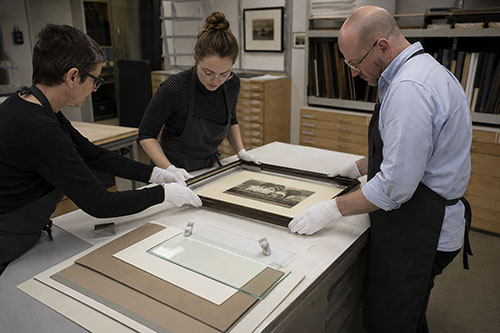
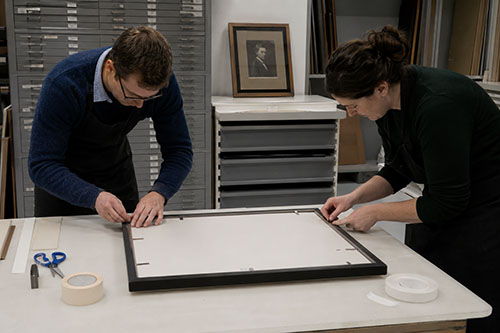
We offer wood and metal frames, custom cut & joined to order. Each framed print includes hanging hardware and foamcore backer.
Matting
We use conservation grade 100% virgin alpha-cellulose 2 ply mats with white core. Acid-free and lignin-free, these are both face resistant and meet all conservation quality standards set by the Fine Art Trade Guild. Mats are digitally cut for ultimate precision. The window will be 1/8″ smaller than the print dimensions.
Glazing (Acrylic Glass)
We offer custom cut panes of shatter-proof, acrylic glass, to protect your valuable artwork and prints.
Premium Clear
Framing grade clear acrylic is shatter resistant and lightweight.
Reflection Control
With its matte finish, Tru Vue Reflection Control® Acrylic scatters light to diminish unwanted glare.
Conservation Clear
Tru Vue Conservation Clear® Acrylic is a framing industry staple, blocking up to 99% of UV rays for ultimate protection.
Conservation Reflection Control
Tru Vue Conservation Reflection Control® Acrylic scatters and diffuses light to reduce unwanted glare. Blocks up to 99% of UV rays.
Related products
-

Martine Beswick – Thunderball (1965) Paula Caplan 007 Bond Girl Reclining Tiger-Stripe Swimsuit Boat Bahamas Publicity Photo
$30.00 -
Christopher Lee – Dracula Has Risen from the Grave (1968) Count Dracula Bloody Lips Coffin Photo
$30.00 -
Clint Eastwood – Dirty Harry (1971) Harry Callahan Outdoor Publicity Photo
$30.00 -
Clint Eastwood & Don Siegel – Dirty Harry (1971) On-Set Discussion Behind-the-Scenes Photo
$38.00


