

Peter Cushing & Kiwi Kingston – The Evil of Frankenstein (1964) Wide Laboratory Scene Photo
Limited Edition Photograph (learn more)
In stock
Peter Cushing as Baron Victor Frankenstein and Kiwi Kingston as the Monster are captured within the expansive laboratory of The Evil of Frankenstein (1964), surrounded by towering electrical machinery, glass vessels, cables and heavy Gothic architecture. The wide composition gives unusual prominence to the laboratory itself, allowing the machinery and stone interior to become as visually important as the characters. Rather than isolating a single experiment, the photograph reveals the scale of Frankenstein’s working environment and the elaborate physical world created around his attempt to restore life.
The photograph is especially striking because of its depth. Large pieces of apparatus occupy the foreground, partially framing the view and drawing the eye toward the illuminated center of the laboratory. Beyond them, Cushing’s Baron stands amid the equipment while the Monster is positioned within the experimental machinery. Stone arches, columns and dark recesses extend behind the figures, giving the room the appearance of an ancient chamber transformed into a place of dangerous modern science.
Light plays a major role in separating the machinery from the surrounding darkness. Cold blue electrical illumination cuts through the warmer tones of stone and metal, while glass components and polished surfaces catch isolated highlights throughout the room. The effect creates the distinctive collision of Gothic architecture and electrical experimentation associated with Frankenstein cinema: an old-world environment invaded by equipment designed to challenge death itself.
This Peter Cushing Kiwi Kingston The Evil of Frankenstein photograph is particularly valuable because it records the production design from a much wider perspective than conventional character stills. Cushing and Kingston remain essential to the image, but the laboratory is given enough space to reveal its construction, scale and complexity. Coils, suspended fittings, vertical machinery and laboratory furniture combine to create a dense visual environment that rewards close inspection.
Directed by Freddie Francis for Hammer Film Productions, The Evil of Frankenstein continued Cushing’s portrayal of Baron Victor Frankenstein and introduced Kiwi Kingston as a new version of the Monster. Sandor Elès appears as Frankenstein’s assistant Hans. The production was photographed at Bray Studios in late 1963 before its 1964 release, and its visual approach deliberately drew more closely upon imagery associated with the classic Universal Frankenstein tradition. Kingston’s Monster, created with makeup work by Roy Ashton, likewise presented a more square-headed, overtly iconic silhouette than Hammer’s earlier Creature designs.
That connection is particularly evident in the laboratory. The electrical equipment, towering mechanisms and dramatic activation imagery evoke the familiar visual language of earlier Frankenstein films while remaining unmistakably Hammer in their color, texture and Gothic atmosphere. The result gives The Evil of Frankenstein a distinctive place within Cushing’s Frankenstein series.
For collectors of Hammer Horror, Peter Cushing and Frankenstein photography, this image offers more than a view of the principal characters. It preserves a broad record of the set, practical machinery and visual design surrounding the experiment, making it especially appealing as a production-oriented laboratory photograph.
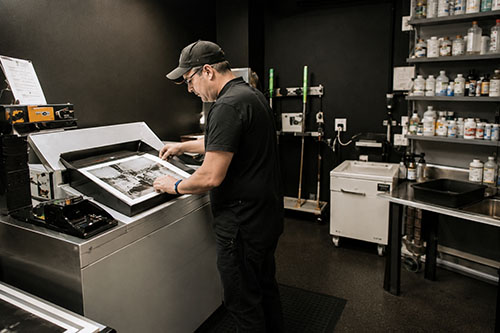
Carefully restored from historic photographic source material and professionally lab-developed, this museum-quality photograph is presented uncropped, preserving the complete image area contained in the source. Restoration recovers laboratory machinery, stone textures, electrical highlights, glass detail and shadow definition while maintaining the natural color balance and authentic character of the historic photograph. The finished photograph contains no AI-generated image content.
Product Enquiry
Kodak Professional Endura Paper
Kodak Endura papers provide an incredible amount of detail and smooth transition of tones. Designed for the professional photographer in mind, looking for a more traditional photo print style, Kodak Endura provides an extended print life and color gamut almost at the level of a high end fine art paper print.
Archival Matte Paper
Archival Matte Paper, also known as Moab Lasal Photo Matte, is our house stock fine art paper and is an economical favorite for fine art reproductions and photo prints. It features a smooth surface, heavy weight (230 g, 9.5-mil), neutral white, matte paper engineered for accurate color reproduction that provides high contrast and high-resolution output. This paper is acid-free, making it the perfect choice for both photography & fine art reproductions.
Giclee William Turner Paper by Hahnemühle
The William Turner by Hahnemühle is one of the most popular papers used in the Giclee printing industry. This is a 310g natural white mould made natural line paper with 100% rag content making it highly archival. It has a slight coarse texture which gives photos and artwork an elegant look. These fine art paper prints (also known as Giclee) are ordered by galleries, individual artists and photographers. The papers and inks are not only archival but use some of the most accurate print technology for full color prints.
- Giclee prints use very expensive archival pigmented inks.
- Highest level of color gamut available in printing (12 color printing).
- Exceptional black & white printing.
- Fade resistant, pigmented inks which provide a superior color range compared to other types of inks. Widely preferred in fine art and photography circles.
- We ONLY use professional grade fine art and photo paper that resist yellowing and aging.
Framing
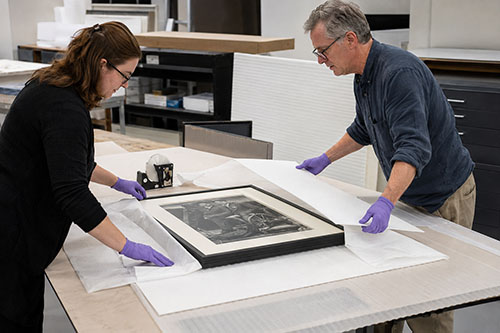
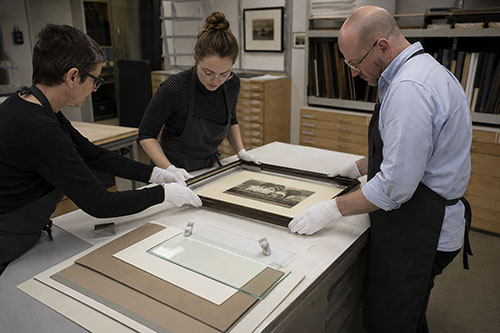
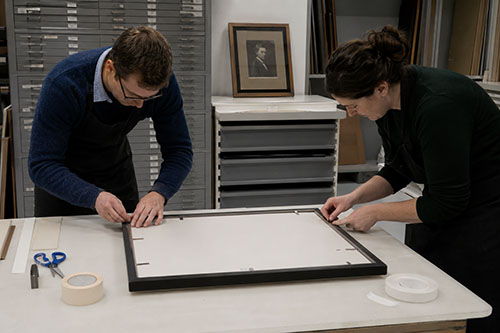
We offer wood and metal frames, custom cut & joined to order. Each framed print includes hanging hardware and foamcore backer.
Matting
We use conservation grade 100% virgin alpha-cellulose 2 ply mats with white core. Acid-free and lignin-free, these are both face resistant and meet all conservation quality standards set by the Fine Art Trade Guild. Mats are digitally cut for ultimate precision. The window will be 1/8″ smaller than the print dimensions.
Glazing (Acrylic Glass)
We offer custom cut panes of shatter-proof, acrylic glass, to protect your valuable artwork and prints.
Premium Clear
Framing grade clear acrylic is shatter resistant and lightweight.
Reflection Control
With its matte finish, Tru Vue Reflection Control® Acrylic scatters light to diminish unwanted glare.
Conservation Clear
Tru Vue Conservation Clear® Acrylic is a framing industry staple, blocking up to 99% of UV rays for ultimate protection.
Conservation Reflection Control
Tru Vue Conservation Reflection Control® Acrylic scatters and diffuses light to reduce unwanted glare. Blocks up to 99% of UV rays.
Related products
-

Ingrid Pitt, Peter Cushing & Dawn Addams – The Vampire Lovers (1970) Savoy Hotel Seated Cast Press Photo
$30.00 -
Peter Cushing – The Evil of Frankenstein (1964) Back-Projection Wagon Setup Behind-the-Scenes Photo
$30.00 -
Peter Cushing & Veronica Carlson – Frankenstein Must Be Destroyed (1969) Holding Script at Elstree Studios Publicity Photo
$30.00 -
The Curse of Frankenstein (1957) Peter Cushing & Christopher Lee Original Belgian Theatrical Design Hammer Horror 15×22 Fine Art Poster
$149.85


