

Susan Denberg – Frankenstein Created Woman (1967) Christina Hammer Glamour Publicity Portrait
Limited Edition Photograph (learn more)
In stock
SUSAN DENBERG is photographed in this striking black-and-white studio glamour portrait associated with Frankenstein Created Woman (1967), the Hammer production in which she plays Christina opposite Peter Cushing’s Baron Victor Frankenstein. Denberg is framed closely from the shoulders upward, turning slightly toward the camera with a direct, subtly knowing expression. Her blonde hair is swept into a high, textured 1960s style, while the strong asymmetric neckline of her dress creates a clean diagonal across the composition. With no scenery, props or character setting competing for attention, the photograph concentrates entirely on Denberg’s face, hair, fashion and screen presence. It is unmistakably a studio glamour portrait rather than a scene from the film, offering collectors a polished promotional-era image quite different from Christina’s period costumes and Gothic surroundings in the finished production.
The uncluttered composition is what makes the photograph so effective. Denberg’s eyes and expression immediately become the focal point, while the sculptural neckline and softly modeled lighting give the image a distinctly mid-1960s character. The styling reflects the contemporary actress rather than Christina’s fictional world, making the photograph particularly useful for collectors interested in Susan Denberg Frankenstein Created Woman 1967 material as well as Hammer’s broader tradition of star and glamour publicity. The restrained background also allows the fine tonal transitions in her hair, skin and clothing to carry the entire image.
Directed by Terence Fisher for Hammer Film Productions, Frankenstein Created Woman reunited Fisher with Peter Cushing, who returned as Baron Frankenstein. Hammer lists Susan Denberg, Thorley Walters, Robert Morris and Duncan Lamont among the principal cast and describes the film as one of the final Hammer productions completed at the company’s celebrated Bray Studios.
The story takes Hammer’s Frankenstein series in an unusual direction. Rather than simply constructing another physical creature, Frankenstein becomes obsessed with the possibility that the human soul can survive death. After Hans, Christina’s lover, is wrongly executed for murder, Christina takes her own life. Frankenstein restores her body and transfers Hans’s soul into it, transforming the previously disfigured young woman into the beautiful Christina seen later in the film. The experiment leads to a revenge story as Hans’s surviving consciousness drives Christina toward the men responsible for his death.
Production records place filming between 4 July and 12 August 1966, principally at Bray Studios, Down Place, Oakley Green, Berkshire, with additional exterior work at Black Park and Frensham Ponds. The film reached British cinemas in July 1967. It was the fourth film in Hammer’s Frankenstein series, continuing Cushing’s increasingly distinctive interpretation of the Baron while giving Denberg one of the production’s central dramatic roles.
For collectors, the appeal of this photograph comes from the contrast between Hammer Gothic cinema and contemporary 1960s glamour. There is no laboratory, village setting or period wardrobe here; instead, Denberg is presented simply as a young screen actress through controlled lighting, modern fashion and a confident direct gaze. That makes the image a strong companion to narrative stills from Frankenstein Created Woman while retaining its own independent identity as classic Hammer-era publicity photography.
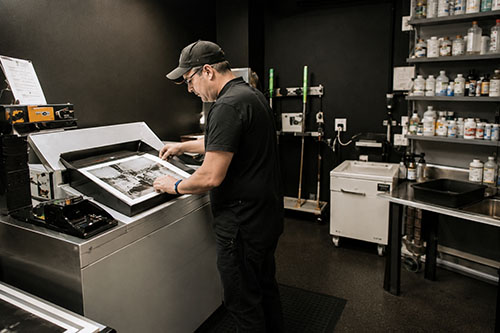
Carefully restored from historic photographic source material and professionally lab-developed, this museum-quality photograph is presented uncropped, preserving the complete image area contained in the source. Restoration recovers facial detail, eye definition, swept-up hair texture and dress fabric while maintaining the natural tonal gradation and character of the historic black-and-white photograph. The finished photograph contains no AI-generated image content.
Product Enquiry
Kodak Professional Endura Paper
Kodak Endura papers provide an incredible amount of detail and smooth transition of tones. Designed for the professional photographer in mind, looking for a more traditional photo print style, Kodak Endura provides an extended print life and color gamut almost at the level of a high end fine art paper print.
Archival Matte Paper
Archival Matte Paper, also known as Moab Lasal Photo Matte, is our house stock fine art paper and is an economical favorite for fine art reproductions and photo prints. It features a smooth surface, heavy weight (230 g, 9.5-mil), neutral white, matte paper engineered for accurate color reproduction that provides high contrast and high-resolution output. This paper is acid-free, making it the perfect choice for both photography & fine art reproductions.
Giclee William Turner Paper by Hahnemühle
The William Turner by Hahnemühle is one of the most popular papers used in the Giclee printing industry. This is a 310g natural white mould made natural line paper with 100% rag content making it highly archival. It has a slight coarse texture which gives photos and artwork an elegant look. These fine art paper prints (also known as Giclee) are ordered by galleries, individual artists and photographers. The papers and inks are not only archival but use some of the most accurate print technology for full color prints.
- Giclee prints use very expensive archival pigmented inks.
- Highest level of color gamut available in printing (12 color printing).
- Exceptional black & white printing.
- Fade resistant, pigmented inks which provide a superior color range compared to other types of inks. Widely preferred in fine art and photography circles.
- We ONLY use professional grade fine art and photo paper that resist yellowing and aging.
Framing
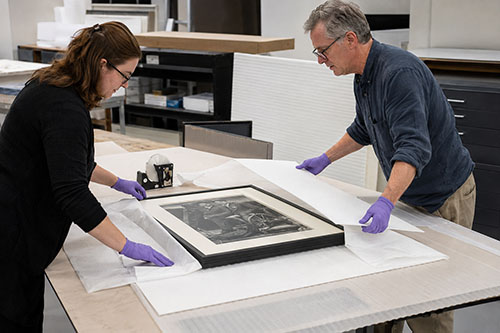
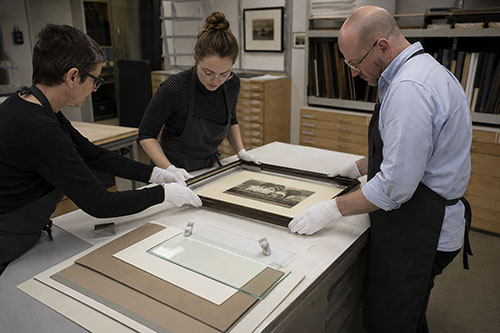
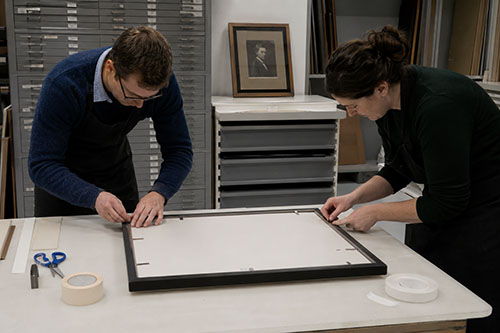
We offer wood and metal frames, custom cut & joined to order. Each framed print includes hanging hardware and foamcore backer.
Matting
We use conservation grade 100% virgin alpha-cellulose 2 ply mats with white core. Acid-free and lignin-free, these are both face resistant and meet all conservation quality standards set by the Fine Art Trade Guild. Mats are digitally cut for ultimate precision. The window will be 1/8″ smaller than the print dimensions.
Glazing (Acrylic Glass)
We offer custom cut panes of shatter-proof, acrylic glass, to protect your valuable artwork and prints.
Premium Clear
Framing grade clear acrylic is shatter resistant and lightweight.
Reflection Control
With its matte finish, Tru Vue Reflection Control® Acrylic scatters light to diminish unwanted glare.
Conservation Clear
Tru Vue Conservation Clear® Acrylic is a framing industry staple, blocking up to 99% of UV rays for ultimate protection.
Conservation Reflection Control
Tru Vue Conservation Reflection Control® Acrylic scatters and diffuses light to reduce unwanted glare. Blocks up to 99% of UV rays.
Related products
-

Sean Connery & Ursula Andress – Dr. No (1962) Connery Brushing Hair on Beach Behind-the-Scenes Photo
$38.00 -
ANTHONY HIGGINS, LAURENCE PAYNE & ROBERT TAYMAN – VAMPIRE CIRCUS (1972) Climactic Crypt Battle Photo
$25.00 -
INGRID PITT, PETER CUSHING & DAWN ADDAMS – THE VAMPIRE LOVERS (1970) Savoy Hotel Seated Cast Press Photo
$30.00 -
YUTTE STENSGAARD & MICHAEL JOHNSON – LUST FOR A VAMPIRE (1971) Mircalla and Richard Gothic Scene Photo
$38.00